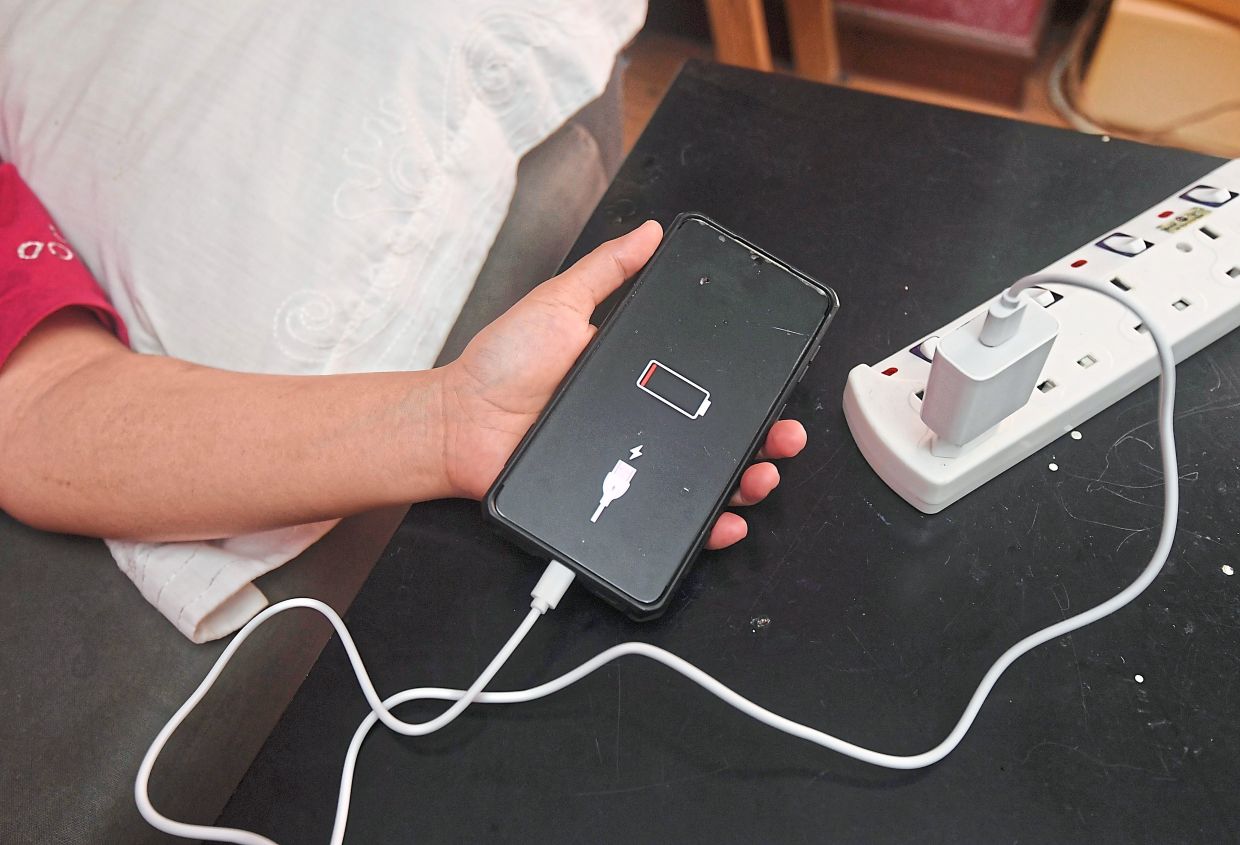
Malaysia's fire safety authorities have sounded a stark alarm about the mounting financial and safety toll of improperly charged electronic devices in homes. Between 2023 and 2025, the Fire and Rescue Department (JBPM) documented 59 distinct fire incidents stemming from unsafe charging practices, resulting in combined losses exceeding RM14.2 million across the country. The scale of this problem underscores a critical gap in public awareness that extends beyond mere property damage, touching on the fundamental vulnerability of Malaysian households to preventable domestic disasters.
The geographic distribution of these incidents reveals a troubling concentration in East Malaysia. Sarawak emerged as the hardest-hit state, with 11 cases generating approximately RM9.7 million in losses—representing nearly 69 percent of the national total. This disproportionate impact reflects not merely the number of incidents but their severity in a region where property values and household contents may be particularly vulnerable. Following Sarawak, Kelantan reported 17 cases with RM1.14 million in damages, and Sabah recorded three incidents totalling RM806,800. The remaining affected states—Selangor, Penang, Johor, Putrajaya, Melaka, Terengganu, and Perak—collectively accounted for less than RM2.5 million despite recording 29 cases, suggesting that Sarawak's incidents were notably more destructive.
Notably, six states including Kedah, Negri Sembilan, Pahang, Perlis, Kuala Lumpur, and Labuan recorded no incidents during this period, and crucially, no deaths resulted from any of these 59 fires. While the absence of fatalities provides some relief, JBPM officials emphasise that the absence of casualties does not diminish the urgency of the threat. The department's investigation methodology reveals the deceptive complexity underlying these seemingly routine domestic accidents. Each fire presents distinct investigative challenges that cannot be reduced to loss figures alone, requiring meticulous examination of evidence that may be severely compromised by heat and smoke.
The technical analysis of these incidents has identified a consistent pattern of dangerous charging behaviours that Malaysian households routinely practise without recognising the inherent risks. Leaving devices plugged in overnight without supervision emerges as perhaps the most widespread unsafe practice, often combined with the use of non-certified chargers or substandard cables that lack proper safety mechanisms. These behaviours frequently occur in conjunction with another critical risk factor: charging devices on or immediately adjacent to highly flammable materials such as mattresses, pillows, upholstered furniture, or bedding. The intimate domestic setting—where people charge phones and tablets in bedrooms before sleep—transforms these everyday conveniences into potential fire hazards.
The department has identified additional contributing factors that amplify ignition risk in contemporary Malaysian households. Overloading power strips beyond their rated capacity remains commonplace, particularly in homes where multiple family members charge devices simultaneously. Furthermore, users frequently continue operating devices displaying obvious warning signs of electrical failure or battery degradation—swollen batteries, persistent overheating, burning odours, or visibly damaged cables—prioritising continued functionality over safety. This normalisation of device dysfunction reflects a broader consumer mindset that privileges cost savings and convenience over protective measures.
At the root of this hazardous behaviour lies a fundamental disconnect between consumer purchasing decisions and fire safety outcomes. JBPM's investigation uncovered a persistent pattern wherein Malaysian consumers deliberately select cheaper, uncertified chargers and electrical accessories despite full awareness of quality concerns. This cost-conscious approach stems partly from the price sensitivity of households seeking to reduce expenses on supplementary items, yet it systematically increases exposure to equipment manufactured without adherence to recognised safety standards. Such substandard chargers frequently exhibit inadequate thermal protection, insufficient electrical insulation, or faulty voltage regulation—deficiencies that transform normal charging cycles into opportunities for overheating, short circuits, or direct ignition of surrounding materials.
The investigation framework employed by JBPM reveals that the most resource-intensive cases often involve fires whose financial losses appear modest relative to the technical demands of accurate cause determination. These challenging investigations require extensive physical evidence analysis, sophisticated risk assessment methodologies, and the ability to reconstruct scenarios from materials severely damaged or partially destroyed by intense heat. The complexity arises not from the scale of destruction but from the technical precision required to identify precisely how electrical malfunction transitioned into flame. This distinction underscores why even a three-case cluster in Sabah or a single Putrajaya incident demands the same investigative rigour as Sarawak's larger incidents.
Public education campaigns targeting device safety have demonstrably failed to penetrate mainstream household consciousness across Malaysian communities. A substantial proportion of the population continues to treat device charging as a routine, consequence-free activity requiring no special precautions or vigilance. The absence of immediate visible danger—many overheating devices never ignite—creates a false sense of security that permits dangerous practices to become habitual. This psychological distance between behaviour and potential outcome represents perhaps the greatest obstacle to behaviour change, particularly when cultural patterns emphasise convenience and cost minimisation over abstract safety considerations.
In response to this persistent threat, JBPM has intensified efforts to promote certified, safety-approved charging equipment, particularly products bearing SIRIM certification and other recognised international safety marks. The department emphasises the importance of avoiding soft surface charging locations, implementing prompt replacement of damaged infrastructure, and maintaining vigilant supervision of charging devices during operation. These recommendations, while straightforward, require deliberate adoption of new habits that contradict the convenience-oriented charging patterns established across Malaysian households. The department has committed to sustained public engagement through fire safety education initiatives, preventive outreach programs, and collaborative work with relevant government and consumer protection agencies to gradually shift public consciousness toward recognising device charging as a genuine fire risk requiring active safety management.