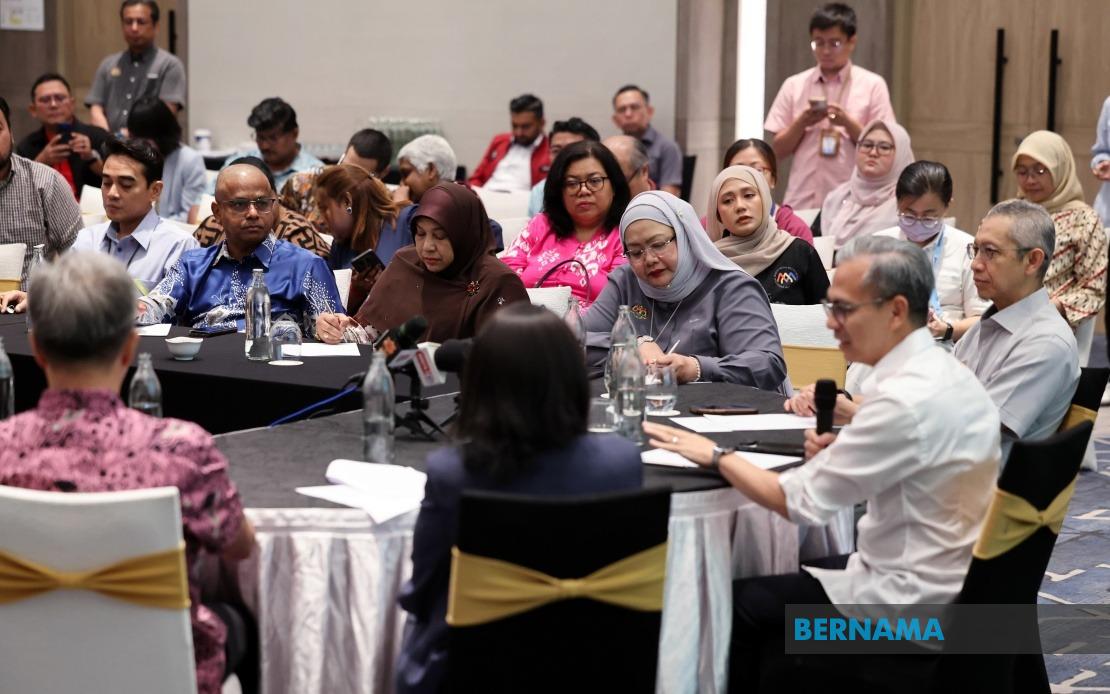
The HAWANA 2026 Summit officially commenced on June 20 at the PICCA@Arena Butterworth Convention Centre, drawing media practitioners, invited guests and strategic partners from Malaysia and throughout the ASEAN region. The gathering represents a significant moment for the regional journalism community, bringing together professionals from diverse news organisations and media houses to reflect on their collective role in the information ecosystem. Early arrivals took advantage of the convention centre's offerings, visiting exhibition booths and a specially curated photo gallery in the foyer, while using the occasion to reconnect with colleagues and peers they encounter less frequently amid their demanding editorial schedules.
The composition of delegates underscores HAWANA's evolving significance as a platform for regional dialogue among media professionals. The presence of representatives from across ASEAN member states signals recognition that journalism operates within an increasingly interconnected Southeast Asian context, where cross-border information flows and shared media challenges require coordinated understanding and professional standards. This regional dimension has grown more pronounced in recent years as media organisations grapple with similar pressures from digitalisation, misinformation, audience fragmentation and the evolving relationship between journalism and technology platforms.
The summit carries the theme 'Media Integrity Strengthens Credibility', a concept that resonates deeply across Southeast Asia. Media integrity encompasses not merely factual accuracy but also editorial independence, transparency about sources and methods, clear separation between news and commentary, and accountability to audiences. In a region where trust in institutions remains variable and public confidence in media varies significantly between countries, this thematic focus addresses fundamental concerns about journalism's legitimacy and social function. The emphasis on credibility directly connects to journalism's capacity to serve democratic processes and informed public discourse.
Prime Minister Datuk Seri Anwar Ibrahim will officiate the summit, reflecting the Malaysian government's investment in recognising and elevating the journalism profession. This high-level attendance signals that official circles acknowledge media practitioners' contributions to public communication and information dissemination. Organisers project approximately 1,000 media professionals will participate, making this a substantial gathering that spans print, broadcast and digital news operations across Malaysia and neighbouring countries. The scale suggests serious institutional commitment to facilitating professional networking and knowledge exchange on a regional basis.
The Ministry of Communications has structured HAWANA 2026 through its implementing partner, the Malaysian National News Agency (Bernama), which operates as Malaysia's national news organisation. Bernama's coordinating role places the summit within Malaysia's institutional framework for managing state communications and journalism relations. The ministry's explicit framing of HAWANA as a platform for recognising 'dedication, professionalism and contributions of media practitioners in delivering accurate, verified and credible information to the public' establishes clear parameters for what the summit values in journalism. This language emphasises verification and credibility as central professional attributes, positioning journalism as a service function essential to public understanding.
For Malaysian journalists and regional media professionals, HAWANA 2026 offers practical value beyond symbolic recognition. Such conferences facilitate direct engagement between editors, reporters and media managers across different markets, enabling discussion of shared editorial challenges, technological transitions and audience engagement strategies. They create space for discussing how news organisations maintain professional standards while adapting to digital publishing models, how journalists verify information amid information overload, and how regional newsrooms can collaborate on transnational stories that affect multiple ASEAN nations.
The summit's emphasis on regional cooperation carries particular relevance for Southeast Asia, where journalism often operates within different regulatory environments and media traditions. Myanmar, Thailand, Vietnam and Cambodia have experienced significant press freedom challenges, while Indonesia and the Philippines maintain more open media environments, and Malaysia operates within its own distinct framework. Creating forums where journalists from these varied contexts can engage professionally encourages mutual understanding of each other's constraints and aspirations, potentially strengthening the broader journalistic community's resilience.
The exhibition components of HAWANA suggest an intent to showcase innovations and resources available to media practitioners. Such displays typically feature journalism training programs, digital publishing platforms, media safety organisations, fact-checking initiatives and technology solutions adopted by news organisations. For practitioners, these exhibitions offer opportunities to assess tools and approaches that might enhance their own newsrooms' capabilities, while vendors gain direct access to media professionals considering adoption of new systems or services.
Looking forward, HAWANA 2026 occurs within a global context of heightened scrutiny of journalism's role in democratic societies and growing concerns about misinformation's impact on public discourse. Southeast Asia has experienced particularly acute challenges with coordinated inauthentic behaviour online, false health claims during the pandemic, and politically motivated disinformation during election cycles. Convening media professionals to discuss integrity and credibility directly engages these challenges at a professional level, encouraging practitioners to reinforce commitments to verification and accuracy in their daily work.
The timing of the summit also reflects Malaysia's broader engagement with ASEAN diplomacy and regional institution-building. By hosting this gathering and positioning Malaysian journalism within regional conversations, Malaysia contributes to developing a Southeast Asian media culture that values professional standards and cross-border cooperation. For Malaysian journalists, participation offers opportunities to benchmark their own practices against international standards while building relationships that may facilitate regional reporting and news exchange. The summit ultimately represents an investment in strengthening journalism as a profession across Southeast Asia, recognising that credible, independent media serves the public interest in all ASEAN societies.

