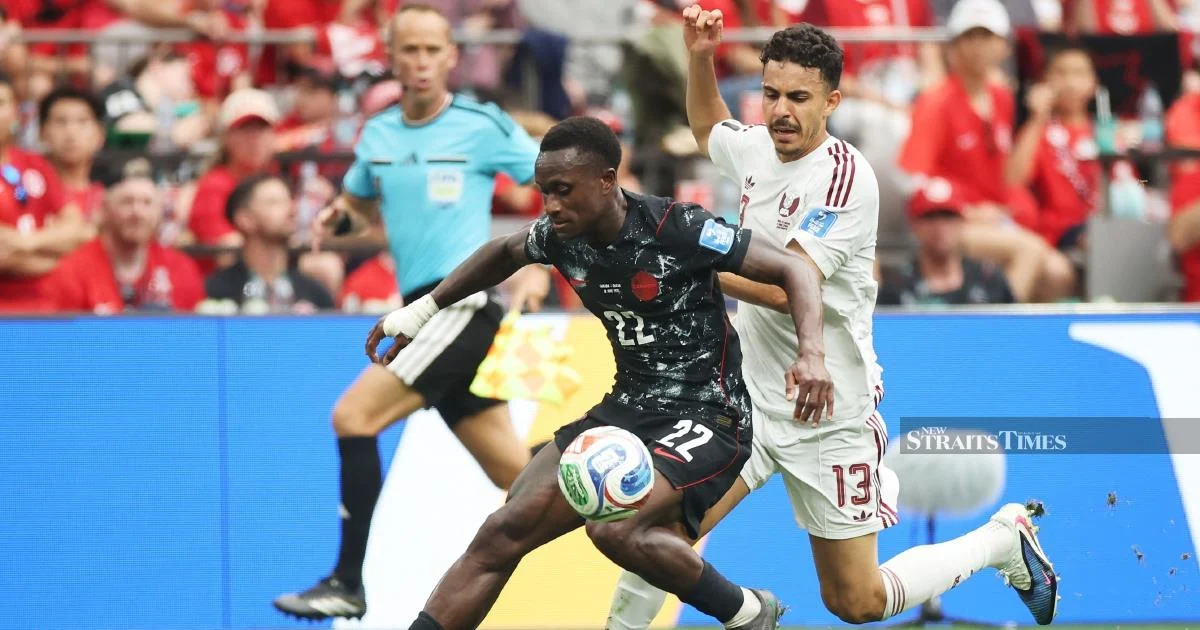
Qatar's catastrophic 6-0 defeat to Canada in World Cup play has become a textbook case for why money alone cannot manufacture sporting success, according to football analysts examining the Gulf nation's troubled tournament campaign. The scoreline represented a watershed moment for a country that invested billions in preparation and infrastructure, yet failed to translate financial resources into competitive performance on football's grandest stage. The scale of the loss—one of the most lopsided results involving a World Cup host nation—has prompted serious reflection on whether Qatar's approach to building a football powerhouse was fundamentally flawed from its conception.
Qatar's heavy reliance on financial investment to develop its football programme has long been a defining characteristic of the nation's sporting ambitions. The country poured unprecedented resources into youth academies, foreign coaching expertise, and infrastructure projects designed to elevate local talent. Yet despite these expenditures, the team arrived at the tournament as one of the weakest sides in the competition, raising uncomfortable questions about how such substantial investment produced such minimal returns. Football critics have seized on the Canada result as vindication of their earlier scepticism, pointing to the disconnect between spending and actual sporting development as evidence that the model was inherently unsustainable.
The humiliation against Canada, which demonstrated Qatar's defensive vulnerabilities and lack of competitive conditioning, highlighted a critical gap in the nation's football ecosystem. While money can construct training facilities and attract foreign talent, it cannot rapidly manufacture the kind of deep institutional knowledge, player development pathways, and competitive football culture that characterise established football nations. Qatar's domestic league, despite its financial muscle, remains relatively uncompetitive on the global stage, and the national team lacked the tactical discipline and match fitness required to withstand pressure from a well-organised Canadian side.
For Southeast Asian football observers, Qatar's situation carries particular relevance. Several ASEAN nations have similarly invested significant resources in football development, with some attempting to create professional leagues and international academies. The Qatari experience suggests that while infrastructure and funding are necessary components, they cannot substitute for long-term systematic development, competitive domestic leagues, and genuine grassroots engagement. Countries across the region seeking to improve their football standing should draw lessons from Qatar's expensive failure rather than attempting to replicate its model wholesale.
The defeat also exposed the inherent difficulties in building competitive football teams through rapid foreign recruitment. Qatar's reliance on naturalised players and foreign coaches, while providing short-term solutions, does not appear to have created a sustainable foundation for consistent performance. The team's inability to function cohesively under pressure against a determined opponent suggested that assembling expensive squads of individually talented players cannot substitute for the organic team-building that emerges from shared competitive experience and cultural alignment.
Football analysts have increasingly focussed on the structural weaknesses underlying Qatar's tournament underperformance. The domestic Pro League, while wealthy, has not developed sufficient competitive depth or quality to prepare players adequately for international competition at the highest level. This mismatch between financial investment and competitive output represents a cautionary tale for any nation attempting to quickly elevate its football standing through spending alone. The lesson extends beyond Qatar: establishing genuine football excellence requires patience, systematic development, and acceptance that rapid transformation through financial injection alone is not feasible.
The Canadian victory, conversely, demonstrated that competitive organisation, tactical discipline, and match fitness often trump superior financial resources. Canada's team, drawn from diverse global leagues and built through consistent competitive experience, displayed the cohesion and resilience that characterised successful football nations. This contrast underscores a fundamental principle increasingly accepted among football development specialists: sustainable success emerges from building strong foundations rather than purchasing immediate results.
Qatar's World Cup campaign now serves as a reference point for what not to do when attempting to establish football competitiveness. The investment was substantial; the strategic conception, however, suffered from fundamental misunderstandings about how football excellence is actually cultivated. The expensive academies, foreign coaching, and imported talent proved insufficient when confronted with a team that possessed neither Qatar's financial resources nor its state apparatus, yet demonstrated superior football understanding and preparation.
Looking forward, the implications extend across Asian football. Nations evaluating their own development strategies must acknowledge that Qatar's financial capacity was virtually unmatched globally, yet produced embarrassment rather than success. This reality should prompt serious examination of whether funding alone, without corresponding investments in grassroots development, competitive domestic structures, and long-term institutional planning, represents effective sports policy. For Malaysian football specifically, which operates within more modest financial constraints, the takeaway is that strategic coherence and systematic development may ultimately matter more than raw spending power in determining international competitiveness.

