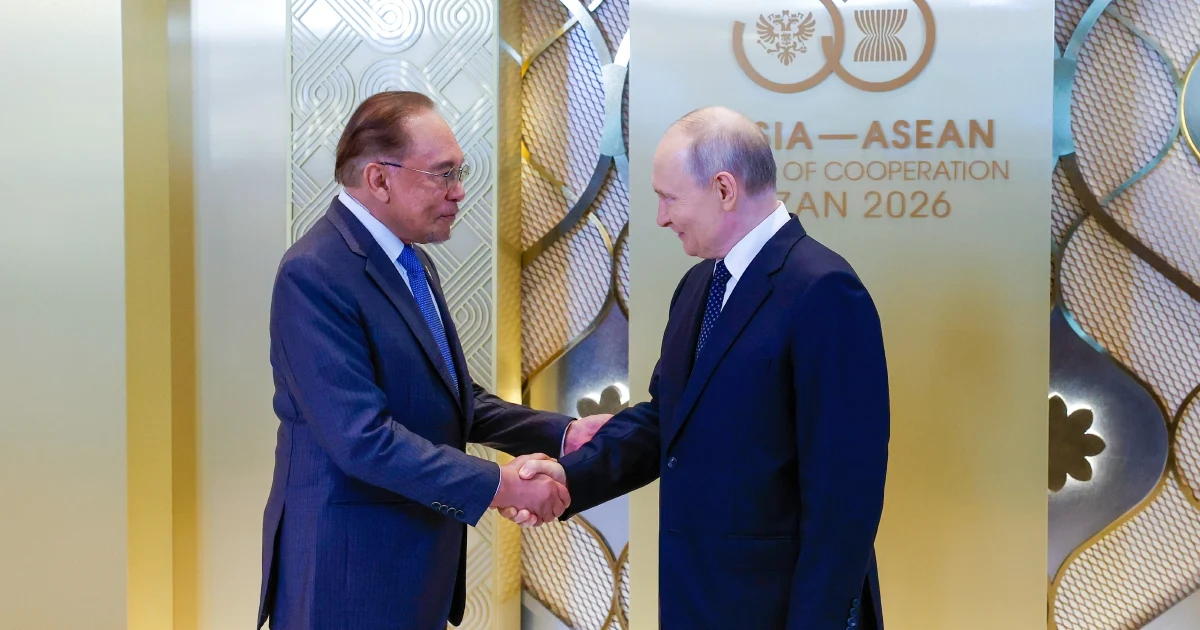
Malaysia is fortifying its role as a critical player in the international energy landscape by cultivating partnerships with established energy powerhouses, according to Prime Minister Datuk Seri Anwar Ibrahim, who revealed details of assurances received from Russian counterpart President Vladimir Putin regarding sustained energy deliveries.
The commitment to long-term energy security reflects Malaysia's strategic positioning as a Southeast Asian energy hub, where demand continues to surge alongside rapid industrialisation and economic development. This diversification of energy sources across geographically distinct producers represents a deliberate policy shift away from over-reliance on any single supplier or region, a consideration increasingly vital for nations navigating the complexities of global supply chain disruptions and geopolitical uncertainties.
Anwar's emphasis on bilateral energy cooperation comes at a time when Malaysia faces mounting pressures to sustain its energy-intensive industries while maintaining environmental commitments and managing domestic energy costs. The assurance from Putin underscores Russia's continued interest in Asian markets and its pivot towards non-Western trading partners, a consequence of Western sanctions imposed following Moscow's 2022 invasion of Ukraine.
Malaysia's pursuit of diversified energy partnerships carries significant implications for the region's energy landscape. As a nation with proven liquefied natural gas export capabilities and substantial oil reserves, Malaysia understands that securing alternative supply sources insulates its economy from market volatility and geopolitical leverage. This bilateral arrangement with Russia therefore extends beyond mere commercial transaction, functioning instead as a stabilising mechanism for Malaysia's broader economic strategy.
The Russian guarantee of consistent energy provision aligns with Malaysia's existing framework of energy diplomacy, which has historically balanced relationships with diverse suppliers including the Middle East, Russia, and regional partners. By formalising these commitments with major producers, Malaysia ensures that its manufacturing sector, power generation infrastructure, and chemical industries maintain uninterrupted access to essential energy inputs at predictable costs.
For Russia, securing reliable markets in Southeast Asia represents a crucial economic outlet as Western restrictions intensify. Malaysia's position as a strategic regional economy makes it an attractive partner, particularly given the nation's geographic advantages, established energy infrastructure, and role as a corridor for regional trade and energy distribution. This mutual benefit underpins the stability of the arrangement.
Within Malaysia's domestic context, the announcement addresses ongoing concerns about energy affordability and accessibility for both industrial consumers and households. Price volatility in global energy markets has created pressure on policymakers to implement price controls and subsidies, straining government finances. Securing long-term supply agreements at negotiated rates provides greater predictability in budget planning and allows for more effective energy pricing strategies.
The partnership also reflects Malaysia's pragmatic approach to international relations, maintaining productive engagement across ideological divides while prioritising national economic interests. Unlike some Asian nations that have explicitly aligned with Western positions on Russia, Malaysia has pursued a more balanced diplomatic course, treating energy partnerships as distinct from political positioning.
Regionally, Malaysia's energy diversification strategy sets a precedent for other Southeast Asian nations seeking to strengthen their resilience in critical resource sectors. As demand for energy across the region expands, particularly in emerging economies like Vietnam and Indonesia, the model of strategic bilateral partnerships offers alternatives to traditional dependency frameworks.
The timing of Putin's energy assurance carries particular significance given Malaysia's broader infrastructure development agenda, including expansion of petrochemical refining capacity and renewable energy integration. Stable, long-term energy supplies from reliable partners reduce investment risk and enhance Malaysia's attractiveness for downstream industrial projects that add value to crude inputs.
Looking forward, Malaysia's energy diplomacy demonstrates the nation's evolution from a resource exporter to an active player in structuring its own energy security framework. Rather than accepting whatever market conditions prevail, the country is actively negotiating commitments that align with its development timeline and industrial requirements.
The assurance from Russia also positions Malaysia favourably within intra-ASEAN energy discussions, where nations increasingly recognise that collective approaches to energy security—whether through regional transmission networks or coordinated purchasing—can amplify negotiating leverage with suppliers. Malaysia's individual agreements contribute to this broader regional resilience narrative.
Ultimately, Anwar's announcement represents more than diplomatic courtesy or commercial transaction; it signals Malaysia's determination to remain an indispensable node in global energy networks while maintaining sovereign control over strategies that ensure prosperity and stability for its citizens and industries across the decades ahead.

