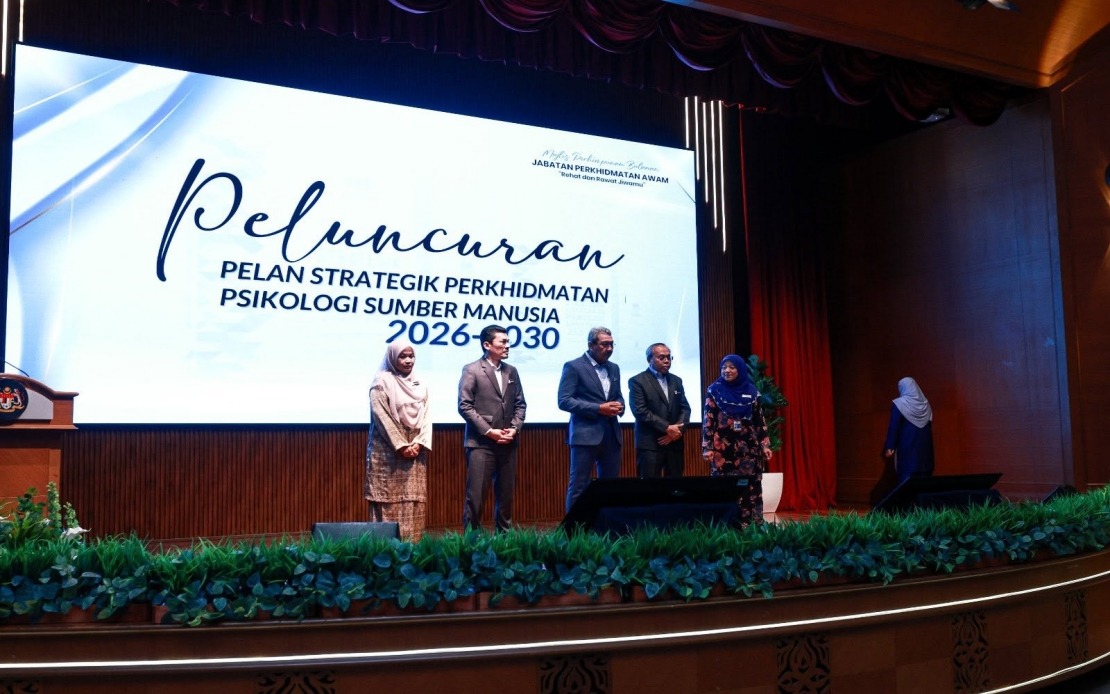
The Public Service Department has unveiled an ambitious roadmap to transform how Malaysia's civil service approaches mental health and psychological well-being. Launched at the June 2026 PSD Monthly Assembly under the theme "R&R (Rest and Treat) Your Soul", the Human Resources Psychology Services Strategic Plan 2026-2030 represents a substantial commitment to creating a healthier, more supportive workplace culture across the government workforce. The initiative was formally introduced by Tan Sri Wan Ahmad Dahlan Abdul Aziz, the Director-General of Public Service, signalling high-level institutional backing for mental wellness as a core government priority.
The strategic framework comprises three interconnected pillars: 12 distinct strategies, 22 comprehensive programmes, and 48 key performance indicators that will track progress and accountability. This multi-layered approach suggests the department recognizes that mental health support requires simultaneous action across prevention, intervention, and institutional culture change. Rather than adopting a one-size-fits-all model, the PSD has structured the plan to address different dimensions of employee psychological welfare, from early detection of distress to long-term wellness maintenance.
Central to the strategic vision is the concept of "Treat", which emphasizes courage and proactive engagement with mental health services. The PSD messaging explicitly encourages civil servants to abandon self-reliance at the expense of wellbeing and instead seek professional support when needed. This reframing is significant because it attempts to dismantle the traditional stoicism that often characterizes government workplaces, where seeking help may have been perceived as weakness. By making professional intervention a normalized and encouraged practice, the department aims to reduce the psychological burden carried by individual officers and create a more transparent dialogue around mental health challenges.
The accompanying "Rawat" concept introduces structured preventive measures designed to identify and address mental health issues before they escalate into serious crises. In the Malaysian civil service context, where hierarchical structures and high-stress workloads are common, proactive intervention represents a significant cultural shift. Rather than waiting for problems to manifest as sick leave, poor performance, or disciplinary issues, the Rawat framework encourages departments to implement early warning systems and supportive mechanisms that keep employees engaged and functional.
This initiative complements the broader "H.E.M.A.T" work culture framework that the PSD has been promoting across the service. That programme emphasizes five pillars: governance shift, public empathy, progressive mindset, innovation appreciation, and transparent administration. The mental health strategic plan functions as a specialized component within this larger transformation agenda, recognizing that achieving H.E.M.A.T principles requires a workforce that is psychologically resilient and emotionally supported. The connection between mental wellness and improved governance reflects international best practice, where developed public services increasingly recognize that employee wellbeing directly correlates with service quality and organizational effectiveness.
For Malaysian civil servants, the strategic plan addresses several pressing concerns. The Malaysian public service employs hundreds of thousands of individuals across federal, state, and local government levels, making this a workforce of considerable scale. Many of these employees face competing pressures: political pressures from elected officials, resource constraints, public scrutiny, and the emotional demands of serving vulnerable populations in healthcare, education, and social services. The PSD plan acknowledges these realities by positioning mental health not as an individual weakness but as an organizational responsibility.
The inclusion of 48 specific performance indicators is particularly noteworthy, as it signals that the PSD intends to measure and report on mental health outcomes systematically. These metrics likely encompass utilization rates for counselling services, employee satisfaction surveys, reduction in stress-related sick leave, and improvements in workplace relationships. By making these indicators public and measurable, the department creates accountability mechanisms that should drive consistent implementation across different government agencies and departments.
The stigma-elimination objective deserves careful attention, as it represents perhaps the most challenging cultural barrier to overcome. In Malaysian society, where mental health issues have historically been viewed through a lens of shame or personal failure, encouraging civil servants to openly discuss psychological challenges requires sustained effort. The monthly assembly theme itself—"Rest and Treat"—uses accessible language that reframes mental wellness as self-care rather than pathology. This linguistic choice matters because it normalizes the concept for a diverse audience that may include skeptics of mental health interventions.
Regionally, Malaysia's initiative places the country alongside other Southeast Asian governments increasingly recognizing mental health's importance in public administration. While Singapore and Thailand have implemented similar programmes, Malaysia's comprehensive approach with specific timelines and measurable outcomes demonstrates serious institutional commitment. For Malaysian workers in the private sector, the civil service plan may create positive spillover effects, as it establishes expectations around mental health support that might influence broader corporate practices.
The five-year timeline allows for phased implementation, capacity building, and adjustment based on initial results. Early phases will likely focus on establishing infrastructure—training psychologists, setting up counselling services, and developing protocols. Middle phases should see broader staff familiarization and increased service utilization. Final years can concentrate on sustainability and integration of mental health practices into routine government operations. This deliberate pacing suggests the PSD understands that cultural change requires time and that premature rollout could undermine credibility.
For civil servants themselves, the strategic plan offers concrete pathways to support previously unavailable or underutilized. Beyond traditional employee assistance programmes, the 22 programmes likely include workshops on stress management, peer support networks, mindfulness training, and crisis intervention services. The emphasis on departmental-level support mechanisms means employees won't solely depend on external counselling but can access wellness resources embedded within their immediate work environment.
The success of this initiative will ultimately depend on consistent implementation across Malaysia's diverse government agencies and sustained commitment regardless of political changes. Skepticism may exist among civil servants accustomed to top-down mandates that remain unresourced or poorly supported. Building trust requires demonstrating genuine investment in services, protecting confidentiality, and ensuring that mental health concerns don't adversely affect career progression. The PSD's explicit messaging from senior leadership helps establish that mental wellness is a departmental priority rather than a peripheral concern.
Looking forward, this strategic plan represents a pivotal moment for Malaysian public administration. By institutionalizing mental health support and embedding it within broader governance reform, the PSD acknowledges that effective government requires not just policies and procedures but people who are psychologically healthy and emotionally supported. Whether the initiative achieves its ambitious goals will depend on resource allocation, persistent leadership, and the willingness of civil servants to embrace a different relationship with mental health—one where seeking help is strength rather than shame.

