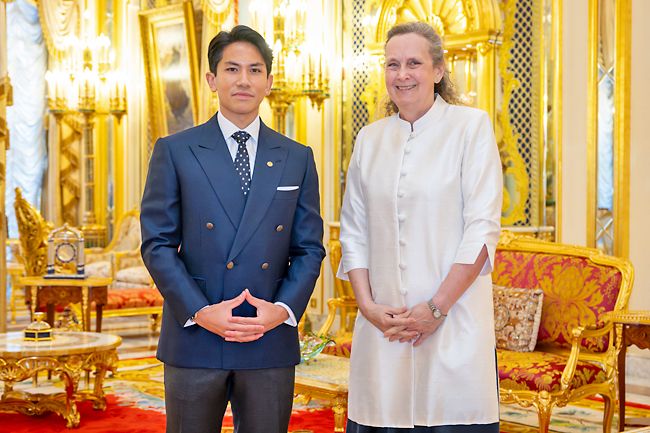
Brunei's Foreign Minister, His Royal Highness Prince 'Abdul Mateen, extended a formal farewell to the United States' departing ambassador on Saturday, June 20, in a ceremony held at Istana Nurul Izzah in Bandar Seri Begawan. The audience with Caryn R McClelland provided an opportunity to mark the conclusion of her diplomatic posting to the sultanate and to reflect on the progress achieved during her tenure representing American interests in one of Southeast Asia's most strategically significant nations.
Prince Mateen used the occasion to commend Ambassador McClelland's efforts in advancing bilateral relations between Brunei and the United States. His remarks underscored the value placed by the sultanate's leadership on maintaining and strengthening the established partnership with Washington, a relationship that has deep historical roots and contemporary strategic importance for both countries in the region.
During her time as ambassador, McClelland oversaw a period of expanded cooperation across multiple sectors critical to both nations' interests. The defence relationship has been particularly noteworthy, reflecting broader American security commitments across Southeast Asia and Brunei's own strategic positioning in the South China Sea. This military and security dimension remains central to the bilateral partnership, especially given regional developments and the shared interest in maintaining freedom of navigation and stability in one of the world's most economically vital maritime corridors.
Educational exchanges have also flourished under McClelland's ambassadorship, with opportunities for Bruneian students to pursue studies in American institutions and collaborative academic programmes expanding. These people-to-people connections form the bedrock of enduring diplomatic relationships, creating networks of alumni and professionals who maintain ties across borders and contribute to mutual understanding long after their academic journeys conclude.
Economic cooperation, encompassing both trade and investment flows, represents another pillar strengthened during the ambassador's posting. As Brunei continues to diversify its economy beyond hydrocarbons and position itself as a regional hub for business and finance, American firms have found increasing opportunities in the sultanate. Simultaneously, Bruneian investors have expanded their presence in the United States, reflecting the reciprocal nature of modern bilateral economic partnerships.
The broader context of these bilateral developments cannot be separated from regional dynamics in Southeast Asia. Brunei, as a member of the Association of Southeast Asian Nations (ASEAN) and chair of ASEAN in 2013, maintains a diplomatic weight that extends beyond its small population and territory. The United States, as a major Indo-Pacific power with substantial economic and security interests in the region, places considerable importance on maintaining strong relationships with ASEAN member states, including the sultanate.
McClelland's tenure, which began when she presented her Letter of Credence to His Majesty Sultan Hassanal Bolkiah in May 2022, spanned a period of significant global and regional transitions. The post-pandemic world saw gradual normalisation of diplomatic engagement and travel, allowing ambassadors to conduct their duties with greater mobility and frequency of in-person interactions than during the heights of COVID-19 restrictions.
The formal nature of farewell audiences reflects diplomatic protocol that honours the contributions of outgoing envoys while providing symbolic closure to their postings. In the context of US-Brunei relations, such ceremonies also serve as moments to reaffirm commitment to partnership frameworks and underscore the continuity of diplomatic engagement beyond individual ambassadors.
For Malaysia and other ASEAN neighbours, the strength of US-Brunei ties carries regional implications. A robust American presence and engagement across Southeast Asia, including in smaller member states like Brunei, contributes to the regional balance of power and reinforces ASEAN's centrality in addressing regional challenges. The sultanate's willingness to maintain close security and economic partnerships with the United States sends signals about regional preferences regarding great power engagement and strategic alignment.
The conclusion of Ambassador McClelland's posting opens a new chapter in US diplomatic representation in Brunei. Her successor will inherit institutional relationships and programme momentum built during her tenure, continuing the work of strengthening connections across defence, education, commerce, and civil society. The transition represents both an ending and a beginning, characteristic of diplomatic cycles that ensure continuity while allowing for fresh perspectives and initiatives.
Brunei's measured but consistent engagement with the United States demonstrates the sultanate's pragmatic approach to international relations. Rather than seeking exclusive partnerships, Brunei maintains balanced ties with multiple powers while preserving its sovereignty and supporting ASEAN unity. This diplomatic equilibrium has served the nation well in navigating complex regional geopolitics and will likely remain central to how future ambassadors from major powers are received and their contributions evaluated.

