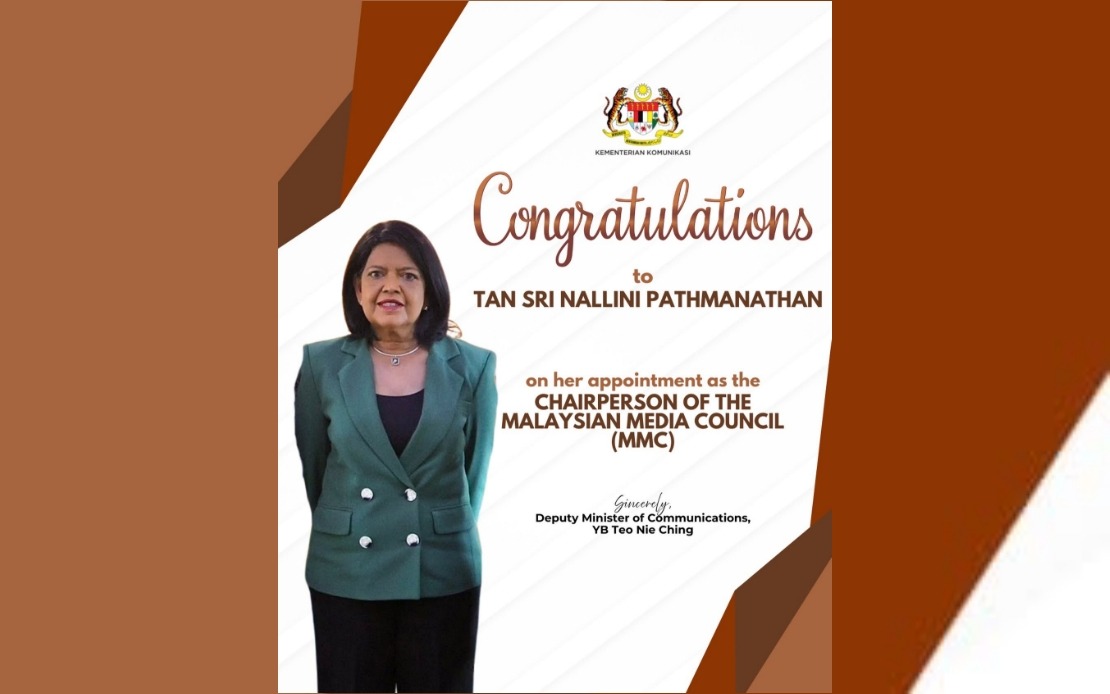
The appointment of Tan Sri Nallini Pathmanathan as chairperson of the Malaysian Media Council marks a significant milestone in Malaysia's media governance landscape, drawing qualified endorsement from Deputy Communications Minister Teo Nie Ching. The decision underscores the government's commitment to establishing a robust self-regulatory framework that insulates the media industry from direct state control—a principle that has long animated discussions about press freedom in Southeast Asia.
Nallini's elevation to this role reflects confidence in her judicial philosophy and constitutional jurisprudence. Throughout her tenure on the Federal Court bench, she demonstrated a consistent willingness to champion expansive interpretations of fundamental rights, particularly in cases affecting vulnerable populations and freedom of expression. Her judicial legacy suggests she brings both intellectual rigor and principled conviction to questions about where state authority legitimately ends and individual liberty begins.
Teo's endorsement specifically invoked Nallini's dissenting judgment in a citizenship case where the majority upheld restrictive constitutional provisions. In that narrow 4-3 decision, Nallini advocated for a purposive reading of constitutional citizenship laws that prioritized compassion and fairness over rigid formalism. This dissent revealed her willingness to push legal boundaries in service of constitutional values, even when departing from prevailing judicial consensus. Such jurisprudential courage carries obvious implications for how she might defend media interests against regulatory overreach.
Equally significant was Nallini's dissenting position in a consequential online publication case, where she ruled that news portals should not bear legal liability for comments posted by third-party subscribers. This judgment directly addressed the tension between platform responsibility and press freedom in the digital age—a question that continues to vex regulators across Southeast Asia. Her stance on this matter suggests she understands the practical realities of modern journalism and the dangers of excessive gatekeeping obligations that could effectively chill speech.
The establishment of the Malaysian Media Council itself represents the culmination of an extraordinarily protracted advocacy campaign spanning five decades. Industry bodies, press associations, and media professionals have persistently lobbied for an independent self-regulatory mechanism that could address complaints and ethical concerns without government involvement. This lengthy gestation period reflects deep skepticism within the media sector about state-administered oversight, a wariness grounded in historical experience and regional patterns. The council's creation under the Malaysian Media Council Act 2025 thus represents a genuine institutional breakthrough.
Teo's framing of media self-regulation as fundamentally distinct from state regulation carries particular resonance given Southeast Asia's varied approaches to press governance. She articulated the essential democratic principle underpinning the council's design: any regulatory apparatus operated directly by government apparatus will inevitably carry the taint of potential oppression, however well-intentioned. The fourth estate functions most effectively when it maintains institutional independence and operates under rules it has participated in fashioning. This logic explains why stakeholders pushed so insistently for a self-regulatory alternative.
Nallini's appointment was unanimously endorsed by members of the MMC Board at a meeting on May 26, signaling institutional consensus around her candidacy. This unanimous support carries weight beyond the merely procedural. It suggests that board members representing diverse media interests and perspectives could coalesce around a figure perceived as principled, intelligent, and genuinely committed to protecting press freedom rather than constraining it. Such cross-sectoral agreement on leadership carries valuable symbolic force.
The implications for Malaysian journalism extend beyond governance architecture. With a respected jurist committed to expansive readings of constitutional rights now heading the council, news organizations may feel greater confidence in pursuing investigations and commentary that push against official preferences. Nallini's dissenting opinions suggest she will resist pressure to interpret the council's mandate in ways that ultimately subordinate media interests to state concerns, even when such subordination might be advocated using reasonable-sounding rationales about social cohesion or public order.
For Southeast Asia more broadly, Malaysia's establishment of an independent media council represents a potential counterweight to tightening regulatory environments visible across the region. Several neighboring jurisdictions have moved toward more restrictive digital media laws and expanded defamation provisions. Malaysia's turn toward self-regulation—undertaken by appointing a figure with genuine judicial standing to protect constitutional rights—might offer an alternative model worth studying. It demonstrates that media accountability need not flow exclusively through government channels.
However, the council's real-world effectiveness will depend on factors beyond Nallini's philosophy or good intentions. The scope of its enforcement powers, the adequacy of its funding, its ability to investigate complaints thoroughly, and the degree to which industry members voluntarily submit to its processes will collectively determine whether it evolves into the "robust, independent, self-regulatory body" that Teo envisioned. Institutional design matters as much as leadership values.
Nallini's appointment also raises questions about the council's internal pluralism and governance. While her presence at the helm carries reassuring implications for press freedom advocacy, the council's ultimate decisions will also reflect the views of board members, staff, and participating media organizations. A strong chair cannot unilaterally transform an institution if other stakeholders pull in different directions. Sustaining consensus around liberal interpretations of press rights will require ongoing commitment across the broader media ecosystem.
The timing of Nallini's appointment, occurring just months after the Malaysian Media Council Act 2025 came into force, allows her to shape institutional culture during the critical formative period. Early decisions about complaint procedures, enforcement standards, and relationships with government agencies will establish precedents that constrain or enable future chairs' latitude. If Nallini uses this window to build protective institutional structures and defend press interests against initial pressure, she will leave a durable legacy extending well beyond her tenure.
Ultimately, Nallini's appointment represents cautious grounds for optimism about Malaysian media governance. Her judicial record demonstrates commitment to constitutional liberties and skepticism about unchecked regulatory authority. Her unanimous selection signals industry buy-in and board confidence. The council's very existence reflects decades of persistent advocacy for alternatives to state oversight. Yet sustained success requires continued vigilance, resource adequacy, and broader stakeholder commitment to self-regulation as a genuine alternative to governmental control.