President Prabowo Subianto's flagship free nutritious meals initiative has been rocked by another leadership crisis, with the National Nutrition Agency's recently appointed chief stepping down after less than two months in the role. Nanik Sudaryati Deyang, who was brought in to restore institutional credibility following a corruption scandal, announced her resignation via Facebook on Wednesday, citing a heart condition and the extraordinary stress of managing the agency's vast budget. Her departure marks the second major leadership change in the programme since June, and underscores deep institutional vulnerabilities in one of Prabowo's most prominent policy commitments.
Nanik's exit came with striking candour about the psychological toll of overseeing the multitrillion-rupiah programme. In posts shared on social media, she revealed that doctors had identified a blocked artery, which she partially attributed to the severe stress caused by her tenure at the helm. She described the burden of safeguarding such massive public funds as standing perilously close to disaster, where any minor error could have devastating consequences. Her refusal to sign off on major decisions unilaterally and her repeated questioning of policies revealed a deeply anxious leadership approach, ultimately unsustainable for someone grappling with deteriorating health. Nanik's candid admission that handling the programme's budget had become a source of "acute trauma" suggests the agency operates under pressure conditions that may be incompatible with stable institutional functioning.
The circumstances surrounding Nanik's appointment and rapid exit deserve closer examination. She had been promoted from her role as deputy under her predecessor, Dadan Hindayana, whose tenure ended dramatically when he and two colleagues were arrested in June on corruption charges linked to procurement and financial irregularities. Prabowo dismissed Dadan shortly before the arrests were made, then turned to Nanik as his choice to rebuild public trust and reassure the Attorney General's Office that governance failings were being addressed. Her inability to sustain the position for even two months suggests that merely rotating personnel without fundamentally restructuring institutional practices may be inadequate to resolve the programme's deeper problems.
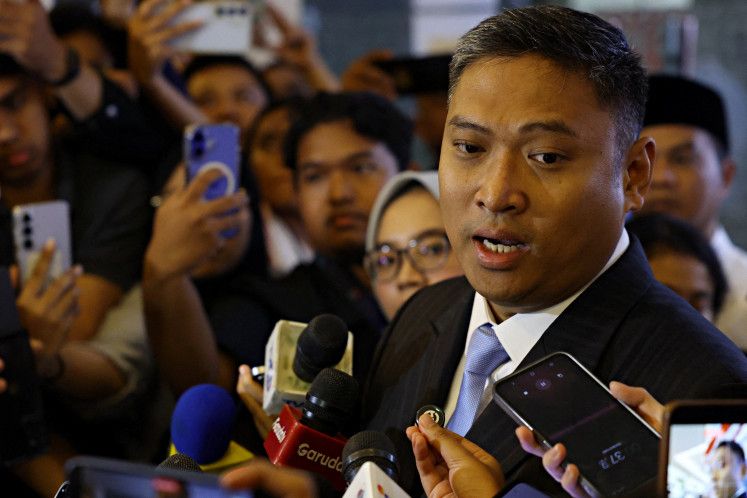
Replacing Nanik with Sudaryono, the Deputy Agriculture Minister, represents a notably different appointment strategy. Sudaryono is both a member of Prabowo's Gerindra Party and served as the President's personal aide during the 2010s, positioning him as someone with direct political proximity to the top decision-maker. This contrasts with Nanik's technocratic background and suggests Prabowo may now be prioritising loyalty and political alignment over external expertise in managing the crisis. During his inauguration at the State Palace, Sudaryono pledged to overhaul operations through transparency measures and digitalisation initiatives, promising that "nothing should happen behind closed doors anymore." Whether such commitments can be operationalised remains uncertain, particularly given the scale of governance challenges already evident.
The programme's operational trajectory reveals a pattern of escalating difficulties since its launch in early 2025. Beyond corruption investigations, the initiative has been plagued by repeated food poisoning incidents affecting multiple locations nationwide, sparking concerns about food safety protocols and kitchen hygiene standards. These public health crises have generated sustained criticism and eroded confidence in implementation capacity. In response, Nanik had imposed a moratorium on new kitchen facilities while undertaking nationwide reviews of existing infrastructure, a pause that prompted fierce resistance from prospective operators who had already invested heavily in preparation. The collision between expansion ambitions and safety imperatives appears to have been a significant source of operational gridlock.
The programme's scope has been substantially recalibrated in recent months, signalling a strategic retreat from its original ambitions. The BGN announced on Tuesday that it had reduced the provisional 2026 budget allocation to Rp229 trillion (approximately US$12.8 billion) from an initial Rp268 trillion projection. More significantly, the beneficiary target for 2026 has been lowered to 62.7 million people, down from an initial allocation intended to serve 82.9 million individuals, which had included schoolchildren, toddlers, and pregnant women. Deputy Chief Agustina Arumsari explained the revised approach by stating that quality improvement has been prioritised over numerical expansion targets, reflecting a tacit acknowledgement that the programme had overextended itself.
These retrenchments carry important implications for Malaysia and the broader Southeast Asian region. Indonesia's free meals initiative was conceived as a signature social programme addressing nutrition security, a challenge shared across the region where many economies face similar challenges in ensuring adequate nutritional intake among vulnerable populations. The programme's visible governance problems provide cautionary lessons about the institutional prerequisites for scaling ambitious universal social schemes. Malaysia's own food assistance and school feeding initiatives, along with similar programmes across Thailand, Vietnam, and the Philippines, can derive valuable insights from observing how institutional capacity, oversight mechanisms, and implementation protocols interact with political timelines.
State Secretary Prasetyo Hadi acknowledged during Wednesday's briefing that the situation represented an outcome "certainly not hoped for," while confirming that Prabowo had directed comprehensive administrative reforms at the agency. Prasetyo justified Sudaryono's selection by noting that he had been involved in developing the free meals concept from its inception, suggesting the President sought someone with foundational understanding of the programme's original design. Yet the revolving leadership raises questions about whether development-stage involvement translates into capacity for managing operational crises and institutional rehabilitation.
Political analyst Wasisto Raharjo Jati offered a diagnosis that captures the fundamental tension underlying the programme's struggles. He characterised the recurring crises as reflecting "shortcomings in planning," observing that despite its elevated political status within the administration, the initiative has been "driven more by political ambition than technocratic preparation." This assessment highlights a recurrent challenge in ambitious policy implementation: the gap between campaign promises and institutional readiness. The free meals programme illustrates how high-profile political commitments can create timeline pressures that outpace the development of necessary administrative infrastructure, quality assurance systems, and corruption-prevention safeguards.
Looking ahead, the critical test for Sudaryono's tenure will be whether his promised digitalisation and transparency measures can address the fundamental structural weaknesses that have produced both corruption and operational failures. The appointment of a politically trusted figure may facilitate decision-making within the executive, but the core challenges—establishing reliable procurement systems, ensuring consistent food quality, managing kitchen facility networks across an archipelago with vast geographic diversity, and preventing resource misappropriation—require sustained institutional capacity that transcends any individual leader's tenure. The programme's trajectory will likely reflect broader questions about Indonesia's capacity for implementing large-scale, geographically dispersed social initiatives with adequate oversight and quality assurance at the local implementation level.

