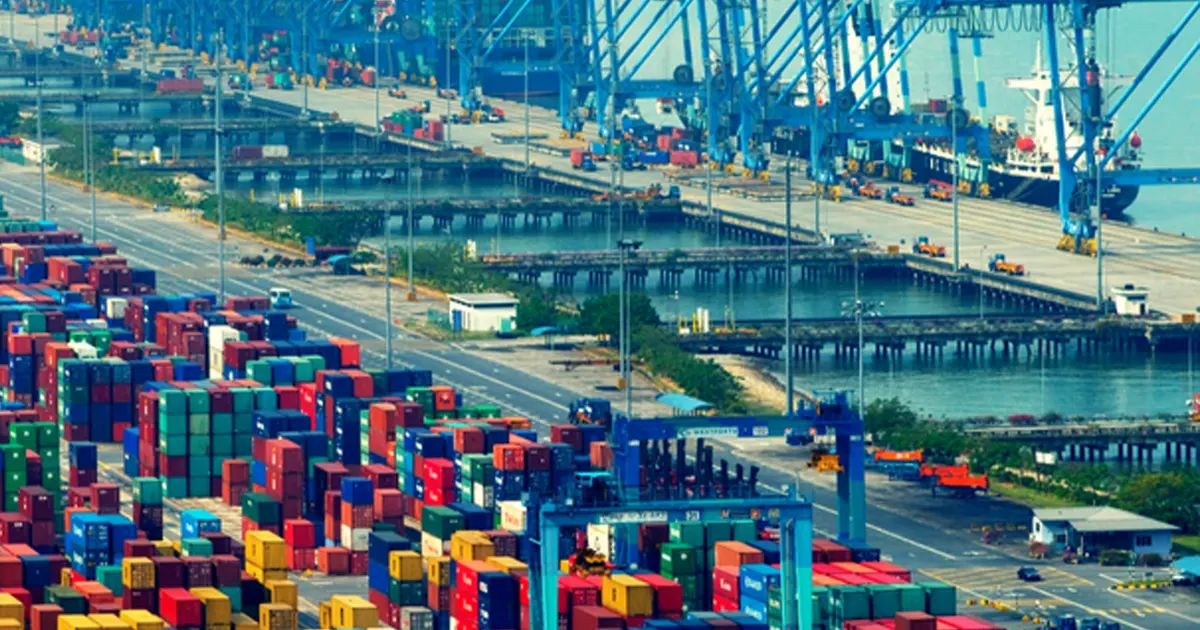
The Port Klang Free Zone (PKFZ) is experiencing a marked turnaround, with Transport Minister Loke Siew Fook announcing that the troubled facility has captured RM108 million in revenue whilst accelerating the reactivation of its sprawling infrastructure. The achievement underscores a deliberate policy shift away from the zone's troubled past, with the ministry reporting that 86 per cent of facilities have now been brought back into operational use. This progress, accumulated over the preceding 18 months, represents a significant waypoint in the government's broader strategy to rehabilitate the port and restore its competitiveness within Southeast Asia's bustling shipping and logistics sector.
The PKFZ's recovery carries particular weight for Malaysia's trade ambitions. Positioned at the gateway to the Strait of Malacca and servicing the greater Klang Valley industrial heartland, the facility has historically functioned as a critical node for transshipment, warehousing, and value-added manufacturing. Its earlier dysfunction created cascading inefficiencies that rippled across supply chains and deterred multinational logistics operators from basing operations here. The ministry's reactivation drive directly addresses these vulnerabilities, signalling to regional traders and investors that the zone is once again a reliable hub for commerce.
The RM108 million revenue figure warrants contextual analysis. Whilst the absolute sum may appear modest relative to the zone's potential capacity, it reflects genuine business revival rather than accounting manoeuvre. Each contract secured and lease activated represents a concrete vote of confidence from operators who evaluate competing hubs across Singapore, Thailand, and Indonesia. The fact that firms are committing resources to the PKFZ indicates that operational improvements and governance reforms have crossed a credibility threshold. For the Malaysian logistics sector, this incremental recovery staves off further brain drain to rival ports and supports the broader Klang Valley industrial ecosystem.
The 86 per cent reactivation metric illuminates the scope of remedial work undertaken. Bringing facilities back online requires far more than administrative sign-off—it entails physical infrastructure upgrades, technology integration, regulatory clarification, and skilled workforce repositioning. Every percentage point gained represents resolved bottlenecks and restored operational relationships. The sustained pace of progress suggests that the ministry has maintained consistent momentum, avoiding the stop-start cycles that plagued earlier recovery attempts. This consistency matters enormously for private-sector planners deciding whether to commit capital.
The Transport Ministry's stewardship of PKFZ reform sits within a broader reshaping of Malaysia's transport infrastructure strategy. Under Loke Siew Fook's tenure, the ministry has pursued a pragmatic blend of debt restructuring, operational rationalisation, and capacity expansion across ports and gateways. The PKFZ revival forms part of this larger endeavour to ensure that Malaysia's physical infrastructure does not become a drag on competitiveness. Given intense regional competition from Indonesia's Tanjung Priok and Thailand's Laem Chabang ports, every efficiency gain in Malaysian facilities translates to retained market share and job creation.
The 18-month window cited by the minister corresponds with renewed accountability mechanisms and governance oversight. Transparency improvements and clearer performance metrics have evidently made a difference, though the work remains unfinished. Reaching 86 per cent reactivation still leaves 14 per cent of the facility offline, suggesting pockets of persistent dysfunction or lower demand for specific facilities. Understanding these remaining gaps will shape the next phase of recovery, determining whether the zone can climb toward full utilisation or whether certain assets face permanent obsolescence.
For Malaysian shippers and manufacturers, the PKFZ's recovery reduces logistics costs and friction. Domestic exporters gain improved transshipment options without routing cargo through foreign hubs, preserving value within Malaysia's economy. Importers benefit from competitive warehousing and consolidation services. The multiplier effects—in jobs, in supporting services, in regional commerce—extend well beyond the zone itself into Port Klang's broader operating environment.
The ministry's achievement must also be weighed against international freight dynamics. Global container volumes remain volatile, with post-pandemic restructuring still unfolding. Regional consolidation among shipping lines and the rise of mega-vessels have redefined port economics, favouring deepwater terminals with advanced automation and direct mainline connectivity. PKFZ's revival depends not merely on internal improvements but on positioning itself within this transformed seaborne trade architecture. The 86 per cent reactivation figure provides heartening proof of concept, yet sustained momentum will hinge on capturing incremental trade growth rather than relying solely on market recovery.
Looking ahead, the ministry faces the challenge of sustaining reactivation momentum whilst addressing structural factors that hampered PKFZ's earlier development. Digital integration, skilled workforce development, and regulatory harmonisation with neighbouring ports will determine whether the current recovery trajectory persists. The RM108 million revenue and 86 per cent reactivation figures represent genuine progress, but they are waypoints rather than endpoints. Success ultimately depends on whether PKFZ can establish itself as the operator of choice for regional logistics players seeking efficient, trustworthy Malaysian infrastructure.