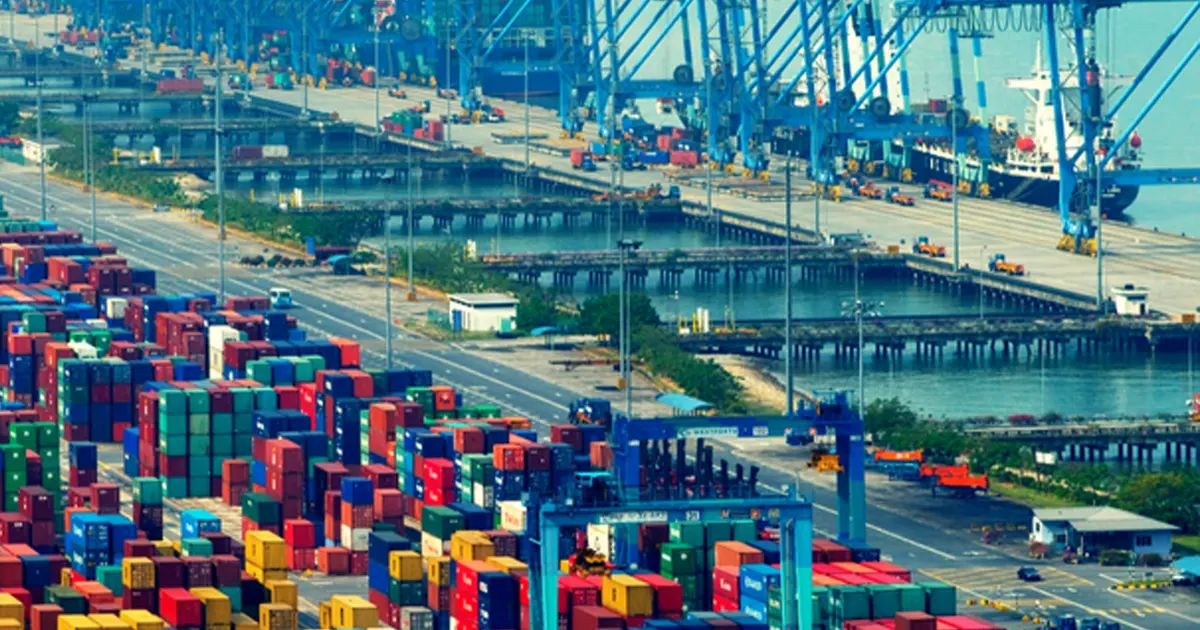
The Port Klang Free Zone has demonstrated substantial momentum in its recovery trajectory, generating RM108 million in revenue as its reactivation programme approaches full operational capacity at 86 per cent. Transport Minister Loke Siew Fook has underscored the facility's turnaround, describing the performance over the preceding 18 months as a period of steady and encouraging expansion.
The PKFZ, which serves as a critical logistics hub on Malaysia's western corridor, had faced significant operational and reputational challenges in preceding years. The facility's resurgence reflects a broader strategic repositioning aimed at restoring confidence among business stakeholders and international freight operators who had retreated during its troubled period. The reactivation rate figure indicates that the zone is now functioning substantially closer to its intended design capacity, with the majority of storage, warehousing, and value-added service operations returning to active status.
Revenue generation of this magnitude signals renewed commercial viability and investor confidence in the free zone model as a competitive logistics proposition within the Southeast Asian supply chain landscape. The steady growth trajectory under the transport ministry's direct engagement suggests that institutional reforms and improved governance frameworks have begun yielding tangible commercial outcomes. For Malaysian businesses involved in import-export activities, the zone's revival offers expanded options for customs-efficient storage, inventory management, and light manufacturing operations without incurring import duties.
The facility's recovery holds particular significance given Malaysia's positioning as a transhipment hub competing against established centres like Singapore and regional alternatives in Indonesia and Thailand. The PKFZ's operational efficiency and cost-effectiveness compared to conventional port-based facilities make its revival strategically important for the nation's logistics competitiveness. Shippers and freight forwarders operating through Port Klang can now increasingly leverage the zone for supply chain optimisation, particularly for goods destined for ASEAN markets where the zone's location provides geographic advantages.
The 86 per cent reactivation milestone represents substantive progress from the facility's nadir, when significant portions remained vacant and underutilised despite infrastructure investment. This recovery pattern mirrors broader efforts across Southeast Asia to enhance logistics infrastructure in response to accelerating e-commerce, supply chain reorganisation away from China, and increasing regional trade integration. The PKFZ's improved performance therefore carries implications beyond Port Klang itself, affecting pricing and availability of logistics services throughout Malaysia's commercial ecosystem.
Transport ministry involvement in the PKFZ's oversight marks a significant departure from earlier operational frameworks, suggesting that direct government coordination with facility management has addressed previous coordination failures between port operations, customs clearance, and free zone administration. The integration of these functions appears to have streamlined processes that previously frustrated international operators and domestic businesses attempting to utilise the zone's purported advantages. Improved administrative responsiveness and clearer operational protocols have likely contributed to the gradual return of dormant commercial activities.
The revenue figures warrant contextualisation within the free zone's total revenue-generating potential and comparable performance at competing regional facilities. While RM108 million represents measurable achievement, the trajectory's sustainability will depend on consistent service quality, competitive pricing against established alternatives, and the zone's ability to attract value-added manufacturing and processing operations beyond simple warehousing. The distinction between revenue recovery and fundamental business model viability remains crucial for assessing the facility's long-term prospects.
Stakeholder confidence metrics will likely prove decisive in sustaining the reactivation momentum beyond the current 86 per cent threshold. International logistics providers and major shippers evaluate free zone facilities based on reliability, regulatory predictability, and total cost of operations rather than static facility capacity. The PKFZ's reputation recovery will require consistent operational excellence over an extended period before attracting the high-margin, sophisticated supply chain operations that would justify the facility's infrastructure investments.
The recovery also reflects broader Malaysian port sector dynamics, including recent capacity upgrades at Port Klang itself and increased container throughput driven by regional trade flows. The free zone operates symbiotically with the main port facility, and simultaneous improvements in both components strengthen the overall competitive position against neighbouring jurisdictions. Malaysian companies requiring customs-privileged logistics operations now face improved options compared to outsourcing such functions to Singapore or other regional centres, with potential cost and operational efficiency benefits.
Looking forward, sustaining the reactivation trajectory will require continued strategic investment in value-added service capabilities, digital integration with customs and logistics systems, and competitive service pricing relative to regional alternatives. The transport ministry's commitment to the facility's development, as demonstrated through Loke Siew Fook's endorsement, suggests ongoing institutional support for infrastructure improvements and operational enhancements. The critical challenge involves converting the current momentum into permanent competitive positioning rather than cyclical recovery that remains vulnerable to shifting trade patterns and regional competition.

