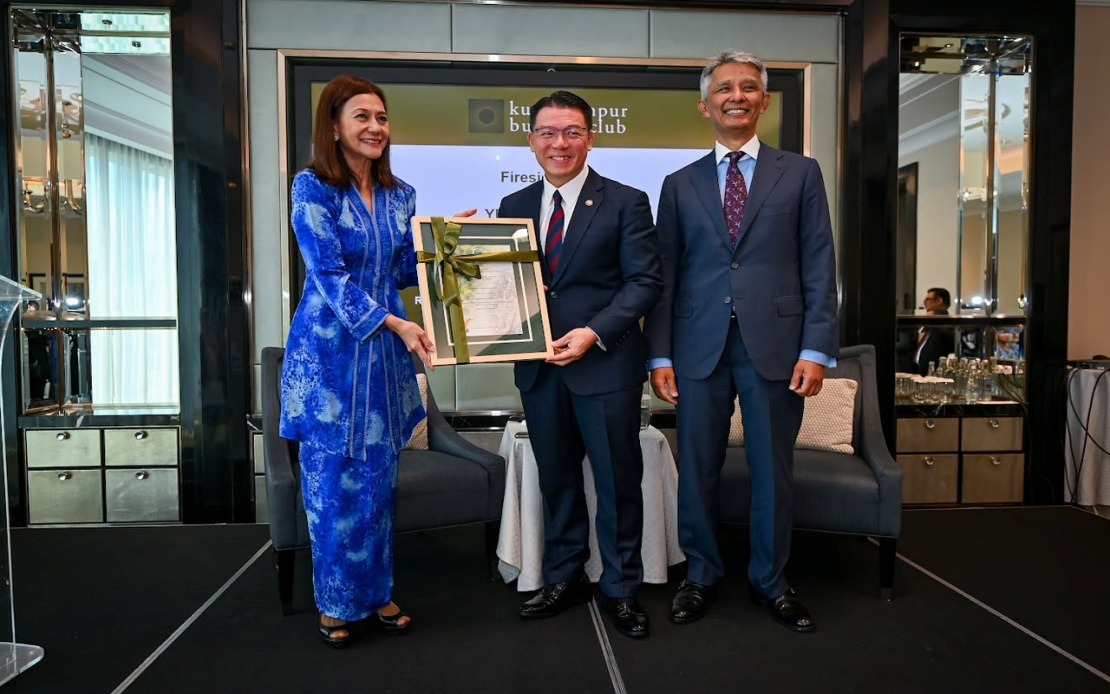
Malaysia's economic transformation depends fundamentally on sustained policy continuity, according to Housing and Local Government Minister Nga Kor Ming, who outlined how the government's MADANI framework must be maintained to lock in reform gains and achieve lasting structural change. Speaking at a fireside chat hosted by the Kuala Lumpur Business Club, Nga underscored that staying the course on current initiatives is critical to converting short-term improvements into enduring competitive advantages for the nation's economy.
The minister's remarks highlight a growing recognition within government circles that Malaysia's recent economic gains require more than one-off policy announcements or cyclical reforms. Instead, the argument goes, transformative change demands an unwavering commitment to institutional strengthening and governance improvements that can weather political transitions and market volatility. This perspective carries particular weight in Southeast Asia's competitive landscape, where neighbouring economies like Vietnam and Thailand are aggressively pursuing their own modernisation agendas.
Under Prime Minister Datuk Seri Anwar Ibrahim's leadership, the MADANI government has introduced reforms spanning public governance, economic stewardship, and international relations. These initiatives have generated measurable outcomes, Nga noted, including improved perceptions of corruption control and stronger international credit assessments. Malaysia's positioning as an investment destination has benefited from these signals of institutional improvement, attracting capital that might otherwise flow to competing regional economies with similar development levels.
One tangible metric of reform success is Malaysia's movement on the Corruption Perceptions Index, a closely watched indicator for international investors evaluating country risk. Coupled with enhanced fiscal credibility reflected in upgraded sovereign ratings, these improvements create a foundation upon which longer-term economic strategy can be built. However, such gains remain vulnerable to policy reversals or inconsistent implementation, which explains why Nga emphasised that a sustained governance mandate is necessary to prevent backsliding.
The minister pointed to Malaysia's resurgence as a preferred investment destination, attributing this partly to transparent policy frameworks and demonstrated political stability. Clear investment rules and predictable governance reduce business uncertainty and lower capital costs for companies considering Malaysian operations. In an era when geopolitical tensions and economic protectionism create headwinds for regional trade, such policy clarity becomes a valuable differentiator that attracts foreign direct investment that might otherwise concentrate in larger economies like Indonesia or Thailand.
An important dimension of this continuity agenda involves Malaysia's expanding international partnerships. Nga cited major collaborative frameworks, including a RM52.73 billion strategic partnership with Turkmenistan and developing energy cooperation with Russia, as fruits of consistent foreign policy engagement. These initiatives illustrate how sustained diplomatic direction creates space for economic partnerships that diversify Malaysia's growth sources and reduce dependence on traditional trading partners. Building such relationships requires time and demonstrated reliability—qualities that policy volatility can undermine.
The housing minister's emphasis on structural reform carries particular relevance for Malaysia's urban development trajectory. The Kuala Lumpur Business Club session was themed around how MADANI reforms are reshaping the nation's urban economy, suggesting that housing, infrastructure, and city planning are viewed as integral to broader transformation goals. This integrated approach differs from treating urbanisation as a separate policy domain and instead positions it as interconnected with governance quality, investment climate, and long-term competitiveness.
For Malaysian businesses and investors, continuity signals offer practical benefits. Companies undertaking capital-intensive projects or long-term market development strategies require confidence that regulatory frameworks and macroeconomic conditions will remain stable. Policy unpredictability imposes hidden costs through deferred investment decisions and higher risk premiums on Malaysian operations. By contrast, demonstrated commitment to reform trajectories encourages Malaysian and foreign firms to expand operations, hire talent, and invest in capabilities that deepen economic roots.
The broader implication of Nga's framing is that Malaysia's current economic vulnerabilities—exposure to global trade fluctuations, competition from lower-cost manufacturing hubs, and technological disruption—require solutions that only accumulated institutional strengthening can provide. Quick fixes or temporary stimulus measures address symptoms rather than underlying structural challenges. Real transformation requires patient, consistent effort across multiple policy domains simultaneously, which is difficult to achieve without sustained political will and coherent government strategy.
Southeast Asian observers might also note that Malaysia's emphasis on policy continuity comes amid regional competition for investment and talent. Vietnam has benefited from consistent foreign investment strategies over decades; Singapore derives competitive advantage partly from predictable governance and continuous institutional evolution. Malaysia's argument is that it must compete on similar terms—offering investors not just current attractiveness but confidence in sustained institutional quality over investment horizons spanning years or decades.
The challenge for Malaysia's policymakers lies in translating these principles into concrete action. Maintaining consistent direction requires not just political leaders' pronouncements but embedding reforms into institutional structures that survive leadership transitions. This might involve establishing independent regulatory bodies with protected mandates, embedding reform commitments in legislation rather than executive decrees, and building broad political consensus that makes reversals costly. Without such institutionalisation, promises of policy continuity risk remaining rhetorical rather than transformative.
For Malaysian investors and businesses navigating economic uncertainty, Nga's message offers modest reassurance that government recognises continuity's importance. However, the critical test will come in implementation—whether promised consistency translates into actual policy stability when economic pressures mount or political circumstances shift. Building and maintaining investor confidence requires more than speeches; it demands demonstrable, sustained commitment across successive electoral cycles and diverse policy challenges.

