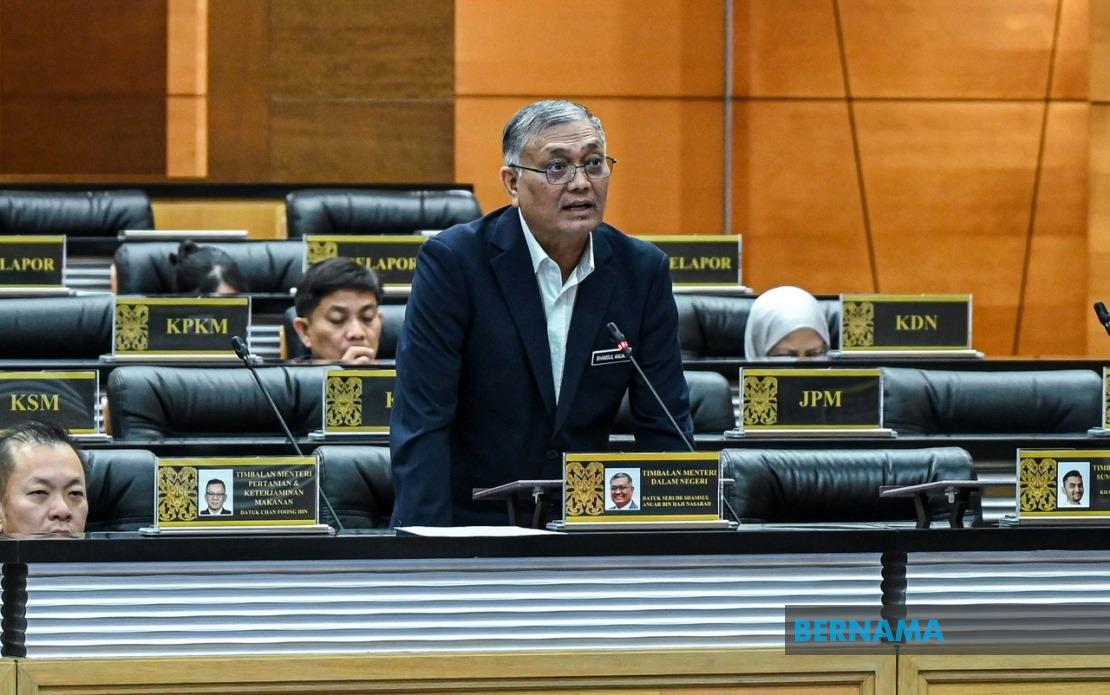
Malaysia's police force operates without bias or favoritism when investigating high-profile cases, according to Deputy Home Minister Datuk Seri Dr Shamsul Anuar Nasarah, who made the assurance during parliamentary proceedings in Kuala Lumpur. His statement addressed longstanding public concerns about whether individuals in powerful positions receive special treatment during sensitive investigations, a question that has periodically emerged in Malaysian political discourse.
The deputy minister's comments came in response to parliamentary queries regarding the status of several significant investigations, most notably the case involving an intimate video recording that circulated widely across social media platforms in 2019. That incident had connections to a former member of the Cabinet, lending it considerable political and public attention. Shamsul Anuar indicated that police efforts remain focused on locating the original video file and identifying all technological devices and systems that may have been involved in its production and distribution.
The investigation into the 2019 intimate video case involves multiple legal statutes, demonstrating the complexity of the matter. Authorities are pursuing charges under Section 292, Section 377B, and Section 504 of the Penal Code, which cover various offences related to obscene materials and defamation. Additionally, the Communications and Multimedia Act 1998 provides another legal framework, specifically Section 233, which addresses offensive content transmitted through digital channels. This multi-statute approach suggests investigators are examining the case from several angles simultaneously.
Shamsul Anuar's emphasis on professional and transparent investigation procedures reflects ongoing efforts by Malaysia's law enforcement to counter perceptions that political connections or governmental rank might influence the pace or direction of inquiries. Such perceptions, whether warranted or not, can undermine public confidence in the impartiality of the justice system. By explicitly stating that police decisions do not hinge on "the position or political affiliation of any party," the deputy minister sought to reinforce the institutional independence that Malaysia's security forces maintain during sensitive probes.
In a related matter that has drawn significant scrutiny, the Malaysian Anti-Corruption Commission (MACC) continues investigating allegations involving the son-in-law of former Prime Minister Tan Sri Muhyiddin Yassin. The MACC has already taken the decisive step of issuing an arrest warrant in connection with this case, signaling that authorities have accumulated sufficient preliminary evidence to justify such action. Shamsul Anuar declined to elaborate further on the specifics, citing the ongoing nature of the investigation and the MACC's lead role in the matter.
The compartmentalization of investigation responsibilities between police and the MACC illustrates Malaysia's institutional approach to handling cases that involve allegations of misconduct by persons in high office. By delegating corruption-related investigations to a specialized anti-corruption body rather than general police authorities, the system aims to reduce the potential for political influence or conflicts of interest. However, this division of labor also creates potential complications when cases involve overlapping criminal and anti-corruption elements.
Beyond domestic investigations, Shamsul Anuar addressed the broader framework governing international legal cooperation, particularly extradition procedures. He noted that Malaysia's approach to extradition is governed by the Extradition Act 1992 and various bilateral and multilateral treaties. Currently, Malaysia maintains formal extradition agreements with eleven countries, providing legal mechanisms for pursuing suspects who flee across international borders.
The Deputy Home Minister highlighted Malaysia's participation in the ASEAN Extradition Treaty, which creates a regional legal framework binding member states to cooperate in returning individuals wanted for prosecution. This multilateral approach strengthens the capacity of Southeast Asian nations to address transnational crime and prevent fugitives from exploiting jurisdictional gaps. For Malaysia specifically, participation in such agreements reflects its commitment to regional security and rule of law principles.
Looking forward, Shamsul Anuar indicated that Malaysia remains willing to negotiate additional extradition treaties with countries where such arrangements do not yet exist. This proactive stance suggests recognition that as global mobility increases and criminal enterprises become more internationalized, Malaysia's law enforcement capabilities depend increasingly on robust international cooperation mechanisms. Each new treaty expands the practical tools available to police and other agencies seeking to bring suspects to justice.
The deputy minister's parliamentary statements, taken collectively, present an official reassurance that Malaysia's approach to investigating sensitive cases attempts to reconcile two potentially competing objectives: ensuring that no individual receives preferential treatment due to political standing, while simultaneously respecting due process and legal procedures throughout investigative work. Whether public perception aligns with these official assurances remains a separate question that continues to occupy space in Malaysian political and social discourse.
For Malaysian observers and regional analysts, these clarifications matter considerably given the country's history of high-profile investigations that have sometimes drawn criticism regarding their pace, transparency, or apparent selectivity. The explicit reiteration that investigations proceed "professionally, transparently and fairly" without regard to political affiliation represents an important articulation of institutional principle, even as observers remain attentive to whether implementation consistently matches rhetoric.

