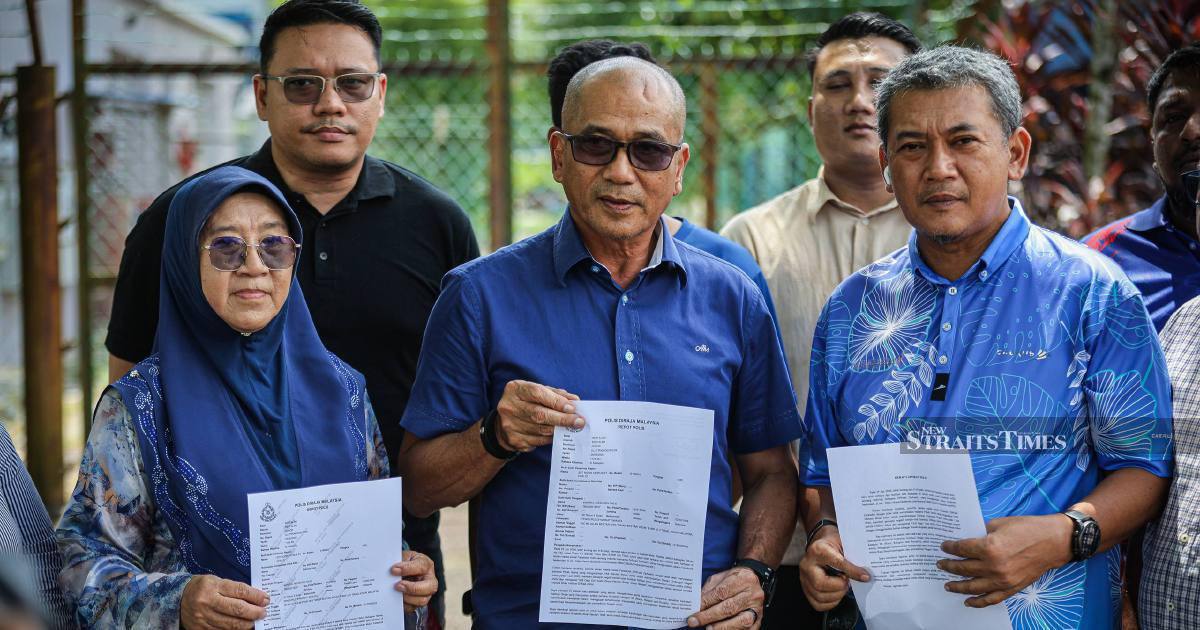
The political landscape in Johor has grown more turbulent following the decision by multiple Barisan Nasional members from the state to lodge police reports against Datuk Dr Mohd Puad Zarkashi, a former member of Umno's supreme council. The reports were triggered by Zarkashi's recent public statements in which he alleged that the Johor palace exerts considerable influence over the direction of state Umno and its affiliated political structures.
Zarkashi's allegations have struck at sensitive terrain within Malaysian politics, where the relationship between royal institutions and political organisations remains constitutionally complex and culturally significant. In the Malaysian context, and particularly within Johor, the role of the Sultan has historically carried considerable weight in state governance and party affairs, though the precise boundaries of acceptable royal involvement in partisan politics remain contested. Zarkashi's decision to air these claims publicly has evidently crossed lines that party loyalists felt compelled to defend through formal police action.
The filing of multiple police reports by Barisan Nasional figures underscores the deep divisions that have emerged within Johor's political establishment. Rather than engaging Zarkashi's specific allegations through internal party mechanisms or public debate, the decision to pursue a police avenue suggests that party leadership views the claims as sufficiently damaging or legally actionable to warrant intervention by law enforcement authorities. This approach reflects broader tensions within the ruling coalition regarding internal criticism and the acceptable scope of political discourse.
Johor occupies a unique position within Malaysia's federal system, given the state's size, economic importance, and the substantial powers traditionally retained by its monarchy. The sultanate has historically maintained influence over key state institutions and personnel appointments, dynamics that become particularly pronounced during politically volatile periods. Zarkashi's willingness to articulate concerns about palace influence suggests growing frustration among certain segments of the political elite regarding the constraints this relationship imposes on their autonomy.
The incident also reflects broader patterns of contestation within Umno itself, where factional disputes have intensified considerably in recent years. Different camps within the party have adopted varying positions on how much input the royal institution should exercise in party and governmental decisions. Zarkashi's former status as a supreme council member indicates he remains a figure of some standing, lending additional weight to his public comments and potentially explaining why party members felt obliged to respond forcefully.
For Malaysia's broader political ecosystem, this episode illustrates the delicate equilibrium required to manage relationships between traditional monarchical institutions and contemporary party politics. The Constitutional framework permits royals considerable scope in certain governance matters, yet modern democratic expectations and party dynamics create recurring friction points. When political figures begin articulating grievances about royal involvement in party affairs, it signals underlying structural tensions that transcend individual personalities.
The decision to pursue police action rather than internal political resolution also raises questions about the health of dispute-resolution mechanisms within the ruling coalition. Traditionally, intra-party disagreements have been addressed through party structures and leadership intervention, with recourse to law enforcement considered a more extreme measure. That this boundary appears to have been crossed suggests either escalating animosity or a strategic calculation that legal mechanisms offer advantages over purely political responses.
Zarkashi's allegations carry particular significance given Johor's role as a critical electoral battleground. The state's Barisan Nasional seats constitute a meaningful portion of the coalition's parliamentary representation, and maintaining party cohesion there has proven increasingly challenging amidst broader shifts in Malaysian electoral dynamics. Any suggestion of palace interference in party management threatens to undermine internal confidence and create opportunities for opposition parties to exploit divisions.
The timing of these events within Johor's political calendar also merits consideration. If this confrontation occurs during periods of internal leadership transitions or policy reassessment, it may reflect underlying disputes over the direction of state governance rather than purely personal grievances between political figures. Zarkashi's allegations could serve as a vehicle for expressing broader frustrations regarding decision-making processes and the influence wielded by traditional power structures.
From a Southeast Asian perspective, Malaysia's experience managing the intersection between monarchical traditions and democratic party competition offers lessons relevant to other regional states grappling with similar constitutional dynamics. The capacity to accommodate both hereditary royal authority and competitive electoral politics remains a distinctive feature of Malaysian governance, yet recent incidents suggest this balance grows more precarious as generational changes and democratic expectations evolve.
Looking forward, the trajectory of these police reports and any subsequent legal proceedings will likely reveal much about current power configurations within Johor Barisan Nasional and the broader coalition. The extent to which authorities choose to pursue the reports actively, and what outcomes emerge, will signal important messages regarding permissible boundaries for discussing palace involvement in party politics. Such clarifications, while potentially uncomfortable for some, may ultimately prove necessary for establishing clearer understandings about the appropriate division between traditional institutions and modern party management.

