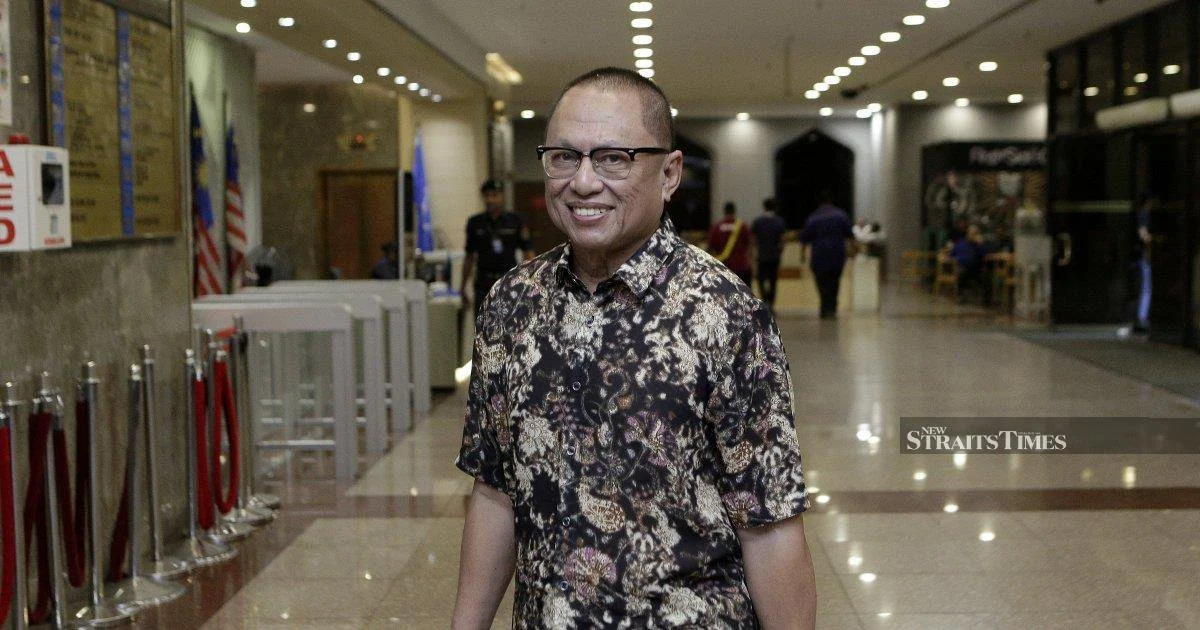
Authorities in Johor Baru have begun a formal investigation into allegedly controversial remarks posted by former Umno veteran Datuk Dr Mohd Puad Zarkashi on social media platforms, following a wave of public complaints. The decision to launch the probe came after police received 153 reports filed by citizens throughout the country, indicating substantial public concern over the statements in question.
The breadth of complaints filed across multiple jurisdictions highlights the divisive nature of Puad Zarkashi's online commentary. Rather than a localised issue confined to a single state or community, the reports reflect nationwide reaction to his social media activity, demonstrating how digital platforms can rapidly amplify contentious political messaging and mobilise public response across geographical boundaries. This nationwide reporting pattern underscores the growing significance of social media discourse in shaping public opinion and triggering official scrutiny of political figures' online conduct.
Puad Zarkashi, a longstanding figure within Umno's political establishment, has wielded considerable influence within the party hierarchy. His social media presence carries particular weight given his status and background, making his online statements subject to heightened public attention and scrutiny. The decision by numerous citizens to file formal complaints suggests that his remarks were perceived as sufficiently serious or offensive to warrant police intervention, rather than remaining confined to the realm of typical political debate.
The investigation's initiation marks an important moment in Malaysia's ongoing reckoning with how political speech—particularly when conducted through social media—intersects with the nation's laws governing sedition, religious sensitivity, and public order. The police force's engagement signals that the remarks in question potentially crossed thresholds that authorities deem warrant formal examination, though the specific nature of the allegations remains to be clarified through the investigative process.
The involvement of 153 separate reports underscores how Malaysian citizens increasingly utilise police reporting mechanisms to address content they perceive as problematic. This trend reflects growing digital literacy and awareness of available legal channels, though it also raises questions about the volume of reports that police resources must now process and investigate in an increasingly interconnected and socially mediated political environment. The sheer number suggests either deeply offensive content, or systematic mobilisation of complaint-filing efforts by organised groups.
For Umno and the broader Malay-Muslim political establishment, the controversy presents a complex situation. Puad Zarkashi's status as a respected party veteran means that criticism of his remarks carries implications for institutional credibility and party unity. The investigation could intensify internal party tensions, particularly if findings suggest his conduct violated party discipline or public interest principles that the organisation purports to uphold.
The investigation's outcome will likely establish important precedents for how Malaysian authorities handle political speech on digital platforms. Whether the police ultimately determine that the remarks constitute unlawful conduct or simply reflect protected political expression will influence how politicians across the spectrum—and their supporters—calibrate their social media engagement moving forward. The investigation thus transcends the individual case to address systemic questions about acceptable boundaries for political discourse in the digital age.
For Southeast Asian observers, the episode illustrates broader regional tensions surrounding political speech, religious sensitivities, and state oversight of digital communication. Malaysia's approach to investigating such matters differs from approaches in Singapore, Indonesia, and Thailand, reflecting distinct constitutional frameworks, established precedent, and political cultures. The investigation's trajectory may inform comparative perspectives on how democracies in the region balance free expression with public order concerns.
The investigation also emerges against Malaysia's broader political backdrop, where Umno has faced sustained internal challenges and public criticism. Puad Zarkashi's remarks, whatever their specific content, arrive during a period when Umno's institutional cohesion and public reputation remain contested issues. The controversy risks amplifying perceptions of internal party disarray or enabling critics to portray Umno figures as engaging in irresponsible speech patterns.
As police conduct their preliminary investigation, attention will focus on whether the remarks constitute violations under existing legislation such as the Sedition Act, Communications and Multimedia Act, or other relevant statutes. The investigation will determine whether the statements targeted religious groups, advocated violence, undermined state institutions, or crossed other legally defined boundaries. These determinations will substantially influence whether charges are ultimately pursued.
The investigation's progression will be closely monitored by civil society organisations, legal experts, and political observers concerned with protecting fundamental freedoms while maintaining public order. The case has potential to become a significant test case for how Malaysian courts and authorities interpret political speech protections against competing interests in an era of rapid digital communication.

