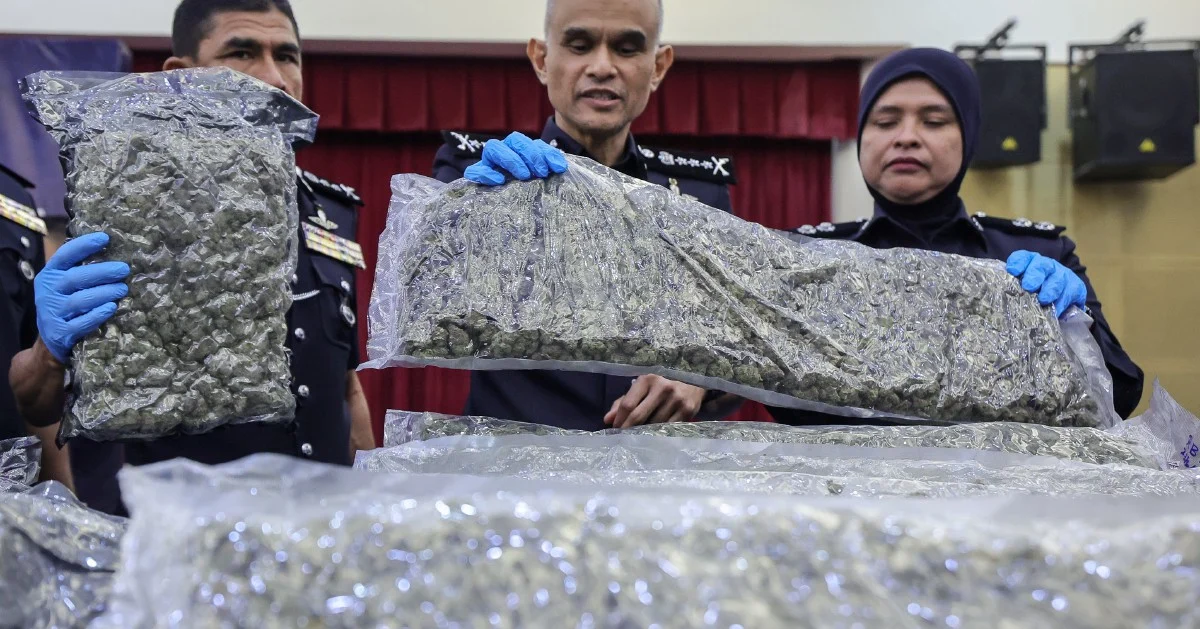
Malaysia's drug enforcement agencies have achieved a significant breakthrough in combating international narcotics trafficking, seizing more than 650 kilograms of cannabis buds at Kuala Lumpur International Airport and apprehending 38 suspects linked to organised drug distribution networks. The haul represents one of the larger cannabis interdictions at the country's primary aviation gateway in recent months and underscores the mounting sophistication of trafficking operations attempting to use Malaysia's transport hub as a transit point for Asian markets.
The operation, spanning from January onwards, demonstrates the evolving threat landscape facing Malaysian law enforcement as criminal syndicates increasingly exploit airport infrastructure and international cargo channels. The sheer volume of confiscated material points to a distribution network designed to serve multiple downstream markets across the region, rather than isolated shipments for domestic consumption. That both Malaysian and foreign nationals feature among those arrested suggests an international operation with coordinated roles across different jurisdictions, a pattern consistent with larger transnational criminal enterprises operating throughout Southeast Asia.
The strategic importance of KLIA in regional drug flows cannot be overstated. As one of Asia's busiest aviation hubs, the airport processes hundreds of thousands of passengers and tonnes of cargo daily, creating inherent challenges for border enforcement even with advanced screening technology. Traffickers exploit this volume by deploying numerous small shipments, concealment methods that evolve faster than detection protocols, and recruitment of couriers spanning multiple nationalities who can navigate security checkpoints with varied travel patterns.
The cannabis seizure reflects broader patterns emerging across Southeast Asia's drug markets. While heroin and methamphetamine have historically dominated regional trafficking flows, cannabis availability has surged following cultivation expansions in Thailand and other producing regions, alongside growing demand from younger urban consumers and medical users operating in legal grey zones. This commodity shift presents enforcement challenges, as cannabis often commands lower per-unit detection priority than harder substances, yet generates substantial profits for organised crime groups when trafficked in bulk.
Cancer patients seeking alternative treatments and recreational users in jurisdictions with decriminalised frameworks have created legitimate-appearing demand that criminals exploit for cover. The timing and composition of the seized material—cannabis buds rather than processed products—suggests source cultivation rather than in-country processing, likely originating from production centres that have proliferated following Thailand's agricultural diversification into cannabis cultivation.
The arrest of 38 individuals represents substantial disruption to trafficking operations, though enforcement specialists note that dismantling major networks typically requires sustained investigation beyond initial seizures. Interrogation of detained suspects generally yields intelligence on source suppliers, transport coordinators, and downstream distribution endpoints, generating leads for follow-up operations. The inclusion of foreign nationals suggests investigation of their home countries' involvement, potentially triggering information-sharing protocols with international partners through Interpol and bilateral arrangements.
Malaysia's Dangerous Drugs Act carries severe penalties including capital punishment for trafficking large quantities, providing strong deterrent potential. However, enforcement officials acknowledge that despite harsh legal consequences, the profit margins in narcotics distribution—particularly for transnational operations—continue motivating recruitment of low-level couriers willing to accept personal risk. Economic desperation in source countries and transit zones ensures supply of expendable operatives, creating a persistent challenge for demand-reduction strategies.
The airport seizure complements broader Malaysian drug enforcement efforts that have intensified across ports, land borders, and postal facilities. Neighbouring Thailand's recent policy adjustments toward cannabis decriminalisation and medical legalisation have complicated enforcement dynamics, creating arbitrage opportunities for traffickers who exploit regulatory divergence across borders. As Thailand shifts toward controlled cultivation frameworks, enforcement cooperation becomes increasingly critical for preventing diversion into illicit channels.
Regional implications extend beyond Malaysia's borders, as KLIA's role as a transit hub means disrupted shipments likely destined for Indonesian, Filipino, and Vietnamese markets where cannabis demand is growing despite severe local penalties. The operation illustrates how Southeast Asian nations remain vulnerable to becoming laundries for drug proceeds and transshipment points despite individual countries' enforcement capacity. Coordinated regional approaches to intelligence-sharing, joint task forces, and supply chain interdiction represent the most effective countermeasure, yet remain inconsistently implemented.
The investigation's progression will determine whether arrests trigger wider network dismantling or represent tactical disruptions absorbed within larger trafficking architecture. Malaysian authorities typically conduct extended interrogations to map organisational hierarchies and identify kingpins, whose removal can significantly disrupt operations. The 38 detainees represent various roles—courier, logistics coordinator, money handler—each position offering investigators different intelligence vectors.
Future enforcement focus will likely concentrate on source cultivation sites, given that 650 kilograms represents substantial production volume. Intelligence gathered from detainees may enable law enforcement to identify and dismantle production facilities before next harvest cycles, creating supply-side pressure complementing demand-reduction campaigns. The sophistication evident in this operation—bulk volumes, international coordination, multiple arrest coordination—suggests trafficking networks capable of adapting to enforcement pressure, ensuring that sustained vigilance remains necessary.

