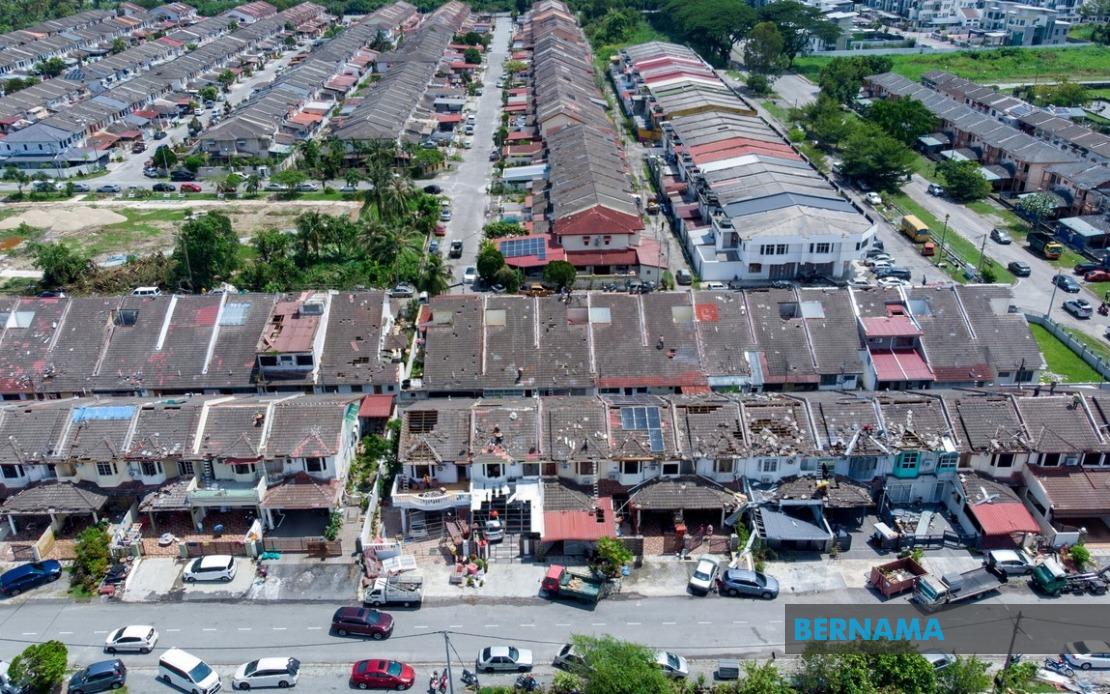
Authorities in Ipoh have implemented comprehensive security measures by sealing five distinct zones within Bercham's storm-damaged areas, with police now controlling access to prevent opportunistic theft and property crime. The cordons were established following the extraordinary weather event that struck on Friday, leaving entire neighbourhoods vulnerable during the recovery phase. Ipoh district police chief ACP Muhammad Najib Hamzah outlined the reasoning behind the restrictions while acknowledging the practical difficulties residents face when attempting to salvage belongings and repair homes.
The approach taken by local law enforcement reflects a delicate balance between maintaining public safety and allowing legitimate cleanup activities. While residents seeking to enter or exit the affected zones will not face blanket prohibitions, police have made clear that nocturnal movements will face stricter scrutiny. This differentiation recognises that substantial portions of Bercham remain without power following the disaster, yet the darkness simultaneously creates ideal conditions for criminal elements to exploit the chaos and displaced residents' attention.
When residents do request entry during nighttime hours to collect valuables or begin restoration work, police personnel stationed at checkpoints will verify property ownership before granting passage. This verification process aims to distinguish genuine cleanup efforts from coordinated looting operations that sometimes emerge in the aftermath of natural disasters. The police chief's comments during an inspection of the Incident Control Post at Bercham police station underscore the seriousness with which authorities are approaching the security dimension of disaster response.
As of the morning briefing, police had registered 492 storm-related reports through the Op Bencana reporting system, a figure that represents only initial documentation of the incident's scope. Notably, authorities have confirmed there is no temporal deadline for victims to lodge formal complaints, ensuring that residents who are overwhelmed by immediate recovery needs can submit reports once they have stabilised their situations. This flexibility in reporting timelines is particularly important given the scale of displacement and material loss affecting multiple neighbourhoods simultaneously.
The financial toll of the disaster remains under assessment, with officials yet to compile comprehensive damage valuations across all affected districts. However, Ipoh Barat Member of Parliament M. Kulasegaran, who also serves as Deputy Minister in the Prime Minister's Department overseeing Law and Institutional Reform, has previously characterised the storm as extraordinary in its intensity and impact. His assessment that more than 200 houses sustained damage underscores the severity of the meteorological event and suggests recovery efforts will be protracted and resource-intensive.
Metorological analysis indicates that the storm resulted from a landspout phenomenon, a relatively uncommon weather occurrence that can generate wind speeds and destructive forces comparable to weak tornadoes. These phenomena are characterised by rotating columns of air that descend from cloud formations and move across the surface with concentrated destructive capability. The landspout classification helps explain why the damage was concentrated in specific neighbourhoods rather than dispersed across a wider geographic area, as the rotating vortex tracked a particular path through Bercham.
The neighbourhoods most severely impacted by the disaster include Anjung Bercham Utara, Taman Mujur, Kampung Bercham, Kampung Tersusun Tasek, Taman Pusat Bercham and Taman Indah Sakti. These diverse residential communities range from traditional kampung settlements to planned suburban developments, indicating that the disaster's reach crossed socioeconomic boundaries. The mix of housing types also means that recovery needs vary significantly, with informal settlements potentially facing greater challenges in accessing reconstruction assistance and formal insurance claims.
For Malaysian residents in affected areas dealing with natural disasters, the Bercham situation illustrates both the necessary security responses authorities must implement and the importance of documentation. Keeping records of damage, photographing property conditions, and maintaining receipts for cleanup materials and repairs will substantiate claims for assistance and insurance purposes. The absence of a reporting deadline, while administratively flexible, should not encourage delay, as evidence preservation becomes more challenging as time passes and cleanup activities obscure the original damage patterns.
The incident also highlights the vulnerability of Malaysian communities to severe weather events, a concern that takes on greater significance given climate change projections suggesting increased frequency and intensity of extreme meteorological phenomena. Bercham's experience will likely inform disaster preparedness planning across Perak and similar states, potentially leading to enhanced early warning systems, shelter preparations, and community education initiatives. The police response demonstrates how security considerations intersect with humanitarian concerns during disaster recovery phases, a lesson applicable to emergency management planning throughout the region.
Looking forward, the comprehensive nature of the security operation—involving cordon establishment, checkpoint manning, and ownership verification procedures—requires sustained resource commitment. Police will need to maintain these measures until either residents have substantially completed recovery activities or threat assessments determine that security risks have diminished sufficiently to warrant relaxation of controls. The challenge lies in maintaining security without creating such onerous restrictions that residents cannot effectively salvage remaining possessions or commence repairs, a balance that requires ongoing communication between authorities and affected communities.

