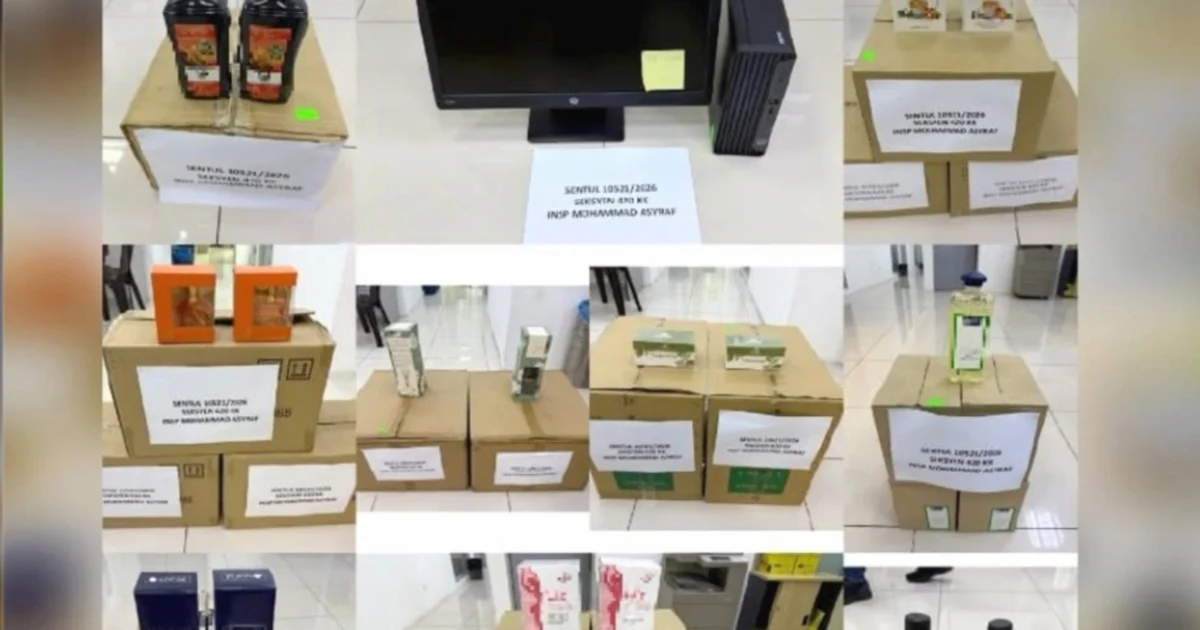
Police in Kuala Lumpur have dismantled what investigators describe as an organized investment fraud network after arresting six individuals during a coordinated enforcement operation targeting premises at KL Eco City on Wednesday. The raid represents a significant breakthrough in tackling investment-related fraud, which has become increasingly sophisticated across Malaysia's financial ecosystem.
The scam centred on luring investors with promises of substantial returns through purported perfume commodity trading and investment opportunities. Victims were typically approached through social media platforms and digital messaging applications, where perpetrators presented themselves as legitimate investment professionals with access to exclusive trading opportunities. The fraudsters would showcase glossy marketing materials, fabricated trading certificates, and testimonials from supposed satisfied investors to establish credibility.
Investment scams of this nature have proliferated across Southeast Asia in recent years, with Malaysian authorities identifying perfume and fragrance trading as a recurring theme in fraud operations. The scheme's appeal lies partly in the legitimate nature of the underlying commodity—perfume is a genuine tradeable product—which lends initial plausibility to the fraudulent narrative. Perpetrators exploit this legitimacy to convince potential victims that they are participating in a viable business venture rather than a Ponzi-style operation.
The mechanics of such scams typically involve initial investments ranging from hundreds to thousands of ringgit per participant. Investors receive regular notifications about supposed trading profits and portfolio growth through falsified statements and communications. These notifications maintain engagement and often encourage victims to inject additional capital to "maximize returns" or upgrade their investment tier. The fraudulent payments frequently come from money laundered through the network's own transactions, creating the appearance of genuine profits.
Police investigations into the KL Eco City operation revealed that the suspects had established a sophisticated infrastructure designed to appear corporate and trustworthy. This included leasing office space in a premium commercial development, employing a structured organizational hierarchy with designated roles for recruitment, transaction management, and customer relations, and maintaining an elaborate digital presence across multiple social media platforms and messaging applications.
The enforcement action underscores growing police focus on investment fraud rings that specifically target retail investors in Malaysia. These operations particularly affect vulnerable demographics, including retirees seeking income supplementation, young professionals with limited investment experience, and individuals already suffering financial stress. Intelligence suggests that many victims remain hesitant to report their losses due to embarrassment or concern about legal repercussions if they unknowingly breached regulations.
Investment frauds of this scale typically generate millions in illicit proceeds before being detected. Funds generated through the scheme are rapidly transferred through multiple bank accounts and often laundered into cryptocurrency or routed through informal value transfer systems to obscure their origins. Tracing and recovering victim funds presents substantial challenges for authorities even after arrests, as the money trail becomes increasingly complex and dispersed.
The incident reflects broader regional trends in investment fraud, where Southeast Asian countries have experienced a surge in commodity-based scams targeting retail investors. Thailand, Indonesia, and Singapore have similarly reported networks operating nearly identical schemes involving precious metals, agricultural commodities, and cryptocurrencies. Cross-border coordination among these networks enables them to operate with relative anonymity while targeting investors across multiple countries.
Authorities handling the investigation have emphasized that legitimate perfume and fragrance trading does occur, but genuine businesses operate transparently with proper licensing and regulatory oversight from relevant authorities. Investors are advised to verify the credentials of investment firms through official registries maintained by Bank Negara Malaysia and the Securities Commission Malaysia before committing capital. Unsolicited investment opportunities presented through social media or personal messaging channels remain a significant warning indicator.
The arrests have led to asset freezes on identified bank accounts and devices belonging to the suspects. Investigators are examining transaction records and communications to identify additional members of the syndicate who may have avoided immediate detention. Police are also cross-referencing victim complaints with data from the arrested individuals to develop a comprehensive picture of the operation's scope and the total number of defrauded investors.
This operation demonstrates the importance of public vigilance against investment fraud. Potential investors can protect themselves by independently verifying claims through official channels, avoiding pressure to invest quickly, being skeptical of guaranteed returns, and reporting suspicious activity to the authorities. The police commercial crime division continues to receive reports related to investment scams and encourages victims to lodge formal complaints to support ongoing investigations.
The case will be investigated under provisions addressing fraud, cheating, and money laundering offences. Pending investigations, authorities have not yet disclosed the estimated value of proceeds generated through the scheme or the number of affected investors, though initial reports suggest the operation affected several hundred victims across Malaysia.

