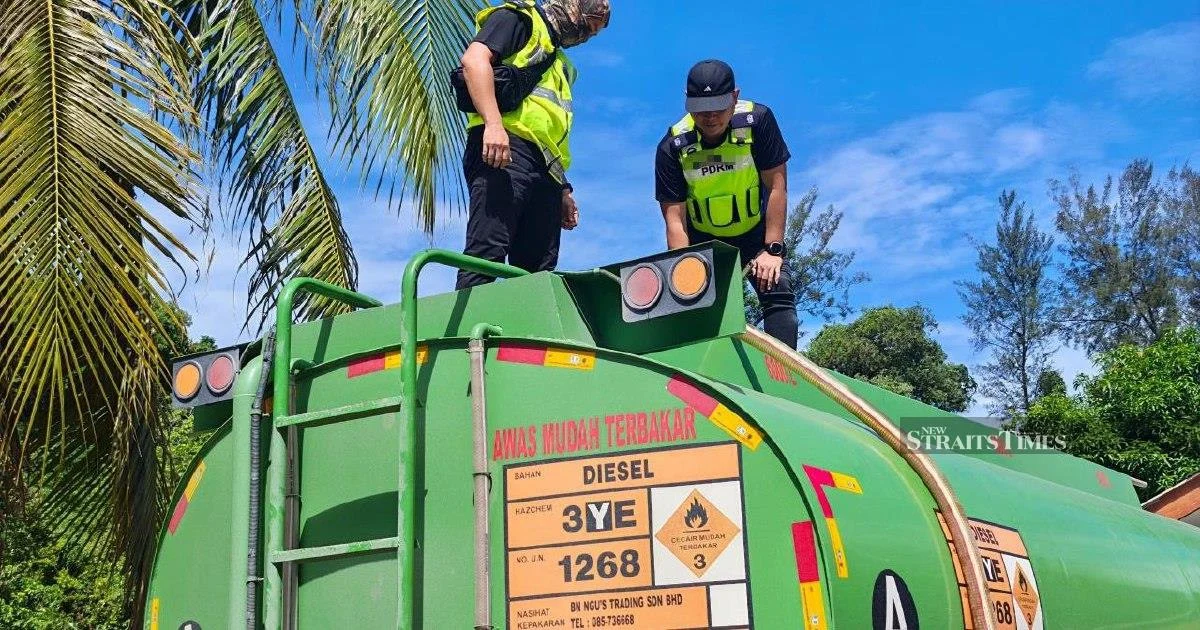
Authorities have successfully shut down an underground operation trafficking subsidised diesel in Miri, marking another significant victory in the ongoing crackdown against fuel diversion schemes that drain government resources across Sarawak. The covert depot, discovered at a residential bungalow in Tanjung Lobang, was functioning as a clandestine distribution hub for diverted fuel intended for legitimate agricultural and industrial use. The raid culminated in the confiscation of 15,000 litres of fuel alongside the detention of four male suspects believed to be principal operators of the scheme.
The discovery underscores a persistent vulnerability in Malaysia's fuel subsidy system, particularly in states like Sarawak where vast distances and porous supply chains create opportunities for organised diversion. Subsidised diesel, priced significantly below market rates for eligible users such as fishermen and farmers, represents a recurring flashpoint for criminal exploitation. When diverted illegally, the fuel enters black markets or is smuggled across state and international borders, causing substantial fiscal losses and distorting legitimate competition. The Tanjung Lobang operation appears to have leveraged the cover of a private dwelling to obscure its activities from routine oversight, a tactic increasingly employed by sophisticated smuggling networks.
The four arrests represent individuals allegedly orchestrating the collection, storage, and distribution phases of the contraband operation. While authorities have not yet disclosed detailed information regarding the suspects' backgrounds or roles within the hierarchy, such operations typically involve a structured network: those securing supply through compromised distributors or fuel retailers, handlers managing logistics from hidden depots, and traders facilitating onward sales to restaurants, transport operators, and cross-border buyers. The fact that investigators located the facility suggests intelligence-gathering efforts, possibly through tip-offs from the public or interagency coordination between customs, police, and petroleum regulatory bodies.
The seizure of 15,000 litres represents a substantial single operation, though it reflects the scale at which modern fuel diversion syndicates operate. In equivalent terms, this quantity could have generated black market revenues in the tens of thousands of ringgit, depending on prevailing spreads between subsidised and unsubsidised prices. Over sustained months of operation, such a depot might process hundreds of thousands of litres, making the loss to the national purse considerable. Sarawak, as one of Malaysia's largest fuel-producing states, paradoxically experiences severe diversion problems, partly due to inadequate tracking mechanisms and the complexity of controlling supply across sparsely populated regions.
The operation highlights the ingenuity of criminal networks in adapting to enforcement measures. By relocating distribution points from easily identifiable commercial premises to residential properties, operators reduce visibility to customs patrols and regulatory inspectors. The bungalow setting may have also provided plausible deniability regarding legitimate fuel storage, given that some rural properties require diesel for generators or small-scale agricultural machinery. This deliberate blurring of lines between legitimate and illicit activity complicates enforcement, requiring investigators to build cases through surveillance, supply chain analysis, and forensic evidence rather than relying solely on physical discovery.
The busting of this depot arrives amid broader government efforts to tighten fuel subsidy administration and combat leakage from the system. The Domestic Trade and Consumer Affairs Ministry has invested in enhanced tracking technologies and expanded cooperation with enforcement agencies to trace diverted fuel. However, gaps remain, particularly in rural and maritime zones where monitoring infrastructure is sparse. Sarawak's geographic challenges—comprising coastal and inland regions separated by dense jungle—naturally favour smuggling operations that can exploit terrain and administrative blind spots.
For Malaysian consumers and taxpayers, fuel subsidy diversions carry tangible consequences. When billions of ringgit intended to cushion fuel costs for eligible groups are siphoned into illegal channels, the fiscal burden falls increasingly on government budgets already stretched by competing demands. This dynamic can delay infrastructure projects, reduce social spending, or necessitate tariff increases elsewhere, ultimately affecting the cost of living. The Tanjung Lobang case demonstrates that combating subsidy fraud requires sustained vigilance, not episodic enforcement.
The detention of the four suspects now opens a critical investigative phase in which authorities will seek to trace the supply chain backwards—identifying which authorised distributors or retailers may have colluded in diverting fuel—and forwards, determining which downstream customers or smuggling networks received the contraband. Such tracing often uncovers larger syndicates operating across multiple states or even internationally, particularly given the price differentials between Malaysia and neighbouring countries. Intelligence generated from interrogations and evidence analysis could yield leads enabling follow-up raids and arrests.
Moving forward, stakeholders including the Sarawak state government, federal enforcement agencies, and fuel retailers must collaborate more intensively to address systemic weaknesses. Implementing real-time digital tracking of subsidised fuel from pump to end-user, conducting surprise audits at authorised outlets, and strengthening penalties for complicit retailers could elevate the cost and complexity of diversion operations. Additionally, public awareness campaigns might encourage vigilance among legitimate users and the community, transforming ordinary citizens into an informal detection network.
The Tanjung Lobang bust, while locally significant, is emblematic of a nationwide struggle to preserve the integrity of fuel subsidies in an era of sophisticated criminal adaptation. As syndicates grow more ingenious in concealment and distribution, enforcement must become correspondingly proactive, intelligence-led, and technologically enhanced. Only through sustained commitment to systemic reform can authorities prevent the next hidden depot from taking root.