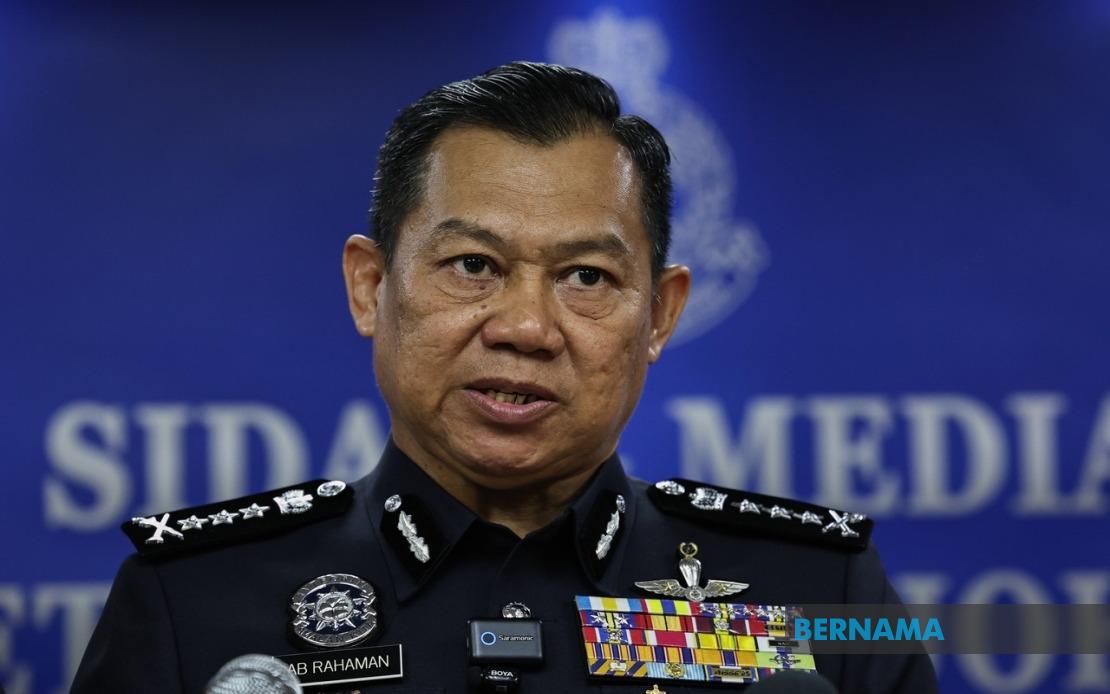
The Royal Malaysia Police has committed substantial resources to guarantee the safety and proper administration of the imminent Johor State Election, deploying a force of 11,926 officers and personnel throughout the electoral process. Johor Police Chief Datuk Ab Rahaman Arsad announced the comprehensive security arrangement during a briefing at the Johor Police Contingent Headquarters, detailing how the deployment would unfold systematically in five distinct phases timed to the different stages of the election cycle.
The phased approach reflects standard practice for major electoral events in Malaysia, where security requirements shift from preparation and campaign periods through polling day itself and culminating in the post-election phase. This stratification allows the police to concentrate resources where they are most needed at each juncture, rather than maintaining uniform deployment levels throughout. Datuk Ab Rahaman stressed that the force structure remained flexible, with the capacity to adjust personnel allocation based on emerging operational requirements as circumstances evolved during the election period.
Beyond the core PDRM contingent, Johor's police force has secured reinforcement through the Internal Security and Public Order Department, which supplied an additional 54 officers and 701 personnel drawn from several specialized units. These supplementary forces comprise elements from the General Operations Force, known for handling high-risk security situations, the Federal Reserve Unit, the PDRM Air Unit which provides aerial reconnaissance and rapid response capabilities, and the Marine Police Force equipped to monitor water-based access points and coastal security. This multi-agency coordination demonstrates how Malaysian authorities integrate different operational specializations to create a comprehensive security envelope.
The decision to mobilize such substantial manpower reflects the significance attached to ensuring that elections proceed without disruption or security incidents. State elections in Johor carry particular weight given the state's size, economic importance, and demographic complexity. The presence of a large police force visible throughout the electoral process serves both practical security functions and acts as a reassurance mechanism for voters and election officials, demonstrating state capacity to maintain order and protect the integrity of democratic processes.
For Malaysian readers accustomed to peaceful elections, the scale of this deployment may seem routine, yet it underscores the logistical sophistication required to administer democracy across a diverse nation. The deployment spans urban centres, suburban areas, and rural constituencies, each presenting distinct security challenges and requiring officers familiar with local geography and community dynamics. The phased approach also accounts for predictable pressure points—heightened vigilance during early voting periods, maximum presence on polling day, and monitoring during vote tabulation when tensions might spike.
The inclusion of specialist units suggests authorities anticipate potential flashpoints that regular police patrols might not adequately address. The General Operations Force's involvement indicates preparedness for scenarios involving large gatherings or confrontational situations, while the Marine Police element acknowledges Johor's extensive coastline and water-based vulnerabilities. The air unit presence provides real-time surveillance and rapid response capacity across the state's sprawling geography, particularly valuable given Johor's size and the dispersed nature of many polling stations.
From a regional perspective, the scale of Malaysia's police deployment for elections reflects institutional maturity in managing electoral security within a competitive democratic framework. Neighbouring countries and international observers often scrutinize how Southeast Asian democracies balance security with electoral freedom, and Malaysia's approach of transparent, professionally coordinated deployments contributes to confidence in the region's democratic institutions. The professional structure announced by Datuk Ab Rahaman—with its emphasis on flexibility, multi-agency coordination, and phase-based deployment—demonstrates established protocols rather than ad-hoc responses.
The coordination between PDRM and KDNKA units also illustrates how Malaysia's security architecture distributes responsibilities across specialized agencies rather than concentrating all authority in a single command structure. This distribution can enhance effectiveness by allowing units to focus on their core competencies while maintaining unified operational direction. However, it also requires robust communication protocols and clear command structures to prevent gaps or duplications in coverage.
For election observers and candidates alike, the visible police presence aims to deter misconduct while remaining appropriately non-partisan. The challenge for any police force during elections lies in appearing sufficiently present to prevent disruption without appearing threatening to voters or creating perceptions of bias. The five-phase deployment structure, scaled to match electoral needs, represents an attempt to calibrate this balance throughout the process.
The 11,926-strong deployment, supplemented by over 750 additional personnel from federal units, constitutes one of the most substantial security operations undertaken in Johor during peacetime. This commitment of resources reflects both the logistical demands of modern elections and the Malaysian state's determination to protect democratic processes from security threats. The structured, multi-agency approach announced by the Johor Police Chief suggests that authorities have learned from previous electoral experiences and refined their operational playbooks accordingly, offering lessons relevant to election administration across Southeast Asia and beyond.