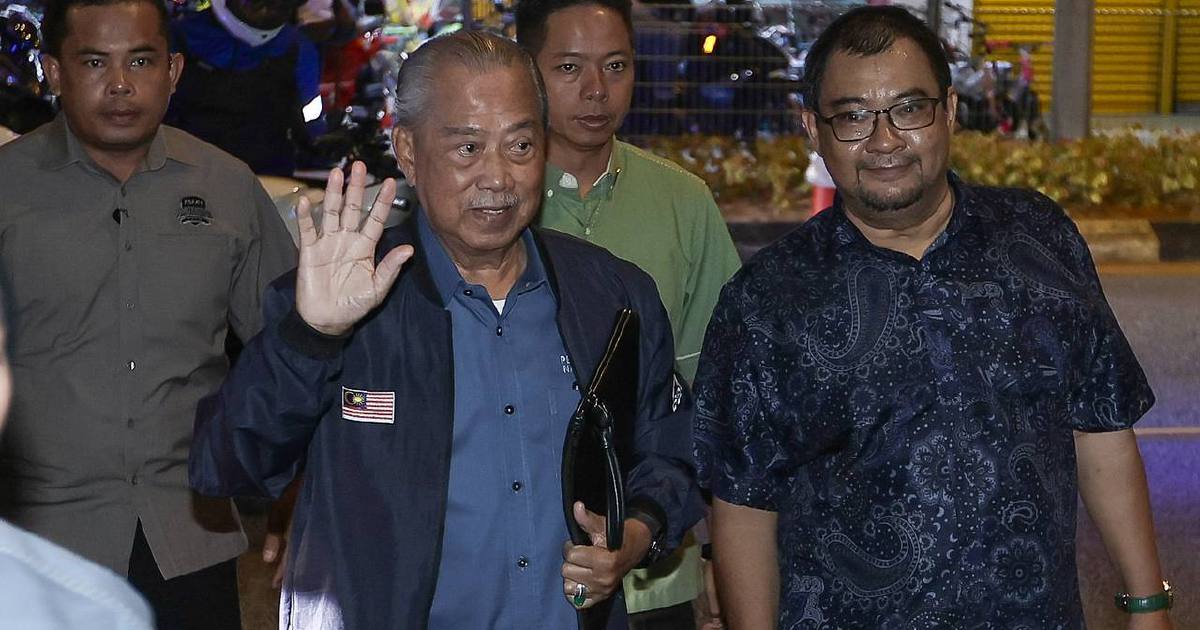
Perikatan Nasional held an emergency session of its Supreme Council in Kuala Lumpur, with party president Muhyiddin Yassin afterwards clarifying that discussions centred on coalition-wide matters rather than the controversial question of Bersatu's internal standing. The carefully worded statement suggests deliberate compartmentalisation within PN's leadership, distinguishing between broader strategic conversations and the more delicate issue of individual component party dynamics.
The coalition's emergency convening signals heightened activity within opposition circles as Malaysia's political landscape continues to shift following the last general election. Such hastily arranged meetings typically occur when urgent decisions require collective input or when coalition cohesion faces external pressure. The timing and scope of this gathering suggests PN leadership sought to address immediate coalition concerns without opening debate over individual party grievances.
Muhyiddin's clarification that Bersatu's membership was not on the agenda carries particular significance given recent speculation about the party's trajectory within opposition politics. Bersatu, which comprises former UMNO members and has served as Muhyiddin's political vehicle since his departure from the government coalition, occupies a pivotal position within PN's fragile equilibrium. By explicitly stating what was not discussed, the party president appears to preempt narratives suggesting internal turmoil or reconfiguration of opposition alliances.
The focus on potential new membership underscores PN's ongoing efforts to broaden its appeal and strengthen its parliamentary presence. Opposition coalitions in Malaysia have historically struggled with stability, with component parties frequently defecting or realigning based on political calculations. Any expansion of PN's membership base would ostensibly require consensus among existing partners, though the absence of detailed public commentary suggests negotiations remain preliminary or contentious.
For Malaysian political observers, the distinction between what was discussed and what deliberately avoided carries instructive weight. Coalition meetings often reflect unspoken tensions beneath diplomatic language. The selective emphasis on coalition matters while steering clear of Bersatu's specific position implies either a conscious decision to defer contentious discussions or an attempt to prevent such matters from destabilising the broader opposition framework. Both interpretations suggest underlying fragility within PN's structure.
Bersatu's role within Perikatan Nasional has evolved considerably since the coalition's formation. Initially positioned as a vehicle for post-Pakatan Harapan opposition politics, the party has navigated between attempting to position itself as a kingmaker and maintaining credibility within opposition ranks. Its presence within PN alongside other components creates inherent tensions, particularly when economic or political pressures mount on individual parties or their political futures become uncertain.
The emergency nature of the meeting warrants examination within the broader context of Malaysian parliamentary dynamics. Opposition coalitions function most effectively when component parties perceive mutual benefit and shared strategic vision. Recent months have witnessed various political movements and realignments, creating an environment where swift collective responses become necessary. PN's Supreme Council likely convened to address such developments, whether legislative challenges, by-election preparations, or coordinating responses to government initiatives.
For Southeast Asian political analysts, Malaysia's opposition architecture remains instructive regarding how diverse political entities negotiate shared space. Perikatan Nasional, comprising Bersatu, PAS, and other components, represents an unusual alliance bridging different ideological and ethnic bases. Maintaining such coalitions requires constant recalibration, occasional silence on contentious matters, and strategic communication to prevent internal disagreements from becoming public spectacles.
Muhyiddin's explicit statement that Bersatu membership was not discussed suggests the party leadership anticipated public interest in such matters. Opposition politics operates under heightened scrutiny, with critics and supporters alike seeking indicators of stability or dysfunction. By preemptively addressing what was not discussed, PN's hierarchy attempts to manage perceptions regarding coalition solidarity while acknowledging that certain topics require separate, more private deliberation.
The implications for PN's political trajectory extend beyond immediate coalition considerations. Opposition effectiveness depends substantially on maintaining sufficient unity to mount credible parliamentary challenges and present viable alternative governance frameworks. Emergency meetings, despite their ostensible focus on specific agenda items, inevitably carry broader signalling value about coalition health and leadership commitment to shared objectives.
Moving forward, observers should track whether PN addresses Bersatu's specific position in subsequent formal communications or whether leadership maintains deliberate ambiguity around this matter. Coalition politics often requires such careful calibration, balancing transparency with strategic discretion. The opposition's ability to navigate such tensions while maintaining public coherence will substantially influence its capacity to influence Malaysian governance in coming years.

