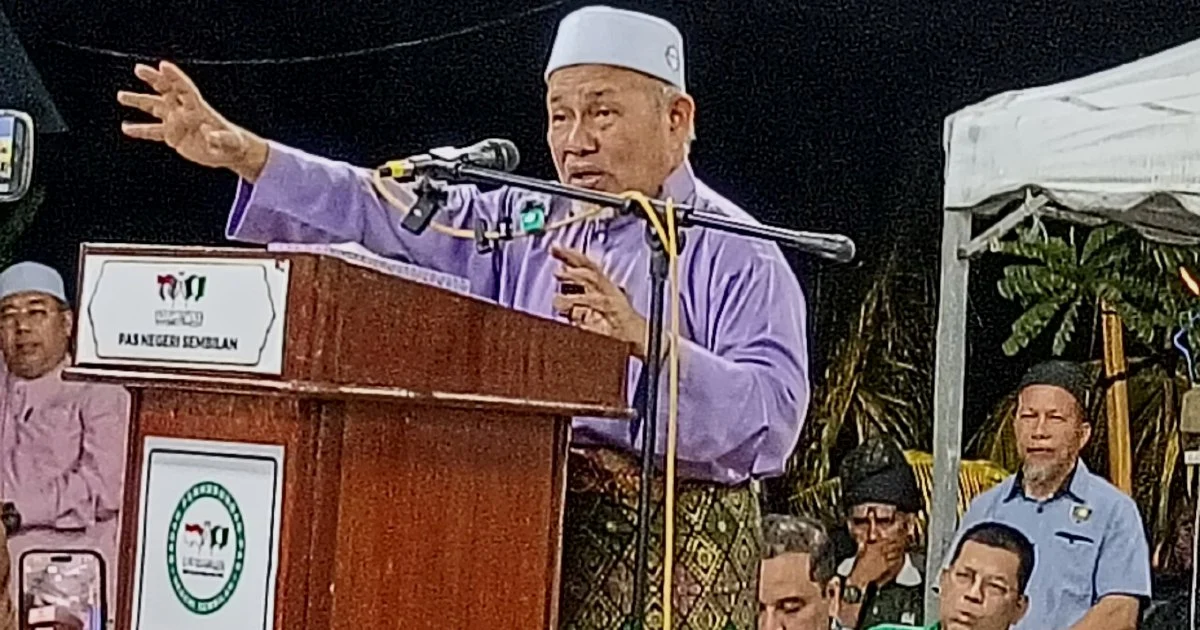
The leadership of Perikatan Nasional clarified on Tuesday that the opposition coalition operates as a shared political vehicle rather than a vehicle dominated by any single member party. Datuk Seri Tuan Ibrahim Tuan Man, the deputy president of PAS and a key figure within PN's structure, pushed back firmly against suggestions that Bersatu exercises exclusive control over the alliance, emphasising instead that each component party holds equal stakes in the coalition's direction and decision-making processes.
This intervention from the PAS leadership comes amid growing tensions within the PN framework regarding governance structures and the distribution of authority among its constituent organisations. The disagreement highlights underlying friction within the coalition about which party wields decisive influence over strategy, candidate selection, and policy positions. For Malaysian observers tracking the evolution of opposition politics, these internal dynamics reveal the precarious balance required to maintain multi-party alliances in a complex political environment where individual party interests frequently diverge.
Tuan Ibrahim's comments represent a direct rebuttal to claims or perceptions that Bersatu, under its leadership, functions as the dominant force determining PN's overall direction. Such assertions matter considerably because control over a coalition's narrative and organisational hierarchy can translate into significant political advantage during election campaigns, policy negotiations, and resource allocation. The PAS deputy's intervention signals that the Islamic party views itself as an equal partner with legitimate claims to influence within PN rather than a subordinate member dependent on Bersatu's goodwill.
The timing of these remarks underscores the coalition's ongoing struggle to present unified messaging to voters and party cadres. In Malaysian politics, coalitions have historically struggled with transparency around decision-making structures, leading to periodic ruptures when members feel sidelined or excluded from crucial deliberations. PN's relatively recent formation means such governance questions remain unresolved and contentious, with each component party intent on securing guarantees about their voice and influence within the broader structure.
PAS, as the largest component by membership and electoral reach, particularly in rural and conservative constituencies, carries substantial weight within PN's calculations. The party's engagement in this dispute reflects its determination to position itself as a co-architect of PN's future rather than merely a supporting player. This assertion of equality among the coalition's components carries implications for how decisions will be made regarding parliamentary coordination, electoral strategy, and the eventual shape of any government should PN succeed in obtaining power.
The controversy also exposes the tension between formal coalition structures and informal power dynamics. While founding documents may stipulate that all parties possess equal standing, practical political leadership often concentrates in the hands of figures from the largest or most visible component. Tuan Ibrahim's public clarification suggests PAS wishes to prevent any erosion of its formal rights through unspoken assumptions or gradual creep of Bersatu dominance. Such vigilance is characteristic of coalition politics globally, where smaller or equal-sized partners must actively defend their positions.
From the perspective of Malaysian voters and analysts, these internal coalition discussions carry weight because they help determine what PN might actually represent in practice if it reaches government. Coalitions often make campaign promises about shared governance and inclusive decision-making, yet implementation frequently deviates from rhetoric once power beckons. Tuan Ibrahim's intervention keeps these commitments visible and subjects them to public scrutiny, making it harder for any single party to claim unilateral authority later.
The disagreement also reflects broader questions about coalition sustainability in Malaysian politics. PN itself emerged from earlier realignments and represented an attempt to forge a new opposition force without UMNO's participation. However, maintaining unity among diverse parties with different ideological anchors, voter bases, and policy preferences remains perpetually challenging. Each component party must periodically reassert its importance and defend its interests to keep internal momentum aligned with external political developments.
Bersatu, despite leading the charge in PN's formation, does not possess overwhelming numerical superiority that would naturally establish uncontested dominance. This structural reality means that sustained coalition success depends on accepted conventions about consultation and shared decision-making rather than hierarchical command. Tuan Ibrahim's remarks serve to reinforce these conventions and remind all parties that PN functions through consensus-building rather than unilateral determination.
The practical implications extend to candidate selection for elections, particularly in constituencies where PAS and Bersatu hold competing interests. Coalition agreements typically attempt to clarify these through formulae and committees, yet disputes inevitably emerge. Clear public understanding that PN belongs to all parties equally theoretically reduces the chance that either party can circumvent agreed procedures by claiming superior authority or ownership of the coalition framework.
Moving forward, how PN manages these ownership and governance questions will significantly affect its capacity to maintain internal cohesion while presenting a credible alternative to existing government arrangements. Coalition partners require confidence that agreed rules will be honoured and that their voice remains valued. Tuan Ibrahim's intervention, while appearing to address a specific dispute, actually performs important maintenance work on the coalition's structural foundations by reaffirming principles that all component parties presumably accept.

