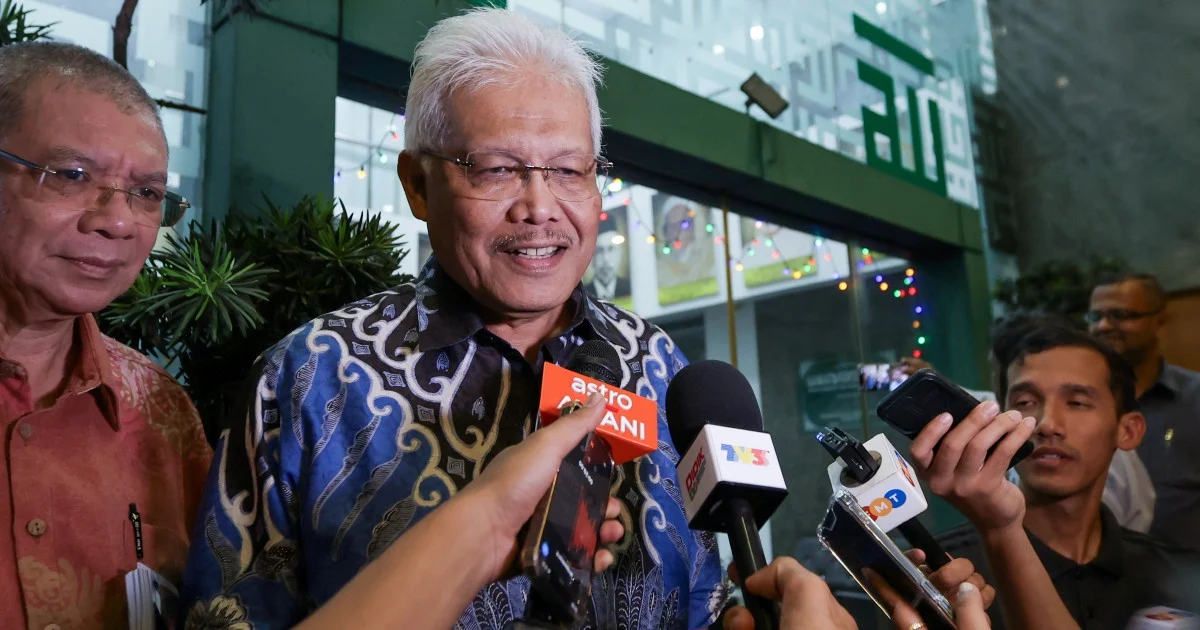
The Perikatan Nasional coalition has taken formal action to reaffirm its parliamentary leadership structure, with the political bloc's chief whip Datuk Seri Takiyuddin Hassan lodging official notification to the Dewan Rakyat Speaker's office regarding Datuk Seri Hamzah Zainudin's reappointment as opposition leader. The administrative step underscores PN's continued assertion of its role as the principal opposition force in Parliament following Malaysia's complex post-2022 election political realignment.
Hamzah Zainudin, the newly reconfirmed opposition leader, has emerged as a central figure in Malaysian parliamentary opposition dynamics. His formal reappointment reflects PN's desire to maintain continuity in its leadership representation and establish a stable institutional position from which to scrutinise government policy and legislative proposals. The notification process itself demonstrates how Malaysia's parliamentary system requires explicit procedural confirmation of such significant appointments, ensuring transparency and formal recognition within Westminster-inspired institutional frameworks.
The submission by Takiyuddin Hassan, operating in his capacity as PN's chief whip, represents routine but consequential parliamentary machinery. In the Malaysian system, the chief whip serves as the liaison between their parliamentary caucus and the Speaker's office, coordinating party positions and handling formal communications that keep parliamentary procedures functioning smoothly. Takiyuddin's role positioning him as the conduit for this notification reflects the hierarchical structures through which coalition parties manage their parliamentary presence and internal discipline.
Peikatan Nasional itself represents a significant force in Malaysian politics, comprising multiple component parties that collectively command substantial parliamentary representation. The coalition's decision to formally document and reaffirm Hamzah's leadership role signals internal consensus around his continuation in this position, suggesting the diverse parties within PN have reached agreement on their opposition strategy and public-facing leadership. This consensus-building carries implications for how effectively the opposition can coordinate its responses to government initiatives.
The opposition leader's role carries substantial institutional weight within Malaysia's parliamentary democracy. Tasked with articulating alternative visions to government policy, conducting scrutiny during parliamentary proceedings, and mobilising opposition resources toward accountability functions, the opposition leader must navigate complex relationships with government backbenchers, maintain internal coalition discipline, and present coherent policy positions across diverse policy domains. Hamzah's reappointment suggests PN believes he possesses the requisite skills and political capital for these responsibilities.
The formal notification process carries symbolic importance extending beyond bureaucratic routine. By submitting official documentation to the Speaker's office, PN establishes incontestable recognition of its opposition leader within Parliament's institutional hierarchy. This documentation becomes part of the parliamentary record, establishing clear lines of authority and communication that govern interactions between government and opposition machinery. The Speaker's office, responsible for maintaining parliamentary protocols and recognising official party representatives, requires such notifications to ensure procedural accuracy and institutional clarity.
Context matters considerably for understanding this development's significance. Malaysia's political landscape has undergone dramatic transformations since the 2022 general election, producing unprecedented coalitional arrangements and parliament configurations. Against this backdrop of fluid political allegiances and shifting majority arrangements, PN's formalisation of Hamzah's leadership provides institutional stability and clear public identification of its parliamentary spokesperson. The reappointment demonstrates that despite broader political uncertainty, PN maintains internal organisational capacity and strategic coherence.
The implications for Malaysian governance extend across parliamentary operations. An opposition leader functioning with secure institutional recognition possesses greater leverage in parliamentary proceedings, can more effectively demand government accountability, and carries enhanced legitimacy when articulating positions on legislation under debate. Hamzah's reconfirmed status strengthens PN's capacity to exercise its parliamentary functions, potentially raising the tenor and quality of legislative scrutiny that characterises Malaysian parliamentary proceedings.
For Southeast Asian observers, Malaysia's detailed attention to formal parliamentary procedures and transparent leadership succession processes reflects the enduring strength of Westminster institutional traditions within the region. Despite political volatility and complex coalition dynamics, Malaysian political actors continue operating within established procedural frameworks, utilising formal mechanisms to resolve leadership questions and maintain institutional legitimacy. This procedural regularity contrasts with less institutionally anchored political systems elsewhere in the region.
Looking ahead, Hamzah's reappointment positions him to navigate Malaysia's evolving political terrain through 2025 and beyond. Whether PN can sustain opposition unity while potentially positioning itself for future electoral contests or coalition arrangements depends partly on his leadership effectiveness and political judgement. The formal confirmation secured through Takiyuddin's notification signals that PN intends his tenure to extend across an extended timeframe, providing opposition constituencies with stable institutional representation within Parliament's formal structures.

