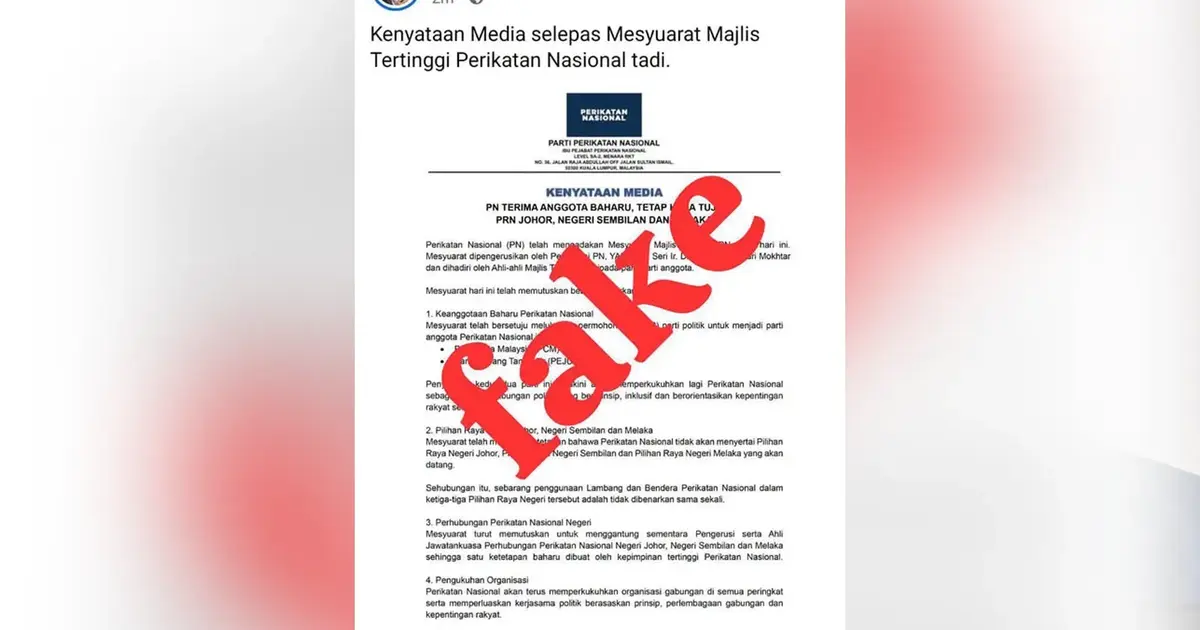
Perikatan Nasional moved swiftly to counter allegations that the opposition coalition intends to abstain from contesting three state elections, describing the circulating statement as entirely baseless. The coalition issued a public denial, characterising the claim as both inaccurate and misleading, though sources within PN indicated the party takes such rumours seriously as they potentially undermine public confidence in its electoral strategy.
The emergence of such claims reflects the intensifying political competition across Malaysia's electoral landscape, where opposition coalitions face mounting pressure to demonstrate unity and electoral viability. PN, which comprises several significant political parties including UMNO-aligned and Islamist factions, has been positioning itself as a credible alternative to the incumbent Pakatan Harapan government. Any suggestion of electoral withdrawal would substantially weaken that positioning and suggest internal fractures within the coalition's leadership or strategy.
The timing of this denial is noteworthy given the cyclical nature of state elections across Malaysia. Various states maintain different electoral calendars, meaning state elections occur sporadically rather than simultaneously. For opposition coalitions, participating in all available electoral contests represents a fundamental strategy to build momentum, accumulate resources, and demonstrate nationwide organisational capacity. Selective participation would signal weakness and invite criticism that the coalition lacks confidence in its electoral prospects or ideological coherence.
Political misinformation has become an increasingly common feature of Malaysian electoral politics, with false or exaggerated claims about party strategies regularly circulating through social media platforms and messaging applications. These rumours often originate from competing political actors seeking to sow discord within rival coalitions or test public responses to potential policy shifts. In this instance, PN's rapid response suggests the coalition recognises the reputational damage such unfounded allegations can inflict, particularly among supporters who might interpret withdrawal from elections as political surrender.
The broader context involves intensifying competition between Malaysia's major political coalitions. Pakatan Harapan, despite holding federal power, faces challenges in maintaining cohesion among its constituent parties and sustaining voter enthusiasm. Meanwhile, Perikatan Nasional has endeavoured to expand its influence by forging alliances with additional political parties and consolidating support in regions where it holds existing strength. Electoral contests at state level provide crucial testing grounds for these competing visions and serve as stepping stones toward future federal elections.
State elections carry particular significance for Malaysian politics because they determine control over state governments and resources, influence federal power dynamics, and shape the trajectory of national political competition. A coalition's decision to contest or withdraw from any state election carries substantial implications for its overall electoral positioning. For PN, committing to participate in all available state elections reinforces its claim to be a comprehensive alternative government with nationwide presence and capability.
The denial issued by Perikatan Nasional leadership reflects standard practice in Malaysian politics, where parties must respond swiftly to false claims to prevent them from becoming embedded in public perception. Left unchallenged, even fabricated allegations can influence voter behaviour and party morale. By issuing an explicit rejection described as addressing claims that are both false and inaccurate, PN attempted to establish a clear factual record while emphasising the baseless nature of the rumour.
Internal coalition management represents another consideration in evaluating such claims. Perikatan Nasional comprises parties with sometimes divergent interests and priorities. Decisions about which elections to contest, how to allocate campaign resources, and how to present joint strategies require consensus among coalition members. Any significant shift in electoral strategy would necessitate formal coalition discussions and agreement, not unilateral decision-making. This reality lends weight to PN's denial, as any actual decision to skip major elections would require coordination that would be difficult to conceal from public view.
The incident underscores the importance of media literacy and verification in Malaysian political discourse. With multiple information sources competing for attention and credibility, voters and observers must carefully distinguish between verified reporting, official statements, and unsubstantiated claims. Political parties themselves bear responsibility for maintaining transparent communication about their strategies and decisions, while media organisations must verify sensational claims before amplifying them to broader audiences.
Looking forward, observers of Malaysian politics should anticipate continuing efforts by various actors to test political narratives through rumours and strategic leaks. Opposition coalitions like PN will likely face ongoing pressure to maintain public confidence in their viability and commitment to democratic competition. The coalition's swift response to these claims demonstrates recognition that electoral credibility depends not only on official policies but also on successfully managing information and public perception in an increasingly complex political communication environment.

