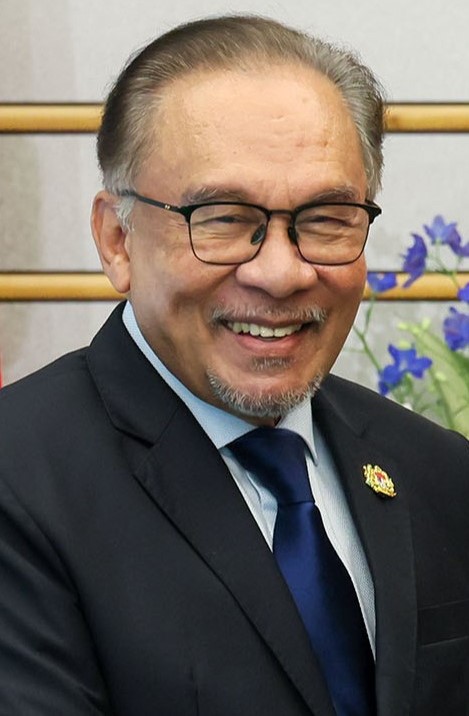
Prime Minister Datuk Seri Anwar Ibrahim has made a fresh appeal to Malaysians to adopt the foundational principles embedded within the concept of Hijrah, positioning this spiritual and philosophical framework as central to the nation's continuing development and social cohesion.
The Hijrah, which traditionally marks Prophet Muhammad's migration from Mecca to Medina in Islamic history, extends far beyond its historical context to represent a broader principle of moral transformation and purposeful change. In Anwar's articulation, this concept becomes a metaphor for personal and collective renewal, wherein individuals and communities commit themselves to higher standards of ethical conduct and national responsibility. By invoking this spiritual dimension, the Prime Minister has attempted to anchor contemporary governance challenges within a framework that resonates deeply with Malaysia's Muslim-majority population whilst remaining inclusive of the nation's multicultural fabric.
The emphasis on truth within the Hijrah framework addresses one of the most pressing concerns in Malaysian public discourse: the erosion of institutional trust and the proliferation of misinformation. Anwar's invocation of truthfulness as a cornerstone principle suggests a recognition that authentic national progress cannot be constructed upon falsehood, fabrication or deliberate distortion of facts. This carries particular weight given Malaysia's experience with political turbulence, where competing narratives and credibility gaps have frequently undermined policy implementation and public confidence in governance structures. The call for embracing truth as a national value proposition implicitly critiques cultures of deception that have characterised aspects of Malaysian politics.
Prosperity, the second pillar highlighted by Anwar, extends beyond conventional economic metrics to encompass holistic wellbeing across different segments of society. In the Malaysian context, where wealth inequality and regional disparities persist despite decades of development initiatives, this framing suggests a reconceptualisation of progress that balances material advancement with social equity. The Hijrah spirit of prosperity, in this interpretation, demands that economic policies and development strategies actively consider the needs of marginalised communities, rural populations, and lower-income households alongside urban and corporate interests. This reflects ongoing tensions within Malaysia's economic model and the need for more inclusive growth strategies.
Security, the third dimension of Anwar's appeal, encompasses both physical safety and psychological reassurance. Malaysia faces multifaceted security challenges ranging from terrorism and organised crime to cybersecurity threats and social destabilisation. By connecting security to the Hijrah principle, Anwar suggests that genuine national safety cannot be achieved through enforcement mechanisms alone but requires foundational changes in societal values, community cohesion, and individual moral responsibility. This broader conception of security acknowledges that sustainable stability emerges from populations that embrace ethical behaviour and collective wellbeing as shared commitments rather than external impositions.
The timing of Anwar's renewed emphasis on these values carries significance within Malaysia's current political trajectory. Having consolidated his position as Prime Minister following the 2022 general elections, Anwar faces the considerable task of delivering tangible improvements across multiple policy domains whilst managing diverse coalition partners with competing interests. The appeal to Hijrah spirit represents an attempt to transcend narrow partisan divisions by appealing to transcendent principles that theoretically unite Malaysians across religious, ethnic and political boundaries. This rhetorical strategy seeks to reframe governance challenges as spiritual and moral endeavours rather than purely technocratic or political problems.
For the Southeast Asian region more broadly, Malaysia's articulation of Islamic governance principles carries implications beyond national borders. As other Muslim-majority nations grapple with questions of how to integrate religious values with contemporary governance demands, Malaysian approaches influence regional discourse. Anwar's emphasis on Hijrah as encompassing truth, prosperity and security suggests a model of Islamic governance that prioritises social outcomes and institutional integrity rather than ritualistic observance alone. This positioning may resonate with populations across Southeast Asia seeking governance frameworks that honour religious traditions whilst delivering practical improvements in daily life.
The concept of Hijrah also historically emphasises building communities based on shared values and common purpose rather than kinship or tribal affiliation. Applied to contemporary Malaysia, this dimension suggests the necessity of transcending ethnic and religious particularism in favour of civic nationalism rooted in constitutional principles and shared national identity. Given Malaysia's experience with communal tensions, the invocation of a principle that historically united diverse peoples around shared moral commitments carries potential relevance for nation-building efforts. However, translating this principle into concrete policies and institutional reforms remains the significant challenge ahead.
Implementing Hijrah values within government structures, law enforcement agencies, business conduct and educational curricula would require systematic reforms extending far beyond rhetorical commitment. The question for Malaysian observers becomes whether this call for spiritual and moral renewal translates into measurable changes in institutional behaviour, transparency mechanisms, and equitable resource distribution. Historical experience suggests that appeals to grand principles, whilst emotionally resonant, often falter when encountering entrenched interests and bureaucratic resistance. Whether Anwar's government demonstrates the political will to operationalise these values through concrete policy instruments will ultimately determine the credibility and impact of this initiative.