Prime Minister Datuk Seri Anwar Ibrahim has called for unity and consensus as the foundation for pursuing reforms inspired by the principles of Hijrah, insisting that sustainable change cannot be achieved through isolated efforts or rhetorical appeals alone. In remarks marking Maal Hijrah 1448H, Anwar articulated a vision of collective national transformation rooted in Islamic values of justice, truth, prosperity and security, drawing parallels between the Prophet Muhammad SAW's migration to Madinah and the modern challenges facing Malaysia's plural society.
The historical significance of Hijrah, as Anwar framed it, transcends religious commemoration to offer a practical template for contemporary governance. The Prophet's journey to Madinah succeeded not through individual heroics but through coordinated action by diverse groups—young fighters like Saidina Ali Abi Talib, supportive women including Asma Abu Bakar, and countless companions who contributed their skills and resources to a unified mission. By invoking these examples, Anwar sought to reframe the government's reform agenda as a continuation of that same collaborative spirit, rather than a top-down initiative imposed by any single authority.
Anwar's emphasis on the difficulties of embedding Hijrah's principles into Malaysia's current context acknowledges the real obstacles to consensus-building in a nation marked by religious, ethnic and political diversity. The repeated assertion that success requires more than "rhetoric, slogans and individual effort" appears directed at both external critics and internal stakeholders who may view reform commitments as mere political messaging. This framing suggests the government recognises that public scepticism about reform sincerity runs deep and that words alone will not suffice to restore confidence in institutions or drive meaningful change.
The insistence that reform must be "a collective effort and not by any single party" carries particular weight in Malaysia's political landscape. It signals openness to multi-partisan or cross-party approaches to national challenges, potentially positioning the government as transcending narrow factional interests in pursuit of shared objectives. For a Prime Minister navigating a complex coalition and facing persistent questions about political legitimacy, such language serves both to broaden his constituency and to deflect accusations that reforms are merely serving the ruling alliance's electoral or ideological interests.
Anwar's reference to Surah An-Nisa verse 100 and his interpretation of Hijrah as sacrifice, struggle, brotherhood and unity underscores the theological anchoring of his political message. This approach integrates Islamic moral frameworks directly into the national reform discourse, validating the inclusion of religious principles in secular governance debates while simultaneously grounding reform efforts in values that resonate across Malaysia's Muslim-majority population. The choice to emphasise shared sacrifice rather than individual gain subtly reframes what reform might demand from citizens and institutions.
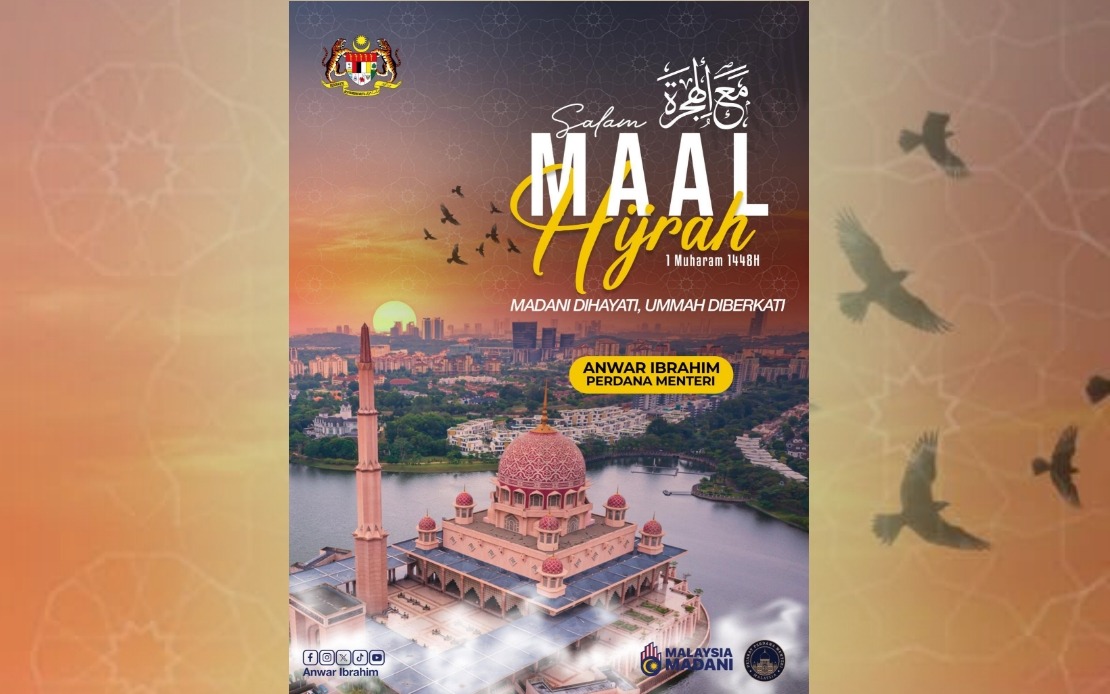
The Department of Islamic Development Malaysia's (Jakim) selection of the theme "MADANI Dihayati, Ummah Diberkati" (MADANI Embraced, The Ummah Blessed) for the National Maal Hijrah Celebration 1448H reinforces the government's messaging strategy. By linking the celebration explicitly to the MADANI framework—the Prime Minister's earlier articulated vision for national transformation—officials have created a symbolic convergence between religious observance and political agenda. This connection positions Hijrah not merely as historical commemoration but as an active force animating contemporary policy direction.
For Malaysian readers, the implications of Anwar's emphasis on consensus-based reform extend beyond ceremonial speeches. The repeated calls for cooperation across diverse networks suggest the government intends to pursue substantive changes affecting governance, judicial transparency, public administration and institutional accountability. However, the insistence on unity also implicitly acknowledges that such reforms face resistance from established interests and require sustained political will to overcome institutional inertia and vested opposition.
The timing of these remarks during Maal Hijrah celebrations reflects strategic communication choices. Religious occasions provide platforms to articulate values-based arguments that might otherwise face scepticism if presented purely through technocratic or political language. By embedding reform narratives within Islamic theological discourse, the government strengthens their resonance within communities where such frameworks carry moral authority and emotional weight.
Anwar's framing also addresses generational and demographic realities within Malaysia. The explicit acknowledgment of youth contributions and women's roles in Hijrah's success mirrors contemporary inclusive governance rhetoric, suggesting that younger Malaysians and women should perceive themselves as essential to reform efforts rather than peripheral constituencies. This inclusive messaging strategy appears designed to broaden the coalition supporting government initiatives beyond traditional political bases.
Sceptical observers might note tensions between calls for consensus and the practical concentration of executive power, or between emphasis on unity and persistent partisan divisions within governing coalitions. Nevertheless, Anwar's rhetorical commitment to collective transformation establishes benchmarks against which future policy implementation will be measured. If substantial reforms fail to materialise or consensus mechanisms remain largely symbolic, the gap between stated principles and political practice will likely fuel further public cynicism about reform commitments.
Moving forward, the challenge for Malaysian policymakers lies in translating Hijrah's principles into concrete institutional mechanisms that facilitate genuine consensus-building across Malaysia's diverse society. This requires establishing forums, processes and institutions where consensus can actually develop, rather than merely invoking the concept rhetorically. Whether the government's commitment to consensus-based reform proves substantive or primarily aspirational will ultimately determine whether Maal Hijrah messaging translates into meaningful transformation of governance structures and outcomes.