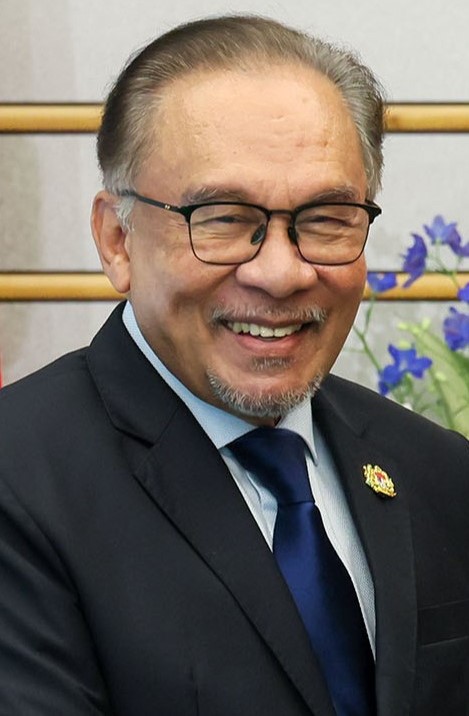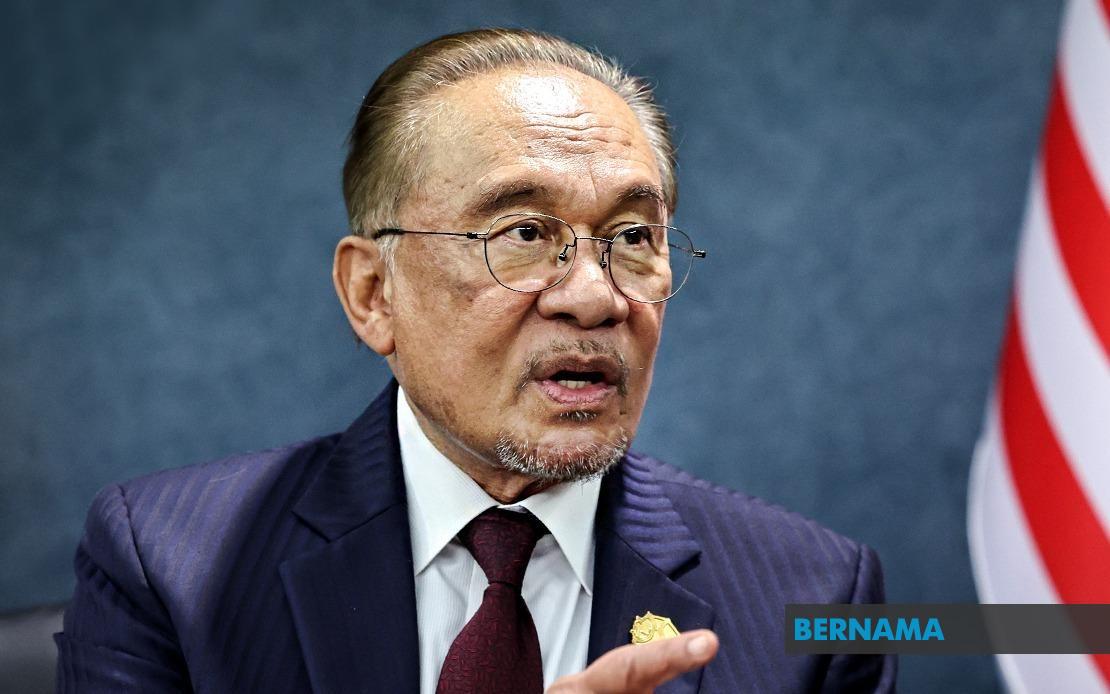
Prime Minister Datuk Seri Anwar Ibrahim is scheduled to address the ASEAN-Russia Business Forum in Kazan, Russia, as Malaysia reinforces its engagement with Moscow through one of Asia's premier regional groupings. The forum, held at Kazan IT Park, represents a significant diplomatic occasion for showcasing Malaysia's economic ties and political interests within the broader ASEAN-Russia framework at a time when regional partnerships are increasingly important for balancing global great-power competition.
As both Prime Minister and Finance Minister, Anwar will speak directly to business representatives and senior officials from all ten ASEAN member states and Russia, positioning Malaysia's voice prominently in discussions about expanding regional commerce and investment. This dual ministerial role underscores Malaysia's investment in the relationship, signalling serious intent to pursue concrete economic outcomes from the gathering. The address comes as part of a wider programme of events that the Malaysian delegation is participating in alongside other ASEAN representatives.
Following his address, Anwar will attend a formal gala dinner at the Tatar State Academic Theater, where a courtesy call on Russian President Vladimir Putin is scheduled. This high-level bilateral interaction offers Malaysia an opportunity to discuss bilateral matters directly with the Russian leadership, reflecting the importance both countries attach to their relationship. The inclusion of such engagements demonstrates that Malaysia continues to maintain pragmatic diplomatic channels with Russia despite broader Western geopolitical tensions, a stance consistent with Malaysia's traditional non-aligned foreign policy approach.
The timing of this year's Kazan summit holds particular significance as it coincides with the 35th anniversary of ASEAN-Russia dialogue relations, a milestone that speaks to the durability of this partnership. The dialogue relationship, formally established in 1991, was elevated when Russia became a full ASEAN Dialogue Partner in 1996, subsequently advancing to Strategic Partnership status in 2018. This progression reflects both sides' commitment to deepening cooperation across political-security, economic, and socio-cultural dimensions, though progress on concrete initiatives has sometimes lagged behind rhetorical commitments.
Kazan, positioned at the confluence of the Volga and Kazanka rivers approximately 800 kilometres east of Moscow, serves as an apt venue for this gathering. With a population of roughly 1.3 million and a history spanning more than a millennium, the city represents Russia's important cultural and economic centres beyond its capital. Kazan holds particular significance as one of Russia's most prominent centres of Islamic culture and heritage, a characteristic that resonates with ASEAN's predominantly Muslim composition. The city functions as a genuine bridge between the Russian and broader Muslim worlds, making it symbolically appropriate for facilitating dialogue between ASEAN and Russia.
Regional trade figures demonstrate the economic dimension of the partnership, though they also highlight the relationship's limitations. In 2024, total ASEAN-Russia trade reached USD18.1 billion, while Russian foreign direct investment into ASEAN amounted to USD92.97 million, suggesting that despite the strategic importance attributed to the relationship, commercial integration remains relatively modest compared to ASEAN's engagement with other major powers. For perspective, ASEAN's annual trade with China, the United States, and the European Union each significantly exceeds bilateral trade with Russia by multiples, indicating where ASEAN's primary economic relationships remain anchored.
Malaysia specifically maintains the ninth-largest trading relationship with Russia among European nations, with 2025 figures showing total bilateral trade valued at RM8.72 billion. While this positions Russia as an important trading partner for Malaysia, it remains secondary to the country's main commercial relationships with China, the United States, and regional neighbours. The bilateral trade structure reveals Malaysia's comparative advantages: Malaysian exports to Russia centre on electrical and electronic products, machinery, equipment and components, alongside processed food items. Meanwhile, Russian exports to Malaysia predominantly comprise petroleum products, minerals, chemicals, and chemical-based commodities, reflecting the complementary nature of the two economies.
The strategic partnership between ASEAN and Russia operates within a complex global context where the region must navigate relationships with multiple powers. ASEAN's commitment to maintaining dialogue with Russia, even as Western nations have instituted sanctions and confrontational policies, reflects the grouping's determination to preserve its centrality and non-alignment in international affairs. Malaysia's active participation in forums like this year's commemorative summit reinforces its own long-standing principle of maintaining engagement across ideological and geopolitical divides rather than choosing sides in great-power competition.
For Malaysian business interests, the forum provides networking opportunities and exposure to Russian markets that might otherwise be difficult to access through bilateral channels alone. The presence of representatives from all ASEAN member states creates a larger collective market proposition that may be more attractive to Russian investors and trading partners than individual national delegations. Similarly, ASEAN companies benefit from the forums' facilitation of contact with Russian enterprises, government officials, and potential partners interested in expanding into Southeast Asian markets.
Looking forward, the challenge facing ASEAN-Russia relations lies in translating strategic declarations into measurable increases in trade, investment, and technological cooperation. The modest investment figures suggest that constraints on Russian capital availability, Western sanctions limiting Russian firms' international engagement, and ASEAN's multiple competing partnerships all contribute to a relationship that remains significant in political terms but underdeveloped in economic substance. For Malaysia, strengthening these ties requires identifying specific sectors where genuine competitive advantages exist and where Russian demand aligns with Malaysian production capabilities.