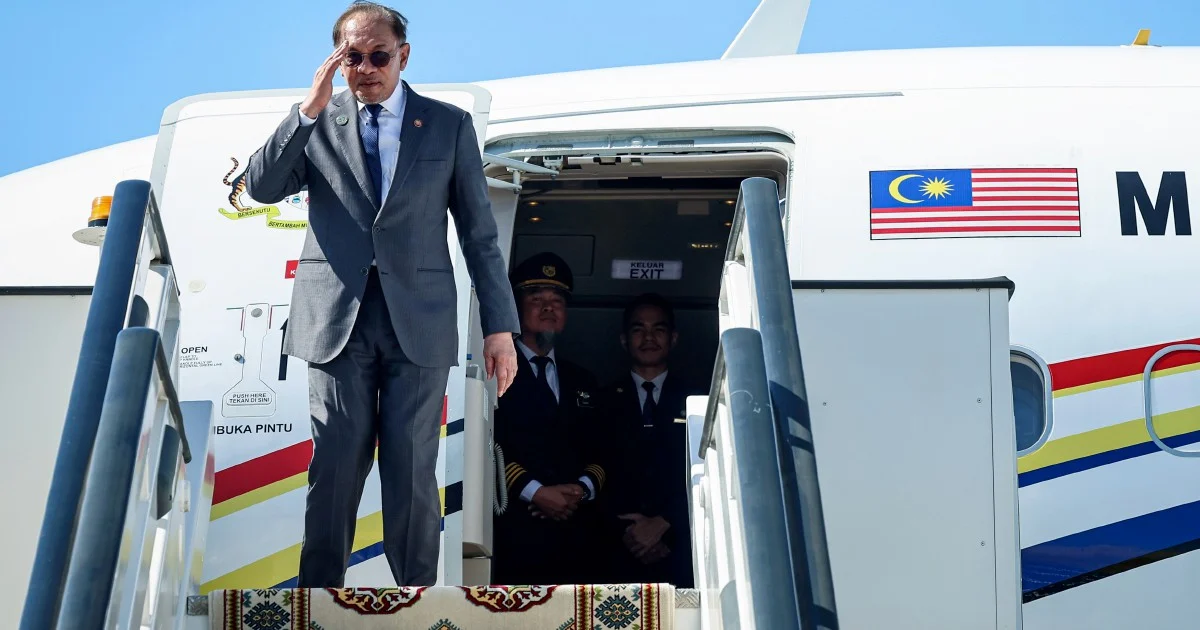
Prime Minister Datuk Seri Anwar Ibrahim touched down in Penang today, transitioning swiftly from his diplomatic mission to Turkmenistan into a packed schedule of domestic engagements that underscore the government's commitment to both media-industry dialogue and economic development in the northern corridor. The hasty transition reflects the Malaysian leadership's balancing act between forging international partnerships and maintaining domestic political momentum through high-profile regional appearances.
The centrepiece of Anwar's Penang itinerary is his attendance at the grand finale of Hawana 2026—the National Journalists' Day commemoration that has grown into an important platform for dialogue between government officials, media practitioners, and civil society. This event carries symbolic weight beyond its ceremonial function; it signals the administration's messaging priorities and its stance on press freedom and public communication at a critical juncture in Malaysia's political and economic cycles. For Malaysian newsrooms and journalists, Anwar's presence typically sets the tone for expected government-media engagement protocols in the coming year.
The timing of Anwar's return from Central Asia to preside over Hawana suggests careful coordination between the Prime Minister's Office and the Penang state apparatus. Turkmenistan, an energy-rich nation, has strategic relevance to Malaysia's long-term diversification goals, and any outcomes from that official visit—whether related to energy cooperation, technology transfer, or bilateral trade—remain undisclosed pending formal announcements. However, his immediate pivot to regional investment events indicates that Malaysia is pursuing a dual-track foreign policy strategy: deepening partnerships in resource-rich countries while simultaneously showcasing investor confidence and economic dynamism within key domestic economic zones.
Penang's designation as the focal point for these concurrent activities is itself significant. The state has positioned itself as Malaysia's primary technology and advanced manufacturing hub outside Kuala Lumpur, and it hosts one of the nation's largest concentrations of semiconductor and electronics firms. By choosing to anchor both his Hawana address and investment-centred engagements in Penang, Anwar reinforces the state's prominence in the federal government's economic blueprint and indirectly validates the state's branding as a competitive investment destination.
The Hawana 2026 grand finale typically features keynote addresses, awards for distinguished journalists, panel discussions on contemporary media challenges, and formal recognition of the Fourth Estate's evolving role in a rapidly digitising society. In Malaysian context, these gatherings have historically been occasions for government leaders to articulate their media philosophy and to signal whether new regulatory frameworks or industry guidelines are forthcoming. Anwar's participation will be closely watched for any indication of policy directions regarding digital media regulation, fake news countermeasures, or the role of artificial intelligence in newsrooms.
Beyond the ceremonial aspects, the Prime Minister's investment-focused agenda in Penang speaks to broader macroeconomic challenges facing the nation. Malaysia has been competing intensely with Vietnam, Thailand, and Indonesia for foreign direct investment, particularly in high-value manufacturing and technology sectors. Penang, with its established supply chains and skilled workforce, remains a contested prize among multinational investors. By convening investment events during his visit, Anwar aims to reinforce government backing for infrastructure development, regulatory clarity, and incentive frameworks that make Penang an attractive alternative to competitors in the region.
The coordination of these disparate activities—international diplomacy, media industry engagement, and economic promotion—reflects the evolving nature of modern prime ministerial duties. Anwar's compressed schedule, moving from Turkmenistan to Penang without apparent rest, underscores the intensity of governance demands and the premium placed on physical presence at key symbolic moments. For the Prime Minister, such visits serve multiple audiences: domestic media interpreting his actions through political lenses, the investment community assessing government commitment to specific regions, and international observers gauging Malaysia's strategic direction and economic vitality.
Penang's Chief Minister and state government officials are likely to leverage Anwar's presence to advance their own development agendas, including infrastructure projects, special economic zones, and skill-development initiatives that align with both state and federal priorities. The convergence of a sitting Prime Minister and regional media-industry stakeholders creates opportunities for state-level messaging on livelihood issues, business support, and social development that often get sidelined in the capital-centric news cycle.
For journalists attending Hawana 2026, Anwar's address will be parsed for substance beyond rhetoric—any specific commitments to transparency, press freedom, or newsroom viability in an era of declining traditional advertising revenue. The media industry globally faces existential pressures, and Malaysian publishers are no exception, making government support for public interest journalism and digital transformation increasingly critical to sector survival.
The convergence of these events in Penang also reflects a broader geographic strategy within Malaysian federalism. The Prime Minister's willingness to spend concentrated time in state capitals, attending regional celebrations and investment forums, can either dilute or amplify federal authority depending on how these events are choreographed and communicated. Anwar's presence ultimately reinforces that key decisions affecting media, investment, and economic direction emanate from the federal level, even when executed through regional forums and partnerships.

