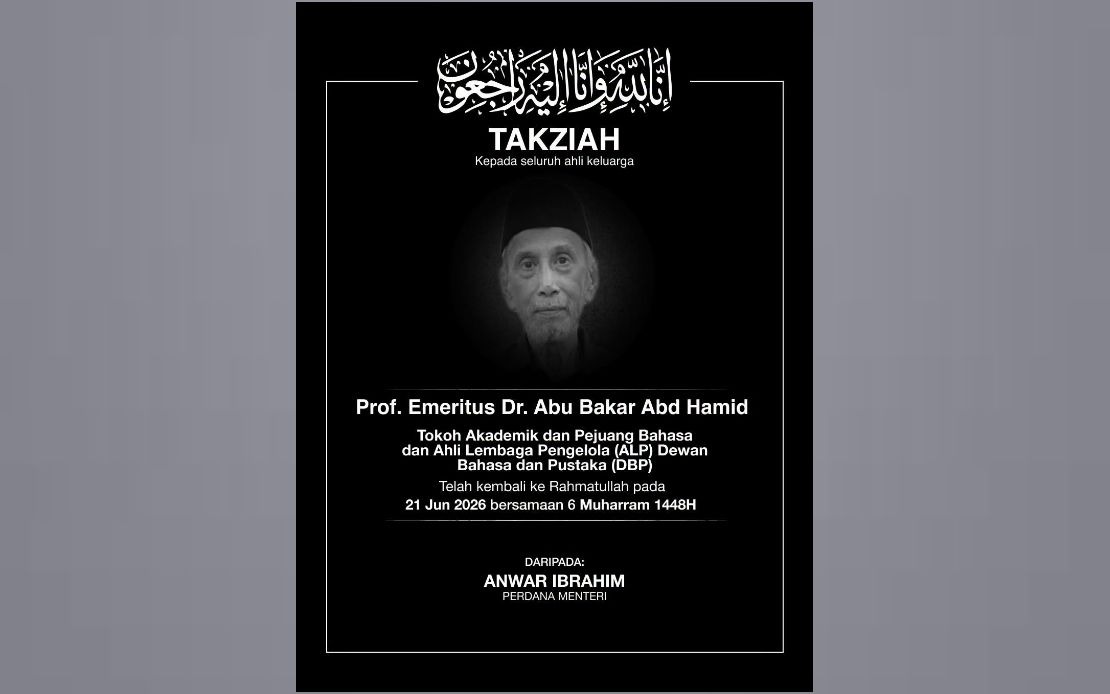
Prime Minister Datuk Seri Anwar Ibrahim has expressed deep sorrow at the loss of Professor Emeritus Datuk Abu Bakar Abd Hamid, a towering intellectual figure whose contributions to Malay literature and higher education shaped the nation's academic landscape for decades. In a heartfelt Facebook tribute, Anwar acknowledged the sudden passing of his former mentor, whose death on Sunday June 21 has left a significant void in Malaysia's scholarly community.
Abstractly, Abu Bakar represented a generation of Malaysian intellectuals who bridged the post-independence period and the modernisation of the nation's universities. As a native of Johor, he embodied the spirit of intellectual rigour that characterised the founding years of Malaysia's premier academic institutions. His career trajectory from university educator to national newsroom leader demonstrated the versatility expected of prominent figures in that era, when scholarly excellence often translated into broader institutional leadership roles.
The 87-year-old academic's most enduring legacy lies in his instrumental role in establishing Universiti Kebangsaan Malaysia, one of the country's most prestigious institutions. Serving as joint secretary of the committee that founded UKM in 1968, Abu Bakar helped shape the university's foundational principles and academic direction during a transformative period in Malaysian higher education. His involvement in UKM's creation placed him alongside other nation-builders who envisioned a distinctly Malaysian approach to tertiary education rooted in local cultural and intellectual traditions.
At Universiti Malaya, Abu Bakar held the position of deputy vice-chancellor from 1987, a tenure that reflected his growing influence within Malaysia's university system. His administrative responsibilities complemented his scholarly pursuits, allowing him to influence policy and institutional development at the nation's oldest university. The combination of teaching, research, and leadership roles made him a multifaceted contributor to Malaysian academic life, far transcending the typical profile of a single-discipline specialist.
Beyond the university sphere, Abu Bakar's appointment as chairman of the Board of Governors of Bernama from 1996 to 2000 underscored the trust placed in him to guide the nation's official news agency during a critical period. His stewardship of Bernama reflected broader confidence in his judgment and vision, responsibilities that few academics undertook alongside their primary university roles. This appointment positioned him at the intersection of knowledge production and national communication infrastructure, influencing how Malaysian news and information reached both domestic and international audiences.
Anwar's tribute carried particular poignancy, rooted not merely in institutional relationships but in the personal mentorship dynamic that characterised Abu Bakar's pedagogy. The Prime Minister specifically referenced his experience as a student, suggesting that Abu Bakar's impact extended beyond formal curriculum delivery into the formation of intellectual character and values. Such testimonials from prominent students reveal how gifted educators imprint themselves on the trajectories of future leaders, a phenomenon often overlooked in institutional histories focused on administrative achievements alone.
The scholarly recognition Abu Bakar accumulated throughout his lifetime testified to his standing within regional and international academic circles. Numerous prestigious awards and accolades marked his contributions to literature, validating his status as more than a local figure but rather someone whose work resonated across boundaries. These honours reflected the respect commanded by an intellectual who engaged seriously with both traditional and contemporary dimensions of Malay literary scholarship.
About 10.30pm on June 21, Abu Bakar suffered a sudden respiratory crisis at his residence in Petaling Jaya, Selangor, an event that underscored the unpredictable nature of mortality even for those enjoying apparent good health. The suddenness of his passing spared him lengthy decline but offered no opportunity for farewell or closure to the many individuals whose lives he touched. His death represented not just personal loss but the removal from public discourse of an active intellectual voice and source of institutional memory.
Following Islamic tradition, Abu Bakar was interred at Bukit Kiara Muslim Cemetery on Monday, allowing family, colleagues, and students to honour him within customary observances. His final resting place in Kuala Lumpur reflected his deep integration into the nation's intellectual and institutional fabric, having dedicated his professional life to Malaysia's educational development. The ceremony likely drew figures from multiple sectors—academia, media, government—illustrating the breadth of his influence across Malaysia's institutional landscape.
Anwar's invocation of mercy and peace in his Facebook tribute, phrased in Islamic idiom, captured the spiritual dimension that underpinned respect for Abu Bakar among those who knew him. Beyond formal accomplishments, colleagues and students remembered him as someone whose personal qualities—passion for knowledge, inspirational presence, and genuine commitment to nurturing minds—transcended professional biography. Such characterisations suggest that Abu Bakar's true legacy extends into the intellectual formation of successive generations who carry forward the values and rigour he embodied.

