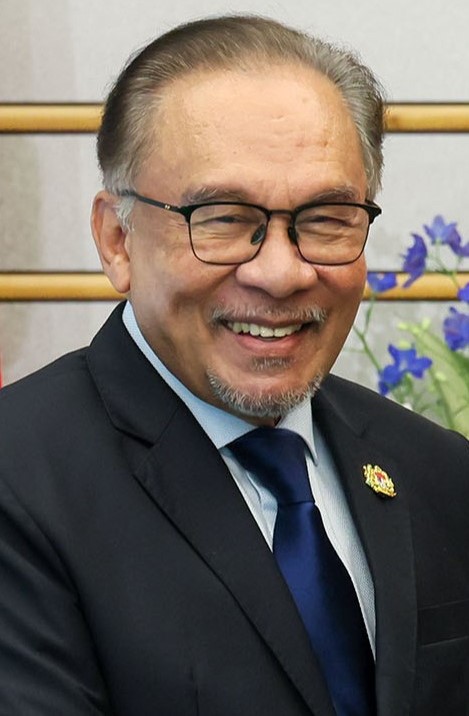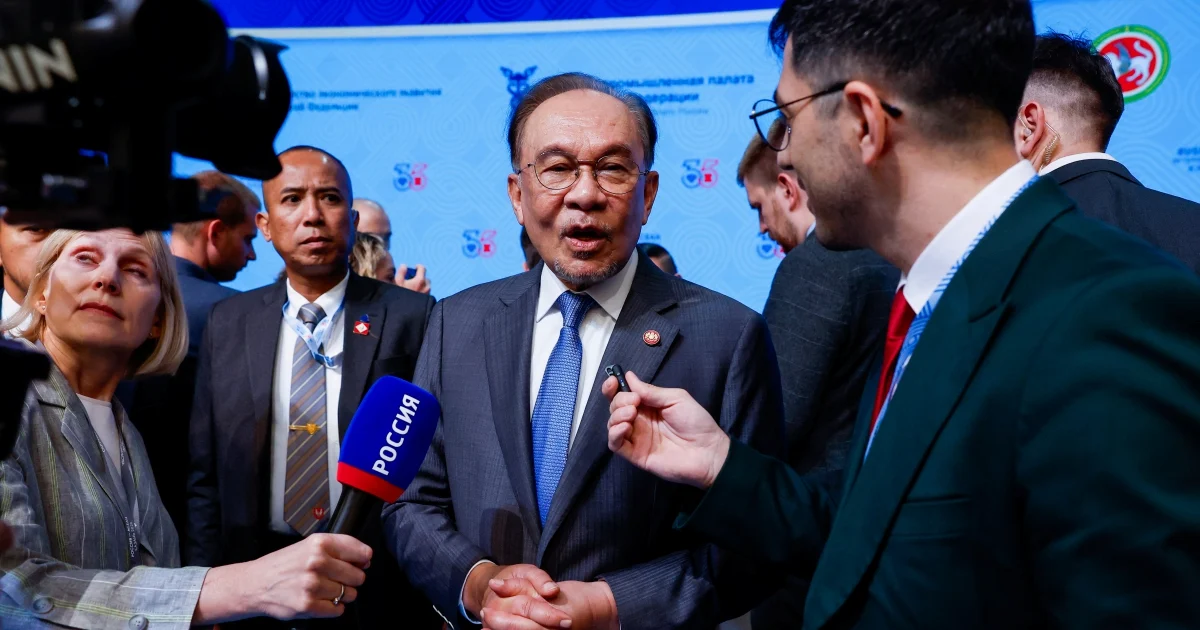
During a visit to Kazan, Prime Minister Datuk Seri Anwar Ibrahim has articulated a perspective on bilateral relations that extends well beyond the conventional framework of trade and investment, placing considerable emphasis on the role that cultural understanding plays in fostering meaningful ties between nations. His remarks highlighted a personal appreciation for Russian artistic traditions, specifically citing an enjoyment of Russian music and literature—observations that reflect a broader diplomatic approach centred on people-to-people connectivity.
Anwar's comments underline a recognition that national relationships thrive when rooted in mutual cultural respect and shared appreciation of one another's heritage. By openly discussing his engagement with Russian cultural products, the Prime Minister modelled the kind of intercultural curiosity that he appears to believe should characterise Malaysia's approach to international relations. This stance carries particular relevance for Southeast Asia, where most nations maintain similarly diverse populations with multiple cultural traditions, making cross-cultural diplomacy a natural and strategically valuable component of statecraft.
The emphasis on cultural exchange as a complement to economic cooperation reflects a maturing understanding of soft power—the ability to influence and attract through cultural appeal rather than economic coercion or military force. For Malaysia, a nation that has historically positioned itself as a bridge between East and West, and between Islamic and non-Islamic civilisations, this framing aligns with longstanding national narrative regarding multicultural harmony and interfaith understanding.
Russia, despite its geographic distance from Southeast Asia, has maintained longstanding cultural traditions that have exercised influence in the region. Russian literature in particular—through canonical works by authors such as Tolstoy, Dostoevsky, and Pushkin—has shaped intellectual discourse globally and continues to find audiences among educated readers in Malaysia and throughout the region. Similarly, Russian classical music maintains a universal appeal that transcends national boundaries, and Anwar's reference to enjoying Russian songs suggests an appreciation for this shared artistic heritage.
By articulating the importance of cultural initiatives alongside economic partnerships, Anwar addresses a dimension of international relations that often receives inadequate attention in policy discussions dominated by trade figures and investment flows. Cultural diplomacy tends to operate on longer timescales and through less immediately quantifiable mechanisms than commercial transactions, yet its cumulative impact on national image, soft power, and the durability of bilateral relationships can prove substantial. Malaysia's international standing benefits when its leadership demonstrates sophisticated engagement with global cultures and artistic traditions.
The Kazan setting itself carries symbolic weight, as the capital of Tatarstan represents Russia's multicultural dimensions—a region where Islamic heritage coexists with Orthodox Christian traditions and diverse ethnic communities. This context makes Anwar's emphasis on cultural exchange particularly apt, suggesting recognition of shared ground regarding cultural pluralism and religious coexistence. For observers tracking Malaysia's diplomatic positioning in a complex geopolitical environment, such statements signal continued commitment to building bridges rather than erecting barriers based on religious or civilisational divides.
From a Southeast Asian perspective, Anwar's approach models an alternative diplomatic style to pure transactional engagement. As regional nations navigate relationships with larger powers including Russia, China, India, and Western nations, the capacity to anchor connections in mutual cultural appreciation provides resilience and depth beyond what economic arrangements alone can deliver. This proves especially valuable when economic circumstances fluctuate or when political changes might otherwise destabilise bilateral relationships.
Anwar's personal disclosure regarding his cultural interests also reflects a broader pattern among contemporary Asian leaders of presenting themselves as intellectually engaged and cosmopolitan figures rather than purely technocratic administrators. This presentation carries weight in regional and global discourse, subtly reinforcing Malaysia's positioning as a nation capable of sophisticated engagement across cultural and ideological divides. It demonstrates leadership comfort with diversity and pluralism at a moment when such comfort remains contested in various global contexts.
The Prime Minister's comments arrive at a time when Malaysia continues calibrating its diplomatic relationships with major powers while maintaining its role within ASEAN. By elevating cultural diplomacy as a strategic concern equivalent to economic cooperation, Anwar articulates a vision of international relations that Malaysian policymakers can consistently apply across multiple bilateral and multilateral partnerships. This framework suggests that enhanced people-to-people contact, educational exchanges, artistic collaboration, and cultural understanding merit investment and priority alongside traditional diplomatic channels.
Looking forward, Anwar's emphasis on cultural exchange may encourage Malaysian institutions—universities, cultural agencies, and broadcasting organisations—to deepen engagement with Russian artistic and intellectual traditions while simultaneously promoting Malaysian culture in Russian contexts. Such reciprocal cultural initiatives generate goodwill, enhance mutual understanding, and create constituencies in both nations invested in maintaining strong bilateral ties. Educational institutions in particular can leverage such frameworks to develop language programmes, scholarly exchanges, and joint cultural projects.
The broader implication of Anwar's remarks extends to how Malaysia positions itself within the wider international community during a period of significant geopolitical uncertainty and realignment. By championing cultural diplomacy as a complement to economic statecraft, Malaysia demonstrates commitment to a more inclusive, humanistic approach to international relations—one that recognises shared artistic and intellectual heritage as foundational to sustainable partnerships. This perspective resonates with Malaysia's historical narrative and contemporary aspirations as a multicultural nation committed to peaceful, multidimensional engagement with the world.