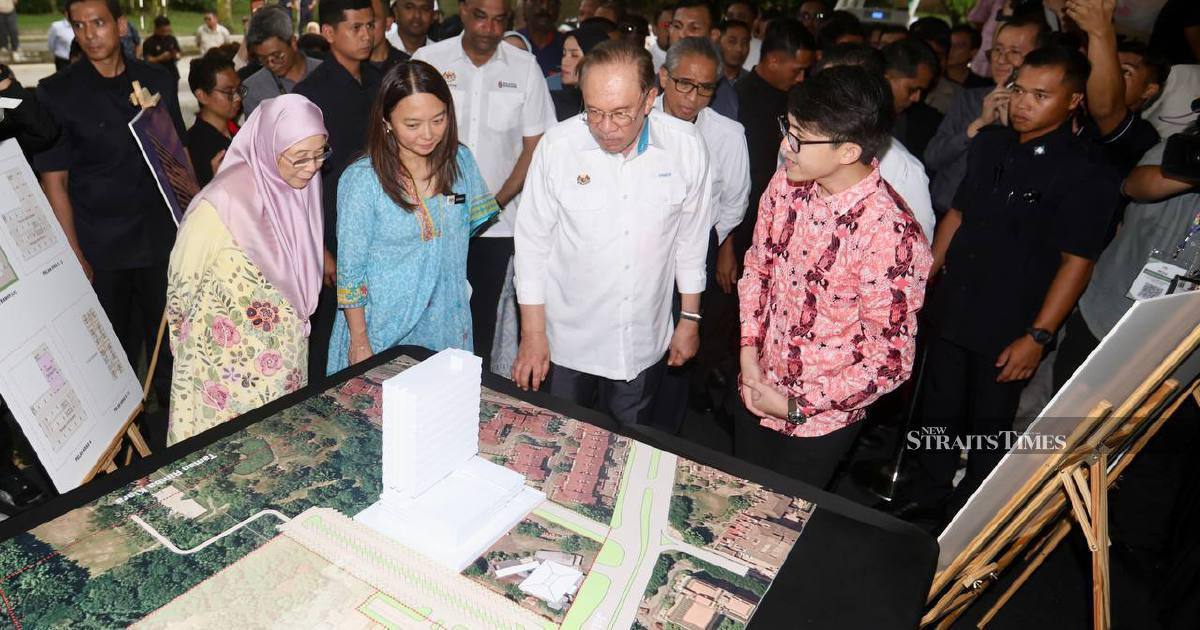
Prime Minister Datuk Seri Anwar Ibrahim has sought to dispel perceptions that his administration is overlooking the needs of Malaysia's urban poor population, emphasising instead that protecting their fundamental rights remains a central pillar of government policy. Responding to mounting public discourse about inequality in cities, Anwar pointed to specific development initiatives as tangible proof that marginalised urban communities are not being abandoned in favour of wealthier constituencies.
The Bukit Kiara project has emerged as the administration's flagship example in this defence of its urban welfare credentials. By championing this initiative, the government intends to demonstrate that it remains committed to translating electoral promises into concrete improvements in the lives of low-income city dwellers who have historically struggled with inadequate housing, limited access to basic services, and the pressures of rapidly gentrifying urban areas. The project's visibility in public discourse reflects a broader strategic effort to reshape the narrative around the current government's approach to urban development and social equity.
Anwar's statement carries particular significance given the economic pressures facing Malaysian cities. Urban poverty has intensified in recent years, driven by rising living costs, stagnant wages for unskilled workers, and the aftermath of the COVID-19 pandemic, which disproportionately affected informal sector employment. These challenges have fuelled criticism from civil society groups, opposition politicians, and community activists who argue that government policies have inadvertently benefited property developers and affluent residents at the expense of those struggling to afford housing and basic necessities in congested urban areas.
The Prime Minister's assertion that rights of the urban poor are being upheld suggests a reframing of what constitutes protection in this context. Beyond simple acknowledgment, the government appears to be arguing that its development projects actively advance the interests of low-income communities through job creation, improved infrastructure, and potentially affordable housing components. This framing attempts to counter narratives that portray the government as indifferent to the plight of city dwellers squeezed out of their neighbourhoods by escalating property values and developer-driven gentrification.
For Malaysian observers, the debate over urban poor welfare touches on broader questions about the social contract between government and citizens. As Malaysia transitions toward higher-income status and urbanisation accelerates, the question of whether growth benefits are distributed equitably remains contentious. The government's emphasis on specific projects like Bukit Kiara suggests an attempt to shift discussion from abstract policy commitments toward concrete, visible interventions that constituents can point to as evidence of action.
The Bukit Kiara initiative's prominence in Anwar's response also reflects the political calculus within the ruling coalition. Urban constituencies, particularly in the Klang Valley and other major metropolitan regions, represent significant electoral prizes. Demonstrating tangible delivery to low-income voters before the next general election could prove decisive in retaining support in these strategically important areas where opposition parties have made significant inroads by emphasising economic hardship and housing affordability.
Regionally, Malaysia's approach to urban poverty sits within a broader Southeast Asian context where rapid urbanisation has created similar pressures. Countries across the region grapple with comparable challenges: informal settlements, inadequate public transportation, limited affordable housing, and the tension between commercial development and the needs of long-term residents. How Malaysian policymakers address these issues could offer lessons—or cautionary tales—for neighbours facing parallel dilemmas.
The Prime Minister's defensive posture on this issue also hints at the government's vulnerability on economic matters. Public sentiment regarding living costs, wages, and housing affordability has shifted perceptibly in recent years, with urban communities expressing particular frustration. By proactively highlighting development projects and reaffirming commitment to the urban poor, the administration appears to be attempting preventive messaging ahead of potential electoral challenges and ongoing criticism from civil society organisations monitoring urban welfare trends.
Anwar's statements further suggest that the government recognises the political and social costs of appearing disconnected from the everyday struggles of ordinary urban Malaysians. Whether through housing initiatives, employment programmes, or infrastructure improvements, the administration is evidently keen to establish a narrative of engagement with—rather than neglect of—low-income city communities. The success of this messaging will ultimately depend on whether residents observe material improvements in their circumstances, affordable housing availability, and equitable access to urban resources that development projects like Bukit Kiara purport to deliver.

