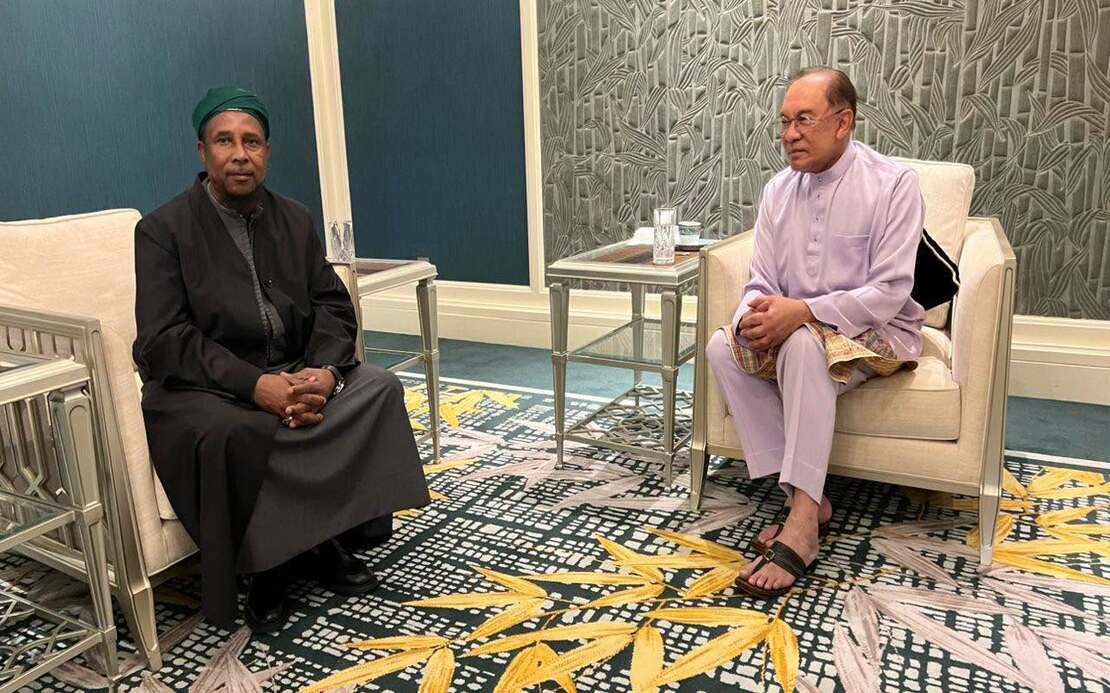
Prime Minister Datuk Seri Anwar Ibrahim on June 26 received a farewell visit from renowned Gambian Islamic scholar Sheikh Muhammad Haydara Al-Jilani, marking the conclusion of an intensive month-long engagement across Malaysia. The meeting, held at the Prime Minister's office, underscored the ongoing diplomatic and religious exchange between Malaysia and West Africa, reflecting the nation's broader commitment to strengthening interfaith and scholarly ties across the Muslim world.
Sheikh Muhammad Haydara Al-Jilani has spent the past four weeks traversing Malaysia to lead a comprehensive series of knowledge-sharing sessions and dhikr gatherings at multiple locations throughout the country. These programmes represent a significant component of dakwah initiatives—religious outreach activities designed to deepen Islamic understanding and spiritual practice among Malaysian Muslim communities. The breadth of the scholar's itinerary across diverse Malaysian states demonstrates the systematic approach to reaching audiences in urban centres and regional areas alike.
The timing of the farewell meeting carries particular spiritual significance, coinciding with the Day of Ashura and occurring on a Friday—both regarded as sacred occasions in the Islamic calendar. Friday, known as Jumu'ah in Islamic tradition, holds special importance for Muslims as a day of congregational worship, while the Day of Ashura commemorates significant historical events in Islamic history. Anwar emphasised that this convergence of dates provided an opportune moment for special supplications and reflection.
According to the Prime Minister's statement posted on his official Facebook account, the meeting served a dual purpose beyond ceremonial courtesy. Anwar sought the scholar's prayers for Malaysia's continued prosperity, national peace, and the overall well-being of all Malaysian citizens. This invocation reflects a common practice in Malaysian political and religious spheres where visiting Islamic scholars are requested to offer prayers and spiritual blessings for the nation's welfare and divine protection.
The request for prayers specifically invoked God's mercy, blessings, and protection upon Malaysia, demonstrating how state officials integrate religious and national concerns within official state functions. Such gestures are significant in Malaysia's Muslim-majority context, where religious legitimacy and spiritual sanction play important roles in public leadership. By publicly documenting this spiritual dimension of governance, Anwar signals the alignment of his administration's objectives with broader Islamic values and principles.
Sheikh Muhammad Haydara Al-Jilani's month-long presence in Malaysia represents part of a broader pattern of Islamic scholarly exchange that enriches Malaysia's religious landscape. Gambian Islamic scholars bring perspectives grounded in West African Islamic traditions, which have developed distinct methodologies in Quranic interpretation, Sunnah application, and spiritual practices. The exposure of Malaysian Muslim communities to such international scholarly voices contributes to a more cosmopolitan understanding of Islamic jurisprudence and practice.
The dakwah programmes conducted throughout the scholar's stay involved systematic engagement with Malaysian audiences through knowledge sessions and dhikr gatherings. Dhikr, the remembrance of God through recitation and meditation, represents a central spiritual practice in Islamic tradition. By facilitating the scholar's nationwide tour, Malaysian authorities demonstrate their support for experiential, community-based religious education alongside formal institutional approaches to Islamic learning.
The selection of multiple nationwide locations for these programmes indicates deliberate effort to ensure equitable access across geographic regions and demographic groups. Rather than concentrating activities in major urban centres, the comprehensive itinerary reflects recognition that religious knowledge-sharing initiatives can serve communities throughout Malaysia. This approach aligns with national policies promoting inclusive development and equitable distribution of cultural and educational resources.
Such international scholarly engagements also position Malaysia within the broader Islamic world, reinforcing its status as a centre for Islamic learning and a welcoming destination for Muslim scholars and educators. Malaysia's tradition of hosting international religious figures contributes to the nation's soft power and cultural influence within Muslim-majority regions. The formal recognition by the Prime Minister elevates the significance of these exchanges beyond purely religious dimensions into matters of state interest and diplomatic importance.
The conclusion of Sheikh Muhammad Haydara Al-Jilani's tour marks an endpoint to a particular phase of engagement, yet such visits typically generate lasting impacts through the communities and institutions with which the scholar has interacted. Knowledge shared, relationships established, and spiritual inspirations imparted during the month-long programme continue to resonate within Malaysian Islamic circles long after the visiting scholar's departure. The network effects of such exchanges contribute to the ongoing vitality of Malaysia's religious intellectual ecosystem and its connections to the wider Islamic world.

