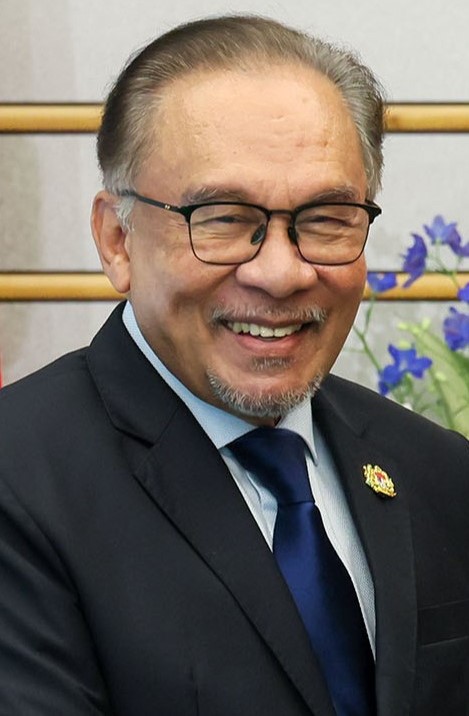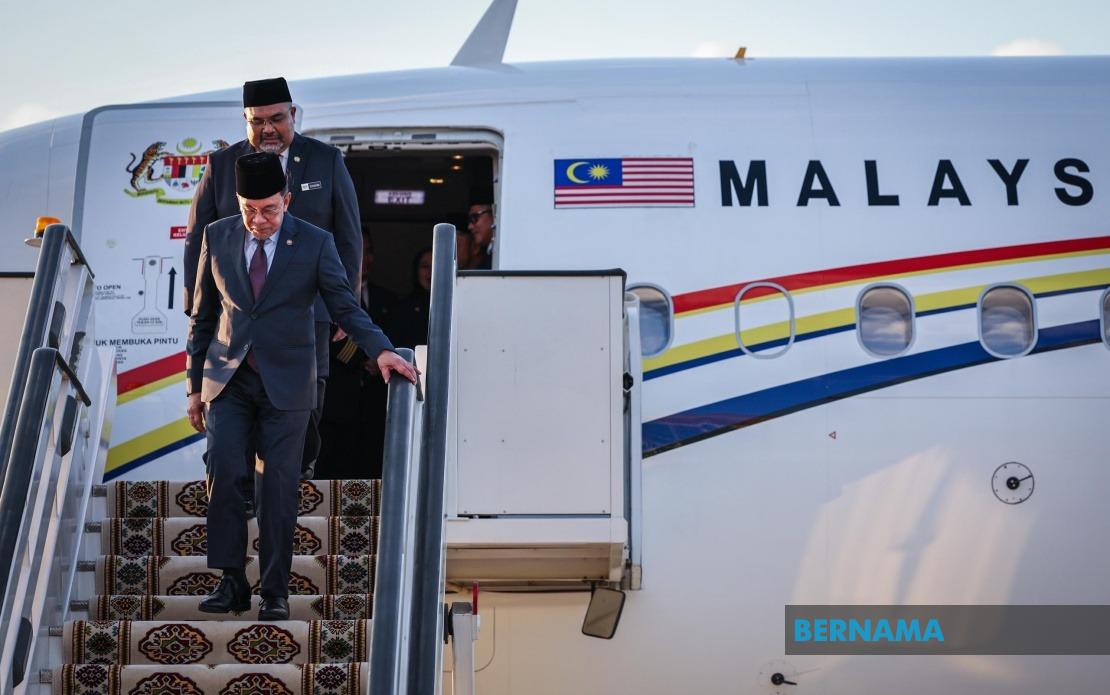
Prime Minister Datuk Seri Anwar Ibrahim touched down in Turkmenistan's capital Ashgabat on Tuesday evening, arriving in the country known as the "White Marble City" to further strengthen Malaysia's diplomatic presence in Central Asia. The aircraft carrying the premier and his delegation landed at Ashgabat International Airport at 8 pm local time after he completed a two-day working visit to Kazan in Russia's Republic of Tatarstan, extending Malaysia's engagement across the wider region. This represents the first official visit by Anwar to Turkmenistan and follows a reciprocal pattern of high-level diplomacy, coming after Turkmenistan President Serdar Berdimuhamedov's official visit to Malaysia last December.
Anwar's travelling delegation includes significant economic and trade figures, underlining the commercial dimensions of the visit. Minister of Investment, Trade and Industry Datuk Seri Johari Abdul Ghani and Minister of Economy Akmal Nasrullah Mohd Nasir accompanied the prime minister, signalling that trade promotion and economic opportunities form core elements of the discussions planned in Ashgabat. Officials from both the Prime Minister's Office and the Foreign Ministry also made the journey, ensuring comprehensive coverage of potential bilateral arrangements and policy coordination. Upon arrival, Malaysia's Ambassador to Turkmenistan Mohd Suhaimi Ahmad Tajuddin greeted the visiting party, while the Turkmenistan side was represented by Deputy Chairman of the Cabinet of Ministers for Oil and Gas Guvanch Agajanov, reflecting the importance of energy cooperation between the nations.
The visit's schedule reflects Malaysia's multifaceted approach to diplomacy in Central Asia, blending official state protocol with community engagement and economic forums. On the evening of his arrival, Anwar is set to host a dinner reception with Malaysian expatriates and friends of Malaysia in Ashgabat, a customary element of prime ministerial visits that helps maintain bonds with diaspora communities abroad. This grassroots dimension of diplomacy often proves valuable for building sustained people-to-people connections that complement government-to-government relations.
The formal programme on June 19 commences with considerable ceremonial fanfare when President Berdimuhamedov receives the Malaysian leader at the Presidential Palace. The itinerary includes bilateral discussions between the two leaders, a formal bilateral meeting between delegations, the signing of a joint statement, and the exchange of agreements and memoranda of understanding that the two governments have already prepared. Such instruments typically address cooperation frameworks across multiple sectors, from trade and investment to cultural and educational exchanges. An official luncheon hosted by Berdimuhamedov follows these discussions, providing informal settings for relationship-building alongside structured negotiations.
Religious observance forms part of the diplomatic calendar, with Anwar scheduled to perform Friday prayers at the Turkmenbashi Ruhy Mosque, also known as the Gypjak Mosque. This element of the visit, common in Malaysian diplomatic missions to Muslim-majority nations, signals respect for local culture and religious traditions. The visit then transitions into the economic dimension when Anwar jointly officialises the Malaysia-Turkmenistan Forum alongside President Berdimuhamedov at the Chamber of Commerce and Industry of Turkmenistan. Such forums serve as platforms for business executives and government officials to identify partnership opportunities, discuss trade barriers, and explore sector-specific collaboration. The visit concludes with a press conference involving Malaysian media, allowing the prime minister to articulate key outcomes and strategic messaging regarding the bilateral relationship.
The economic relationship between Malaysia and Turkmenistan, though not Malaysia's largest trading partnership globally, carries substantial significance within the Central Asian context. In 2025, Turkmenistan ranked as Malaysia's fourth-largest trading partner among Central Asian nations. The bilateral trade figures reveal an interesting structural dynamic: total trade reached RM75.80 million, with Malaysian exports dominating at RM75.50 million, indicating a trade surplus heavily weighted toward Malaysian goods and services reaching Turkmenistan's market. This represents a healthy 9 per cent increase compared with the previous year, suggesting growing market penetration and strengthening commercial ties despite the geographic distance between Southeast Asia and Central Asia.
Where the economic relationship becomes particularly noteworthy is through Malaysia's energy sector engagement, specifically Petroliam Nasional Bhd (Petronas), the national oil company. Petronas operates as a major investor in Turkmenistan's hydrocarbon sector, with cumulative investments since 1996 totalling RM52.73 billion. This substantial presence over nearly three decades demonstrates long-term strategic commitment to Turkmenistan's energy industry, positioning Malaysia as a significant foreign investor in the country's vital oil and gas resources. For context, Turkmenistan possesses considerable natural gas reserves and is a key energy supplier to regional markets, making Petronas's operational footprint strategically important.
This diplomatic engagement carries implications extending beyond bilateral concerns. Central Asia represents an increasingly important economic zone as global supply chains diversify and nations seek alternatives to traditional trading routes. Malaysia's deliberate cultivation of relationships with Central Asian nations, evidenced through Anwar's current visit and earlier stops in Russia, reflects recognition of the region's growing economic importance. For Malaysian businesses, establishing institutional frameworks with Turkmenistan through forums like the Malaysia-Turkmenistan Forum creates structured environments for identifying partnership opportunities and resolving commercial obstacles.
The visit also underscores Malaysia's "Act East" policy dimension, encompassing engagement across Asia's vast landscape. While Malaysia is geographically positioned in Southeast Asia, its diplomatic and economic strategy extends systematically across the wider Asian region, including Central Asia. By maintaining high-level bilateral relationships with Central Asian leaders and investing through companies like Petronas, Malaysia positions itself as a credible, long-term partner capable of operating successfully across diverse markets with different regulatory environments, cultural contexts, and business practices.
Further, this engagement reflects recognition within Malaysian policymaking circles that Central Asian nations offer both investment opportunities and market access increasingly relevant as Asian economies integrate across traditional geographic boundaries. Turkmenistan's hydrocarbon wealth, strategic location along historical and emerging trade routes, and growing international engagement make it an attractive partner for Malaysian investors seeking diversification. The presence of both trade and investment ministers in Anwar's delegation suggests the Malaysian government views the relationship as having potential for expansion beyond current levels.
The joint statement and agreements expected to emerge from Anwar's visit will likely establish frameworks addressing cooperation in areas including trade facilitation, investment protection, cultural exchange, and potentially tourism promotion. Given Malaysia's expertise in Islamic finance and banking, discussions may also explore opportunities for Malaysian financial institutions to participate in Turkmenistan's banking sector development. Educational exchanges and scholarship programmes often feature prominently in Malaysian diplomatic engagements, potentially expanding opportunities for Turkmen students to study in Malaysian institutions.
As Malaysia continues navigating an increasingly multipolar Asian landscape, visits like this to Central Asia demonstrate the systematic approach government undertakes to expand economic opportunities and diplomatic influence. The combination of high-level political engagement, energy sector investment through Petronas, and deliberate cultivation of commercial forums positions Malaysia to deepen its presence in this strategically significant region, particularly as Central Asian nations themselves seek to diversify their international partnerships and reduce dependency on traditional regional powers.