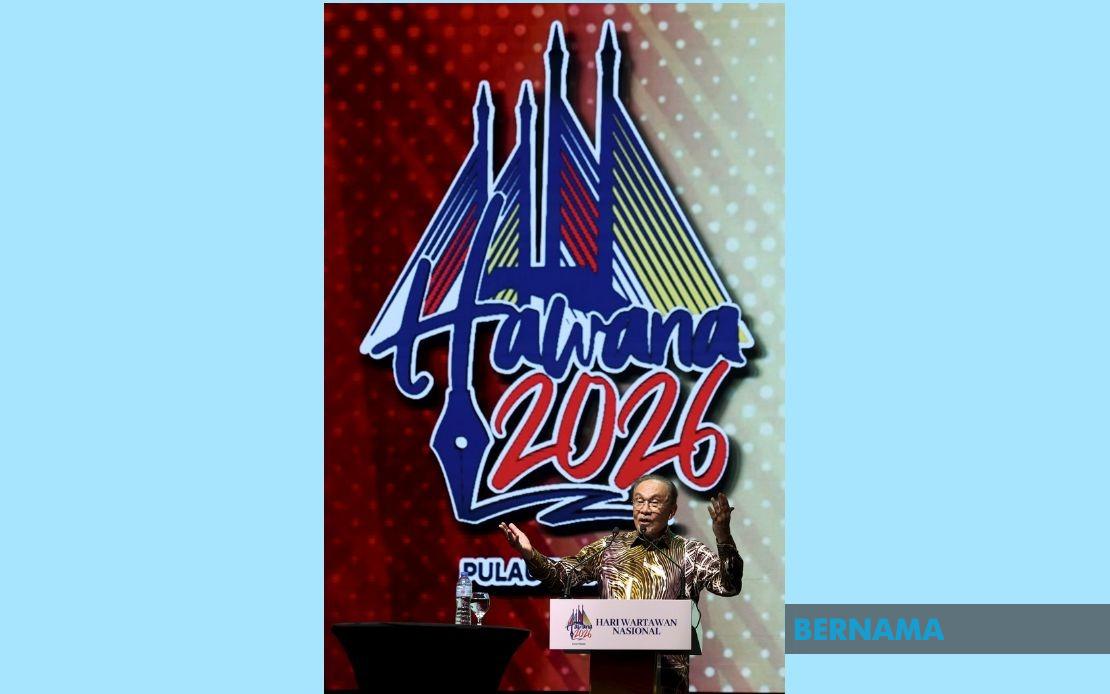
Prime Minister Datuk Seri Anwar Ibrahim committed an extra RM1 million to support Malaysia's journalism community during the National Journalists' Day (HAWANA) 2026 main event, held at PICCA Convention Centre@Butterworth Arena in Penang. The announcement underscores the government's strategic focus on strengthening the media sector, which plays a critical role in maintaining public discourse and democratic accountability. As Finance Minister alongside his prime ministerial duties, Anwar's pledge reflects a deliberate policy priority to ensure journalists and their families receive tangible support during financial hardship.
The Tabung Kasih@HAWANA represents a targeted welfare mechanism that has gained traction since its establishment during the HAWANA 2023 celebration. The fund provides a safety net encompassing financial aid, medical expense coverage, family welfare assistance, and broader support measures tailored to the specific vulnerabilities faced by journalism professionals. By creating this dedicated vehicle, the government acknowledges that media practitioners often operate under challenging conditions that may leave them exposed to sudden economic shocks or health crises without adequate protective mechanisms.
Since its inception, the welfare fund has extended assistance to 773 media practitioners nationwide, channelling RM2.26 million in total support. These figures demonstrate substantial uptake and indicate genuine demand within the journalism profession for such relief mechanisms. The relatively broad reach across the country suggests that economic pressures affecting journalists span geographical and organisational boundaries, affecting freelancers, regional journalists, and workers at major outlets alike. Anwar's decision to allocate an additional RM1 million reflects recognition that current resources remain insufficient to address ongoing need within the sector.
The government's investment in media welfare carries broader implications for journalism quality and sustainability in Malaysia. When journalists face economic precarity, news organisations struggle to retain experienced talent, and younger professionals may be deterred from entering the field. By reducing financial stress through welfare mechanisms, the government creates conditions enabling journalists to focus on their work without desperation-driven compromises to editorial independence or professional standards. This represents an indirect but meaningful investment in press freedom and news quality.
The HAWANA 2026 main event, organised under the theme "Media Integrity Strengthens Credibility," brought together more than 1,000 media practitioners domestically and internationally. The gathering's regional dimension—including delegates from Timor-Leste, Cambodia, and Laos—positions Malaysia as a convener for Southeast Asian journalism discussion. This continental engagement signals the government's commitment to positioning the nation as a regional leader in media development, professional standards, and cross-border journalistic collaboration. The international participation also provides Malaysian journalists with valuable networking and knowledge-exchange opportunities within their regional peer community.
Penang Chief Minister Chow Kon Yeow and Communications Minister Datuk Fahmi Fadzil's attendance underscored multi-level government commitment to the event. The participation of senior Communications Ministry officials, including secretary-general Datuk Abdul Halim Hamzah and deputy secretary-general Datuk Bahria Mohd Tamil, indicated institutional prioritisation of media sector development. Malaysian National News Agency (Bernama) leadership, represented by chairman Datuk Seri Wong Chun Wai and chief executive officer Datin Paduka Nur-ul Afida Kamaludin, demonstrated the state news agency's central role in coordinating national media initiatives.
The welfare fund's establishment and expansion must be understood within Malaysia's evolving media landscape, where digital disruption has eroded traditional business models supporting journalism. Print circulation decline, advertising migration to digital platforms, and intensified competition have compressed newsroom budgets and journalist salaries. In this context, government welfare support addresses a structural vulnerability that market forces alone cannot resolve. The fund provides stabilisation allowing journalists to weather industry transition periods without abandoning the profession entirely.
Tabung Kasih@HAWANA's eligibility criteria encompass both active and former media practitioners, reflecting recognition that journalism careers often involve transitions, retirements, or involuntary separations from the profession. This inclusive approach ensures that experienced practitioners who contributed to Malaysia's information ecosystem retain access to support during vulnerable periods. The fund's medical expense coverage acknowledges that health crises disproportionately impact those in financially precarious positions, while family welfare assistance recognises journalists' dependents and broader household vulnerabilities.
The RM1 million additional allocation, when considered alongside existing fund management structures and beneficiary networks, suggests the government anticipates increased demand and seeks to prevent assistance waitlists or eligibility restrictions. The announcement's timing at the major industry gathering enabled direct messaging to the journalist community about government responsiveness to their welfare concerns. This transparent communication may strengthen professional relationships between government institutions and media organisations, fostering collaborative approaches to journalism sustainability challenges.
Moving forward, the sustainability model for Tabung Kasih@HAWANA warrants attention. Whether funding continues through annual government allocations or transitions toward multi-stakeholder contributions involving media corporations and industry associations will influence the fund's long-term viability and independence perception. Malaysian policymakers should consider whether welfare support mechanisms might eventually transition toward industry-led sustainability, reducing dependence on government budgets while maintaining funding adequacy. Regional comparisons with journalism welfare initiatives in Singapore, Thailand, and Indonesia could inform best-practice approaches adapted to Malaysia's specific context and institutional capacity.

