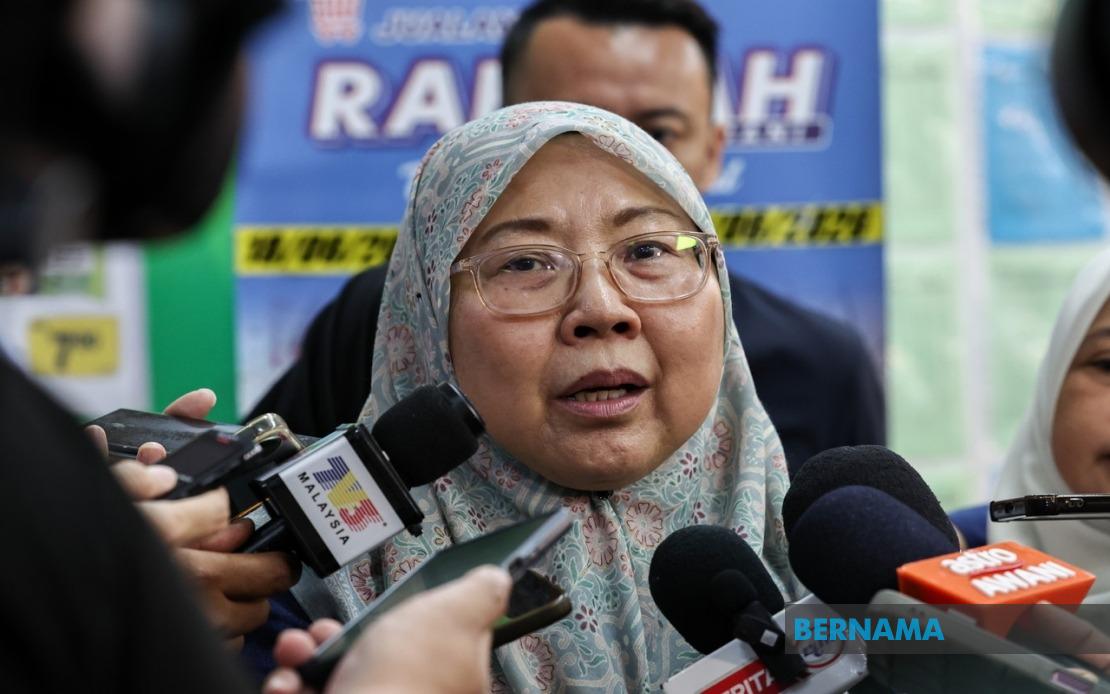
PKR's selection process for candidates contesting the forthcoming state elections in Johor and Negeri Sembilan has reached the final stages, with party secretary-general Datuk Dr Fuziah Salleh confirming that the slate is 99 per cent complete. The party plans to contest 20 state seats in Johor and 16 seats in Negeri Sembilan, with formal presentation of the full candidate roster anticipated within days. This marks a significant milestone as both states head toward critical polls that will reshape the political landscape in two pivotal regions.
The composition of PKR's candidate teams reflects a deliberate strategic choice to blend continuity with fresh perspectives. Fuziah indicated that the party would present a carefully calibrated mixture of incumbent and untested candidates, with particular emphasis on broadening representation among women and younger voters. However, she withheld specific details about the proportion of new entrants, preferring to reserve that disclosure for the official announcement ceremony. This measured approach suggests PKR is attempting to maintain voter confidence while simultaneously positioning itself as a party capable of renewal and generational change.
The timing of these elections carries substantial weight for the broader Pakatan Harapan coalition's standing in Malaysia's political firmament. In Johor, voters will head to polls on July 11 following dissolution of the state assembly on June 1, with nomination scheduled for June 27. The state legislature comprises 56 seats, and prior to dissolution, the composition heavily favoured Barisan Nasional with 40 seats, while PH controlled 12, Perikatan Nasional held three, and MUDA secured one. This distribution illustrates the uphill challenge facing PKR and its allies in attempting to reclaim ground in a state historically dominated by BN politics.
Negeri Sembilan's electoral calendar unfolds along a slightly different trajectory, with polling day set for August 1 and nomination occurring on July 18, with early voting on July 28. The state assembly operates with 36 seats total, and prior to its June 5 dissolution, PH maintained a narrow plurality with 17 seats compared to BN's 14 and PN's five. This more competitive configuration suggests that Negeri Sembilan may prove a more contested battleground than Johor, offering PKR better prospects for electoral gains and providing a potential narrative of momentum heading into the larger Johor contest.
A contentious matter requiring resolution involves the Puteri Wangsa constituency in Johor, where PKR and coalition partner Amanah are locked in dispute over allocation rights. Johor Amanah vice chairman Dr Zuhan Zain has publicly objected to PKR's assertion that the seat properly belongs to PKR after being loaned to MUDA during the 2022 state election. Rather than pursuing a confrontational public stance, Fuziah delegated the controversy to top-tier party leadership, indicating that senior figures would negotiate a resolution behind closed doors. This approach reflects the inherent tensions within coalition politics, where smaller partners like Amanah must balance acceptance of PKR's structural dominance against concerns about marginalisation within shared electoral arrangements.
The mechanism of seat-sharing and loan arrangements within PH has emerged as a recurring friction point that threatens coalition cohesion. MUDA's temporary occupation of Puteri Wangsa created a precedent that Amanah now contests, with the party asserting residual claims once the parliamentary term concluded. These disputes, though often portrayed as technical seat allocation matters by mainstream media, carry deeper significance for coalition dynamics and smaller parties' leverage in negotiation. Unresolved territorial disputes can poison coalition relationships and create opportunities for opposition parties to poach dissatisfied partners seeking more equitable treatment.
Simultaneously, PKR faces an internal disciplinary matter involving Subang MP Wong Chen, who openly challenged party leadership to dismiss him following an investigative process. Fuziah confirmed that Wong's case has been forwarded to PKR's Disciplinary Board for determination, leaving his ultimate status within the party unresolved. This situation highlights the complexities of managing internal dissent within a modern political party, particularly when high-profile MPs employ public defiance as a negotiating tactic. The outcome of Wong's disciplinary proceeding could establish important precedents regarding the party's tolerance for maverick behaviour among its parliamentary representatives.
The strategic positioning evident in PKR's candidate composition merits closer examination beyond surface-level assurances about balanced representation. By emphasising inclusion of women and younger candidates, PKR attempts to capture demographic sentiment, particularly among urban, educated voters who have increasingly gravitated toward opposition politics. This demographic realignment represents a significant shift from Malaysia's traditional political patterns, where age-based voting preferences showed less pronounced variation. Whether PKR's candidate roster actually delivers meaningful advancement opportunities for these groups or merely offers symbolic gestures will become evident through campaign dynamics and post-election advancement within the party hierarchy.
For Malaysian voters in both Johor and Negeri Sembilan, the imminent state elections represent an opportunity to assess the viability of alternatives to decades of political incumbency. In Johor specifically, the vast disparity between BN's 40 seats and PH's 12 seats underscores the magnitude of ground that opposition forces must recover to achieve meaningful influence. Negeri Sembilan's more balanced configuration offers PH a more promising pathway toward electoral success, potentially generating momentum that could influence perception of opposition viability across other states. The next several weeks will determine whether PKR's carefully curated candidate slate resonates with voters or whether the coalition struggles to translate its peninsular urban support into broader state-level victories.
As PKR prepares to unveil its full candidate roster, the party faces mounting expectations from coalition partners, grassroots supporters, and opposition-minded voters seeking credible alternatives to established governance structures. The announcement itself will provide critical data regarding the party's actual commitment to generational renewal and demographic inclusion. Scrutiny will focus on whether promised new faces receive competitive constituencies with genuine winning potential, or whether they are relegated to unwinnable seats as symbolic gestures. For Malaysian political observers and voters weighing their electoral choices, the details contained within PKR's candidate announcement will carry implications extending far beyond the immediate Johor and Negeri Sembilan contests, signalling the opposition coalition's broader strategic direction and internal equilibrium.