The Philippine Department of Justice has launched a formal investigation into potential criminal charges against government officials connected to a shooting incident at the Senate building on May 13 and the subsequent escape of Senator Ronald dela Rosa from protective custody early the following day. Justice Secretary Fredderick Vida announced that prosecutors are actively examining evidence and witness accounts to determine the circumstances surrounding both incidents and any possible connections between them.
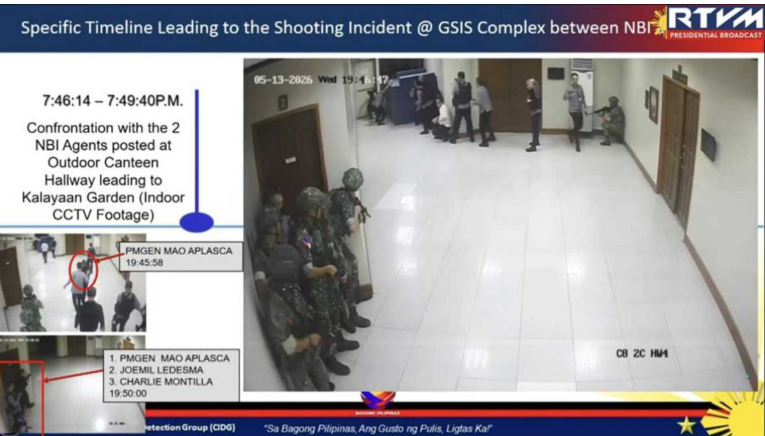
According to Vida's statement, the investigative panel has compiled accounts from National Bureau of Investigation officers, journalists who were present, and security camera footage documenting the incident. The evidence points to sniper fire originating from the fifth floor of the Senate building, with shots directed toward an identifiable NBI vehicle that was stationed at the GSIS premises. This detail is significant as it suggests the shooting was not random but deliberately targeted, raising questions about the motive and who may have orchestrated it.
The timing of these two events within hours of each other—the shooting on May 13 and Dela Rosa's escape in the early hours of May 14—has fuelled speculation about their possible interconnection. The Justice Department's investigation seeks to clarify whether the shooting incident was connected to circumstances surrounding the senator's protective custody or whether they were separate events that merely occurred in close succession. Vida emphasized that the investigation remains fluid and that conclusions should not be drawn prematurely.
When directly questioned about whether specific individuals are being targeted in the investigation, Vida declined to name names but indicated that preliminary findings suggest multiple personalities involved are public officials. This revelation carries considerable weight in the Philippine context, where government accountability and institutional integrity are contentious issues. The involvement of public servants in either the shooting or the escape—or both—would represent a serious breach of trust and raise broader questions about the rule of law within government institutions.
Vida's comments reflect the delicate position the Justice Department occupies in handling such sensitive cases. He stressed that the department would conduct its work with professionalism, objectivity, and impartiality, explicitly stating that no individual should receive preferential treatment based on their status. This assurance appears directed at public concerns that officials might shield colleagues or that powerful figures could escape accountability due to their positions within government.
The principle that "no individual is above the law" has been reiterated consistently in Vida's statements, though notably he balanced this with the caveat that "no person should be judged before the evidence has been fully examined." This formulation suggests the Justice Department is conscious of due process requirements and the potential reputational damage that premature accusations could cause, even to public officials who may ultimately be exonerated.
The involvement of the NBI in the investigation underscores the complexity of the case. As the nation's lead investigative agency for crimes against persons and property, the NBI's presence and the apparent targeting of their vehicle indicates this matter has escalated beyond routine criminal investigation into territory that touches upon national security and the integrity of state institutions. The fact that NBI members themselves are providing accounts suggests potential institutional involvement rather than isolated individual actions.
For Malaysian observers and regional security analysts, this case illustrates the challenges Southeast Asian democracies face in maintaining institutional checks and balances. The Philippines, like Malaysia, operates under a constitutional framework that theoretically protects citizens from abuse of power, yet both nations periodically confront situations where state actors appear implicated in serious crimes. The public's confidence in investigative bodies and the justice system depends significantly on the outcome of cases like this, where government officials stand accused.
The investigation's progression will likely be closely monitored not only in the Philippines but across the region, as it represents a test of whether democratic institutions can effectively investigate their own members without political interference. The challenge facing Vida and the Justice Department is demonstrating that their inquiry is genuinely independent and not merely performative. Given the high-profile nature of the case and the involvement of a sitting senator, any perception of bias or favoritism could undermine public trust in judicial institutions.
As the investigation continues, several critical questions remain unanswered: Who authorized the sniper fire from the Senate building? What was the tactical objective? How did Dela Rosa escape from protective custody, and were security personnel complicit? Were the two incidents coordinated, or did they merely coincide? The answers to these questions will determine not only the individual accountability of officials involved but also whether systemic vulnerabilities within Philippine government institutions require remediation.
Vida's commitment to professional and objective investigation will be tested as the case develops. The department must balance the urgency of public demands for accountability against the methodical gathering and verification of evidence. In cases involving government officials, the stakes for institutional credibility are exceptionally high, making the Justice Department's handling of this matter consequential far beyond the immediate criminal charges that may result.