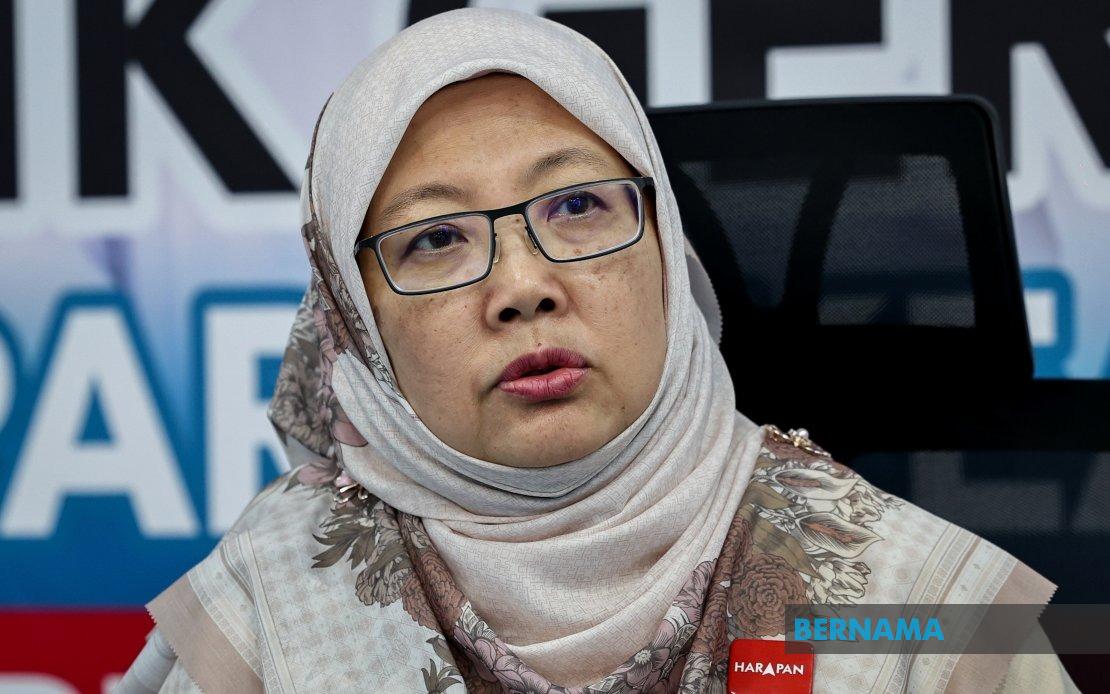
Pakatan Harapan has committed to preserving the Sultan of Johor's constitutional powers to select the state's Menteri Besar, should voters entrust the coalition with forming the next government following the forthcoming Johor state election. The pledge underscores the coalition's position on royal institutions and federalism, particularly the sovereignty of individual state rulers over critical administrative appointments. By affirming adherence to the Johor State Constitution 1895, PH seeks to navigate the delicate balance between electoral competition and respect for established constitutional frameworks that have long governed the sultanate's governance structures.
Johor PKR chairman Datuk Seri Dr Zaliha Mustafa elaborated on the party's stance in a statement, emphasising that PH intends to direct public discourse toward substantive governance matters rather than personnel decisions. The coalition's strategy reflects a deliberate choice to sideline the Menteri Besar appointment question as a campaign flashpoint, redirecting voter attention toward concrete policy platforms and economic agendas. This tactical positioning becomes particularly significant given the traditional prominence of leadership personalities in Malaysian state politics, where the identity of the top executive often dominates campaign narratives and voter considerations.
The statement arrived as a response to remarks made by incumbent Johor Menteri Besar Datuk Onn Hafiz Ghazi, who had publicly called upon Pakatan Harapan to disclose its preferred candidate for the post should the opposition bloc secure sufficient legislative seats. This call reflected conventional electoral practice in Malaysian politics, where coalitions typically present voters with a known leadership figure before ballots are cast, allowing the electorate to make informed choices about who will assume executive responsibility. Onn Hafiz's intervention injected an element of pressure into the campaign dynamics, placing PH in a position of either naming a candidate or accepting criticism for keeping voters in the dark about prospective leadership.
Dr Zaliha's response circumvented this pressure by reframing the conversation around constitutional propriety and the Sultan's prerogatives. She articulated that Pakatan Harapan possesses sufficient depth of competent and seasoned leaders across the state capable of shouldering gubernatorial responsibilities, should the mandate be granted. This formulation allows the coalition to maintain flexibility in leadership selection whilst demonstrating confidence in its bench strength. The emphasis on multiple qualified candidates rather than a singular preferred choice suggests internal discussions about potential appointees remain fluid, with final determination appropriately delegated to the Sultan following any electoral victory.
The underlying constitutional question reflects broader tensions within Malaysia's federal system regarding how much electoral transparency should accompany royal prerogatives. While the Sultan's right to appoint the Menteri Besar is constitutionally clear, modern democratic practice increasingly expects coalition blocs to present voters with transparency about intended governance structures. Pakatan Harapan's position essentially argues that these two principles need not be mutually exclusive—the Sultan retains constitutional authority whilst the coalition demonstrates organisational capability and policy readiness. This framing attempts to satisfy both traditional constitutional understandings and contemporary electoral expectations.
For Malaysian and Southeast Asian observers, this exchange illuminates how Westminster-style democracy interacts with constitutional monarchy in the Malaysian context. Unlike fully republican systems where voters directly elect chief executives, Malaysia's state governments preserve royal appointment powers that create layered legitimacy—electoral mandates from the people operate alongside sovereign appointments by the ruler. Johor's specific constitutional arrangements, enshrined in 1895 legislation, maintain this dual legitimacy structure in ways that some view as enhancing checks and balances whilst others see as introducing ambiguity into democratic mandates.
The broader campaign implications merit consideration as well. By declining to name a candidate, Pakatan Harapan potentially avoids persona-based attacks and negative campaigning targeting a specific individual, allowing the coalition to maintain message discipline around policy platforms. Conversely, the decision may frustrate voters seeking clarity about prospective leadership, particularly in a state where personality-driven politics holds considerable sway. The strategy also creates operational flexibility, enabling coalition members to effectively campaign across constituencies without committing to hierarchical structures that might alienate competing factions within the broader Pakatan alliance.
Dr Zaliha's emphasis on listening to public concerns and addressing living standards, employment opportunities, and economic growth reflects deliberate prioritisation of bread-and-butter issues over institutional mechanics. This approach acknowledges that whilst constitutional questions engage political elite and observers, ordinary voters are typically more concerned with tangible improvements in daily life. By anchoring the campaign narrative around economic security and social welfare, Pakatan Harapan attempts to shift attention from questions about appointing processes toward substantive governance outcomes that voters can evaluate through their own lived experience.
The Sultan's role in appointing the Menteri Besar represents a significant institutional mechanism in Malaysian federalism that distinguishes state governance from Westminster systems lacking monarchical elements. This prerogative, historically understood as allowing the Sultan to select administrators from amongst those with demonstrated support in the legislature, introduces an element of sovereign discretion beyond pure electoral majoritarian logic. Various interpretations exist regarding whether the Sultan must appoint the leader of the largest coalition or retains unfettered discretion, with constitutional scholars and political practitioners holding differing views on these boundaries.
Looking ahead, Pakatan Harapan's commitment to respecting these constitutional arrangements may serve the coalition's longer-term interests in portraying itself as a moderate, constitutionally-minded political force respectful of institutional traditions and federalism principles. This positioning contrasts with potential opposition framing of PH as a centralising force seeking to diminish royal and state authority. By explicitly affirming the Sultan's role, the coalition signals commitment to constitutional pluralism and respect for Malaysia's unique governance architecture, considerations that may resonate with voters concerned about institutional stability and proper checks on executive authority.
The election campaign will reveal whether this strategy successfully reorients Johor voters toward policy-focused deliberation or whether voters themselves demand greater clarity about prospective leadership before casting ballots. The tension between constitutional propriety and electoral transparency remains unresolved in Malaysian political practice, with each state election potentially establishing precedents about how these competing principles should be balanced in democratic engagement.

