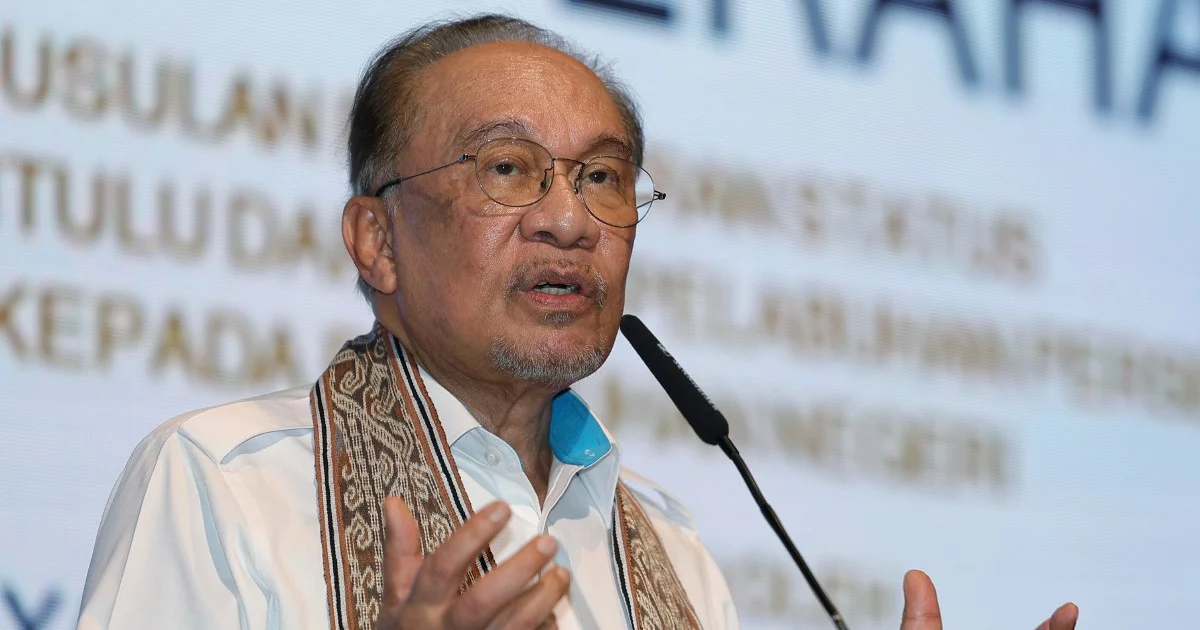
Negotiations between Petronas and Petros are tracking in a constructive direction, according to Prime Minister Datuk Seri Anwar Ibrahim, who made the statement during a visit to Kuching. The remarks underscore the government's determination to pursue structural improvements within Malaysia's energy sector through high-level diplomatic engagement between the two state-owned enterprises.
The dialogue between Malaysia's national oil company Petronas and Sarawak's state petroleum corporation Petros represents a significant initiative aimed at clarifying operational boundaries and commercial relationships that have remained contentious. These discussions carry implications not only for the two organisations but also for the broader energy landscape across Malaysia and the region. The progress cited by Anwar suggests that both parties may be moving toward resolving disputes that have historically complicated resource management and revenue distribution.
Anwar's characterisation of the talks as positive reflects an administration commitment to finding middle ground between competing interests. Petronas, as the federal entity, operates under national directives and maintains responsibility for Malaysia's international energy commitments. Petros, conversely, represents Sarawak's constitutional rights over resources within its territorial boundaries. Balancing these institutional mandates has proven persistently difficult, particularly regarding exploration, development, and fiscal arrangements in shared or overlapping zones.
The significance of advancing these negotiations extends beyond administrative mechanics. Malaysia's hydrocarbon sector remains crucial to national revenue and economic stability, with oil and gas exports contributing meaningfully to foreign exchange earnings and government coffers. Clarity regarding which entity controls specific assets, operational decisions, and revenue flows can unlock investment potential that remains frozen by uncertainty. Resolving ambiguities may enable both organisations to pursue projects more aggressively and attract additional international capital to Southeast Asia's energy infrastructure.
From a regional perspective, Malaysia's ability to optimise its petroleum sector gains added relevance amid global energy market volatility. The Asia-Pacific region faces mounting demand for reliable energy supplies as economies expand and industrialise. Malaysian hydrocarbon reserves, though finite, represent a valuable regional resource. Effective coordination between Petronas and Petros could position Malaysia to capitalise on this advantage more effectively than rival producers in the neighbourhood.
The timing of Anwar's comments also reflects broader policy priorities within the current administration. The government has emphasised modernisation, institutional reform, and pragmatic problem-solving as hallmarks of its governance approach. Successfully concluding Petronas-Petros negotiations would demonstrate capacity to navigate complex intergovernmental and institutional dynamics, potentially building momentum for other ambitious sectoral restructuring initiatives. This success could validate the administration's credentials as capable reformers willing to tackle entrenched structural obstacles.
Historically, relations between Petronas and Petros have been marked by tension stemming from divergent interpretations of constitutional provisions and contractual agreements governing resource ownership and management. Disputes have occasionally erupted into public disagreements, creating uncertainty about regulatory direction and investment framework stability. Investors, both domestic and international, typically view such friction negatively, potentially delaying capital allocation decisions. Progress in negotiations signals movement toward greater institutional predictability.
The inclusion of specific financial and operational parameters within any Petronas-Petros framework would provide clearer guidance for future ventures. Such arrangements might establish protocols for joint development, revenue-sharing formulae, or jurisdictional clarifications that reduce interpretive ambiguity. These mechanisms, if thoughtfully constructed, could simultaneously protect federal interests, acknowledge state prerogatives, and create space for commercial efficiency.
From a stakeholder perspective, multiple constituencies have vested interests in constructive resolution. International oil majors operating in Malaysian waters need transparent frameworks to justify sustained investments. Local communities in petroleum-producing regions expect stable institutional arrangements that support employment and local economic development. Capital markets favour predictability and institutional coherence when assessing risk profiles of Malaysian energy sector investment opportunities.
Anwar's public acknowledgement of progress, even framed carefully, suggests that confidential discussions have yielded substantive movement rather than mere procedural advancement. The statement indicates willingness to highlight positive developments to business constituencies and international observers, potentially signalling confidence that agreement is achievable within a reasonable timeframe. Such confidence, if warranted, could encourage investment community patience with ongoing negotiations.
Looking ahead, the resolution of Petronas-Petros tensions could catalyse broader energy sector modernisation initiatives. Clarified institutional relationships might enable both organisations to redirect resources from dispute management toward productive ventures, including renewable energy transition investments increasingly demanded by global markets. Malaysia, like many petroleum exporters, faces long-term strategic imperative to diversify energy portfolios while petroleum revenues remain available to finance that transition.
The pathway forward likely involves compromises on both sides, structured through mechanisms balancing competing constitutional and commercial claims. Success requires sustained political commitment, willingness to acknowledge legitimate interests of each party, and technical capacity to implement agreed frameworks effectively. Anwar's public encouragement suggests the administration views these conditions as potentially achievable, positioning Malaysia toward more cohesive institutional stewardship of its petroleum wealth.

