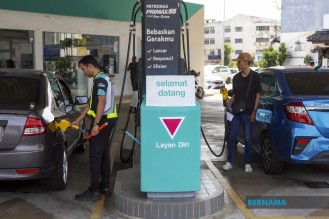
Malaysia's fuel supply situation has been given a more positive assessment, with the Minister in the Prime Minister's Department (Law and Institutional Reform), Datuk Seri Azalina Othman Said, confirming that Petronas petrol stations will have sufficient stocks to meet demand through August. The reassurance came during deliberations of the National Economic Action Council (MTEN), where officials reviewed the latest feedback directly from the national oil company regarding its distribution network capacity.
The importance of this declaration lies in Petronas Dagangan Bhd's dominant market position. As the publicly listed downstream arm of Petronas, the company supplies approximately 50 percent of Malaysia's total domestic fuel requirements through its extensive petrol station network. This concentration of supply responsibility means that disruptions affecting Petronas directly impact half the nation's fuelling infrastructure, making statements about its operational stability matters of genuine national concern.
The government has responded to global energy uncertainties by establishing a dedicated Crisis Management Task Force under MTEN's oversight. This mechanism represents an institutional commitment to maintaining vigilance over fuel security during a period marked by geopolitical tensions and volatile commodity markets. The task force assumes responsibility for continuous monitoring of the country's fuel, petroleum, and broader energy supply trajectories, working to identify emerging bottlenecks before they affect consumers at the pump.
Beyond simple supply tracking, the task force operates with a multifaceted mandate. Officials emphasise that the unit simultaneously pursues price stability objectives and undertakes enforcement activities against fuel smuggling and irregular market activities. These parallel responsibilities reflect the government's understanding that supply security alone proves insufficient without complementary price controls and market integrity measures.
The establishment of this formal oversight structure followed parliamentary questions from Khairil Nizam Khirudin, the member for Jerantut, who sought clarity about Petronas' earlier statement that supply guarantees existed only until June 2026. The legislator's intervention highlighted public concern about the adequacy of contingency planning should international energy disruptions intensify. Government officials responded by acknowledging the elevated risk environment while presenting evidence of concrete preparatory measures.
Seeking alternative crude sources reflects pragmatic energy diplomacy in response to Middle East tensions. Officials announced ongoing negotiations to secure crude oil from exporters outside the West Asian region, particularly suppliers in West Africa and the Americas. However, these suppliers must meet Malaysia's specific technical requirements regarding crude oil grades and provide commercially acceptable terms. This geographic diversification strategy reduces dependency on any single region's stability while maintaining quality standards essential for domestic refining operations.
The announcement carries particular significance for Malaysian businesses and consumers accustomed to affordable petrol and diesel. Malaysia's transportation sector, manufacturing industries, and agricultural operations all depend on stable fuel availability and predictable pricing. The government's articulation of supply confidence through August provides businesses with sufficient visibility to plan operations without immediate hedging against acute shortages, though longer-term planning beyond that horizon remains clouded by global uncertainties.
Regionally, Malaysia's experience mirrors challenges facing other Southeast Asian economies. While the region's geographical distance from the Middle East provides some insulation from direct conflict impacts, global energy markets remain tightly integrated. Oil price movements driven by West Asian events cascade through regional supply chains and affect development costs for infrastructure projects across the Association of Southeast Asian Nations.
The three-month supply window flagged by officials suggests that the government views August as a critical juncture requiring reassessment. Implicit in this timeline is an assumption that either global conditions will stabilise by late summer or that the task force will have implemented alternative sourcing arrangements sufficiently robust to maintain supply continuity. This staging of reassurance reflects transparent acknowledgment that the current geopolitical landscape remains fluid and unpredictable.
For Malaysian stakeholders, the government's dual approach—combining confidence in near-term supply while establishing formal crisis management infrastructure—signals measured optimism tempered by realistic contingency thinking. Officials are essentially communicating that while immediate concerns about running out of fuel prove unfounded, complacency about medium-term energy security would be imprudent. The establishment of systematic monitoring and coordination mechanisms represents preparation for scenarios that officials hope will not materialise but recognise warrant serious planning.
The fuel supply question also connects to Malaysia's broader economic resilience narrative. Energy security underpins industrial competitiveness, manufacturing export performance, and household cost-of-living stability. By publicly committing to supply oversight and diversified sourcing strategies, the government addresses not merely physical fuel availability but investor confidence in Malaysia's ability to manage resource security during turbulent global conditions. This institutional credibility proves as valuable as actual barrel supplies in sustaining economic stability.

