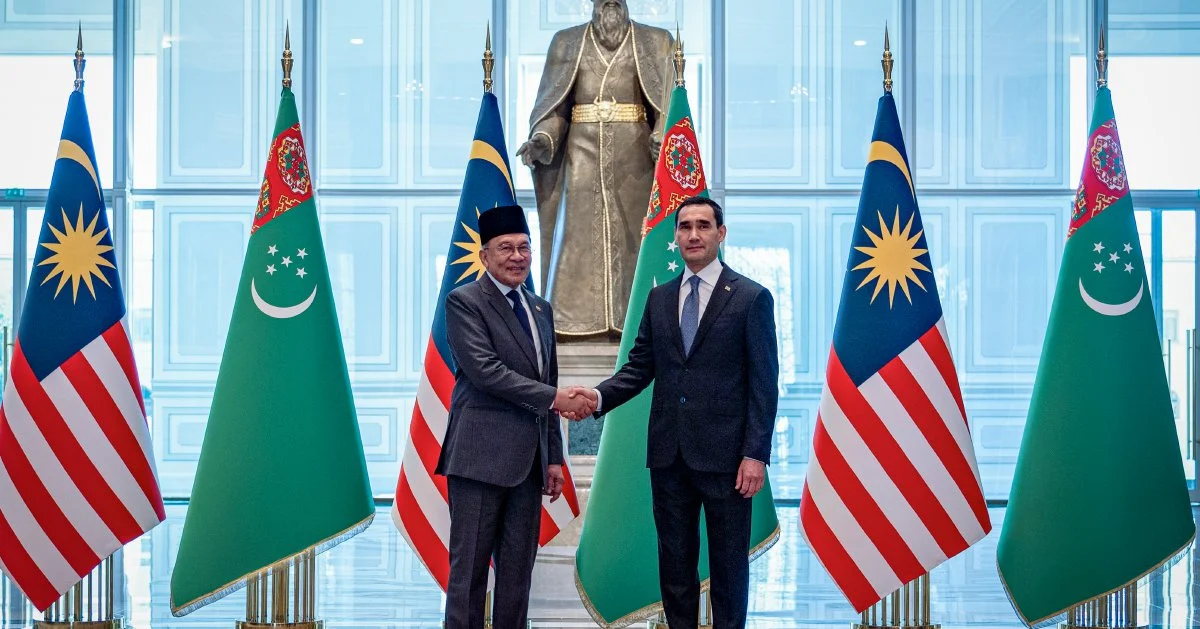
Petronas is positioning itself as the cornerstone of Malaysia's deepening engagement with Turkmenistan, leveraging the national oil and gas champion's operational footprint across the Central Asian republic to unlock new economic opportunities and solidify bilateral ties. The timing of this strategic push follows Prime Minister Datuk Seri Anwar Ibrahim's recent official visit to Ashgabat, a mission that signals Kuala Lumpur's renewed commitment to building meaningful partnerships beyond traditional Southeast Asian circles. By anchoring Malaysia-Turkmenistan relations in the energy sector—an area where both nations have vested interests—the two countries are constructing a framework for cooperation that transcends diplomatic pleasantries and creates tangible commercial benefits.
Petronas's presence in Turkmenistan represents one of the longest-running foreign energy investments in the country, providing the Malaysian corporation with institutional knowledge, local relationships, and operational infrastructure that few competitors possess. This accumulated experience becomes particularly valuable in Turkmenistan's complex regulatory environment and its culturally distinct business landscape. The company's ability to navigate these terrain, combined with its track record of successful project execution across multiple jurisdictions, positions it as a trusted intermediary capable of bridging Malaysia's development aspirations with Turkmenistan's hydrocarbon wealth. For Malaysian policymakers, this existing relationship eliminates much of the groundwork typically required when establishing diplomatic and commercial frameworks with new partners.
The energy sector forms the logical foundation for Malaysia-Turkmenistan cooperation because both nations recognise hydrocarbons as critical drivers of economic development and fiscal sustainability. Turkmenistan possesses substantial natural gas reserves—among the world's ten largest—yet faces persistent challenges in monetising these resources and accessing lucrative international markets. Malaysia, conversely, has developed sophisticated downstream capabilities, technical expertise in gas processing and liquefaction, and established networks connecting resource-rich regions to consumers across Asia-Pacific and beyond. By facilitating Petronas's expanded activities in Turkmenistan, Malaysia gains access to additional gas supplies that could enhance regional energy security, while Turkmenistan benefits from Malaysian technical knowledge and market connections.
Prime Minister Anwar Ibrahim's visit to Turkmenistan carries strategic significance beyond ceremonial exchanges. The journey underscores Malaysia's deliberate pivot toward Central Asia as a region of economic interest, particularly as supply chains diversify and demand for energy increases across Asia. Traditional Malaysian diplomatic focus has centred on Southeast Asia and immediate neighbours, but escalating global competition for resources and geopolitical realignment are prompting Kuala Lumpur to cultivate relationships further afield. Turkmenistan, sitting at the crossroads of Europe, Asia, and the Middle East, offers Malaysia a strategic gateway to Central Asian markets and investment opportunities that have largely remained peripheral to Malaysian economic strategy until recently.
The expansion of Petronas's operations carries implications for Malaysia's broader energy independence and long-term industrial development. As domestic crude oil production gradually declines, Malaysian policymakers recognise the necessity of securing external hydrocarbon sources to sustain petrochemical industries, power generation capacity, and export-oriented refining operations. Turkmenistan's gas reserves provide a potential long-term supply option that could supplement dwindling domestic production and reduce Malaysia's vulnerability to volatile global energy markets. Additionally, Petronas's international operations generate substantial foreign exchange earnings and repatriate profits that fund domestic investment in renewable energy, technology development, and economic diversification—imperatives that underpin Malaysia's long-term prosperity.
The Petronas-Turkmenistan relationship also demonstrates the effectiveness of leveraging state-owned enterprises as instruments of foreign policy and economic statecraft. Unlike purely diplomatic channels, which can prove ephemeral and subject to political fluctuations, commercial partnerships rooted in mutual economic interest create durable institutional linkages that withstand short-term political turbulence. When Petronas invests capital, deploys technical teams, and commits to long-term projects in Turkmenistan, it creates constituencies on both sides—Malaysian shareholders and employees whose livelihoods depend on successful operations, and Turkmen officials and workers whose careers advance through partnership success. These interconnections weave the two nations together in ways that pure diplomacy cannot achieve, generating incentives for sustained cooperation across successive administrations.
Turkmenistan's energy sector presents distinct advantages for Malaysian investors seeking diversification beyond Southeast Asia. The country offers abundant natural resources, relatively lower competition from other major powers in certain subsectors, and government eagerness to attract foreign investment and technical expertise. However, Turkmenistan's authoritarian governance structure, limited transparency in business practices, and sanctions-related complications impose risks that require careful management. Petronas's long operational history in the country positions it to navigate these challenges effectively, having developed institutional mechanisms for managing regulatory uncertainty and political risk. This capability becomes a competitive advantage that other Malaysian firms might lack, further cementing Petronas's role as Malaysia's primary vehicle for Central Asian energy engagement.
Looking forward, the expansion of Petronas's Turkmenistan operations could catalyse broader Malaysian involvement across Central Asia. Success in energy cooperation frequently creates momentum for investment in adjacent sectors—telecommunications, infrastructure, financial services, and manufacturing. Malaysian banks, trading companies, and construction firms could follow Petronas into the region, gradually establishing a more comprehensive Malaysian economic presence. This pattern has historically occurred when major resource investments open markets to subsequent commercial activity, creating self-reinforcing cycles of bilateral engagement that benefit businesses, workers, and policymakers in both nations. For Turkmenistan, attracting diverse Malaysian investors reduces over-reliance on any single partner and introduces competitive dynamics that can improve service quality and terms.
The strategic cooperation between Petronas and Turkmenistan also carries regional implications for Southeast Asia's broader energy landscape. As Malaysia strengthens ties with Central Asian suppliers, it potentially enhances regional energy security by diversifying source countries and reducing collective Southeast Asian dependence on Middle Eastern hydrocarbon supplies. During periods of geopolitical tension in the Gulf region or disruptions along crucial shipping lanes, Central Asian energy imports provide alternative pathways for supplying regional demand. Additionally, Malaysia's expanded role in Central Asia could position it as a technical and financial intermediary, helping other Southeast Asian nations access Central Asian resources and thereby elevating Malaysia's strategic importance within ASEAN itself.

