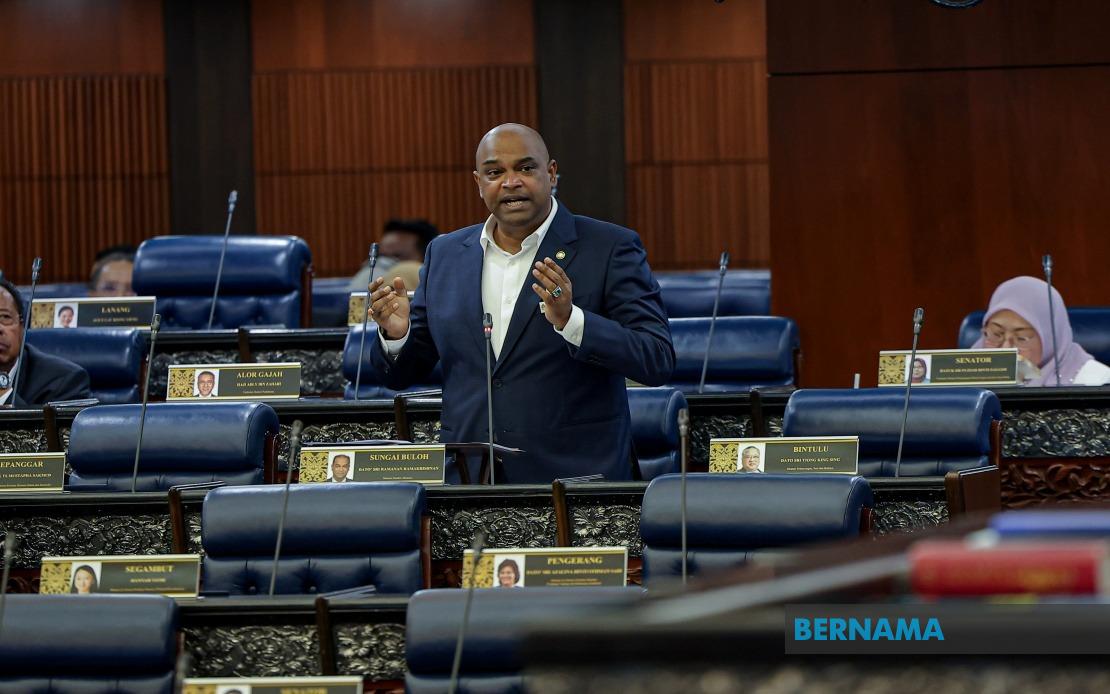
Malaysia's Social Security Organisation (PERKESO) has demonstrated substantial improvement in its claims processing efficiency, with compliance rates exceeding 96 per cent in the previous financial year, according to Human Resources Minister Datuk Seri R. Ramanan during parliamentary proceedings on June 24. This performance milestone reflects the organisation's commitment to strengthening the nation's social safety net at a time when workers increasingly depend on reliable, swift benefit disbursement mechanisms. The achievement comes amid broader government efforts to modernise public service delivery and rebuild citizen confidence in state institutions.
The minister's disclosure reveals that PERKESO has implemented significantly tightened service standards through a restructured Customer Charter framework, which took effect across all major benefit schemes. The new standards establish clear processing timelines calibrated to claim complexity and urgency levels. For immediate benefits such as Funeral Assistance and Temporary Disablement payments, the organisation has committed to a two-day processing window once all required documentation arrives complete. More complex claims involving permanent incapacity determinations, invalidity assessments, survivor entitlements, and dependent benefits operate under a three-day processing mandate. This tiered approach acknowledges that different claim categories demand varying levels of medical review, administrative verification, and financial assessment.
The LINDUNG Kerjaya scheme, PERKESO's newer initiative targeted at gig economy and self-employed workers, demonstrates the highest performance standards, achieving an average 99.68 per cent compliance rate in 2024. This exceptional figure suggests that purpose-built digital infrastructure and streamlined workflows specifically designed for independent workers may offer lessons for optimising the broader claims ecosystem. The scheme's performance also indicates that clearer operational parameters and simpler application pathways can meaningfully reduce processing delays, an insight particularly relevant to Malaysia's growing informal and gig economy sectors where workers often lack employer-mediated benefit access.
Digitalisation has emerged as the cornerstone of PERKESO's operational transformation. The organisation has deployed the LINDUNG Faedah PERKESO portal to digitise benefit enquiries and reduce paper-based workflows. More substantially, the 1Best system—fully activated this year—overhauls the internal infrastructure through which benefit assessments proceed, enabling faster data verification and cross-referencing with employment records and medical documentation. Complementing these backend improvements, the newly launched PRIHATIN mobile application puts service information directly into workers' hands, allowing real-time claim status tracking and instant access to guidance materials. Such digital touchpoints matter considerably in a nation where smartphone penetration exceeds eighty per cent and workers increasingly expect government services to match private sector responsiveness standards.
Beyond technological infrastructure, PERKESO has established the Prihatin Squad, a dedicated advisory service tasked with guiding contributors through claim procedures, clarifying documentation requirements, and troubleshooting application bottlenecks. This human-centred intervention acknowledges that many workers—particularly older, less digitally literate, and informal economy participants—need personalised assistance navigating bureaucratic processes. The Squad's presence reflects recognition that efficiency metrics alone cannot address the anxiety and confusion that often accompanies benefits claims, especially for individuals facing temporary or permanent incapacity.
For accident and emergency cases, PERKESO has introduced the INSPIRE System, which integrates hospital records directly into PERKESO's assessment workflows. This integration eliminates the delay inherent in traditional paper-based referral chains, where medical documentation must physically travel between healthcare facilities and government offices. Emergency claims can now be processed within 24 hours under simplified protocols, a critical improvement for workers with urgent household financial pressures following workplace injuries. The system exemplifies how interagency coordination, when properly designed, can substantially compress processing timelines without sacrificing verification rigor.
Claim fraud detection represents an increasingly sophisticated operational challenge as benefit schemes mature and payouts scale. Ramanan outlined PERKESO's approach as a layered verification process combining automated artificial intelligence screening with mandatory human review. The AI component performs preliminary pattern recognition, identifying statistically anomalous claims that warrant closer examination. However, staff manually reverify every approved claim before disbursement proceeds, ensuring that algorithmic errors or edge cases do not result in improper payments. This hybrid model reflects international best practice in fraud prevention, acknowledging that machines excel at high-volume data analysis while humans bring contextual judgment and exceptional case recognition that purely automated systems cannot provide.
The backdrop to these operational improvements is Malaysia's evolving labour market structure. As formal sector employment stagnates and gig economy participation accelerates, social security institutions must serve increasingly diverse worker populations with varied contribution patterns and benefit needs. PERKESO's performance improvements suggest the organisation is successfully adapting institutional structures to this reality, though challenges remain in reaching underserved informal workers who often lack awareness of available schemes or struggle with registration requirements.
For Malaysian workers and their families, the practical implications of these improvements are substantial. Faster claim processing means reduced household cash flow stress during periods of temporary incapacity or bereavement. Clearer timelines enable workers to plan contingencies with greater confidence, knowing approximately when benefits will arrive. Enhanced digital accessibility reduces transaction costs and time burdens associated with in-person office visits, particularly valuable for workers in rural areas or those balancing multiple employment arrangements.
The 96 per cent compliance milestone also carries significance for regional social security systems. As Southeast Asian nations grapple with ageing populations, rising healthcare costs, and informal economy growth, Malaysia's experience demonstrates that public benefit institutions can achieve first-world service standards through systematic digitisation, clear operational standards, and integrated interagency systems. The LINDUNG Kerjaya scheme's performance particularly interests nations developing benefits frameworks for self-employed workers, a growing demographic across the region.
Looking forward, PERKESO's trajectory suggests several areas warranting continued attention. Coverage expansion remains critical—many informal workers remain outside the system entirely, unable to access even basic protection. Outreach efforts targeting informal sector populations, simplified registration pathways, and employer incentive mechanisms could meaningfully expand the contributor base. Furthermore, as claims processing accelerates, communication with beneficiaries about entitlement timelines must keep pace, ensuring workers understand their rights and don't abandon legitimate claims due to perceived delays.
The organisation's commitment to continuous improvement also suggests that current 96 per cent compliance rates represent an interim benchmark rather than a ceiling. As 1Best infrastructure matures, INSPIRE hospital integration deepens, and staff expertise with new systems accumulates, further efficiency gains appear feasible. However, maintaining service quality and claim accuracy must remain paramount—speed gains are worthless if they generate elevated error rates or improper approvals that undermine scheme sustainability.
Ultimately, PERKESO's performance improvement reflects a broader institutional shift toward treating social security not merely as a welfare obligation but as a critical economic stabiliser. When workers experience rapid, reliable benefit disbursement following income loss, household consumption steadies and economic resilience strengthens during downturns. For Malaysia, investing in responsive social security institutions represents sound counter-cyclical economic policy alongside humanitarian imperative.

