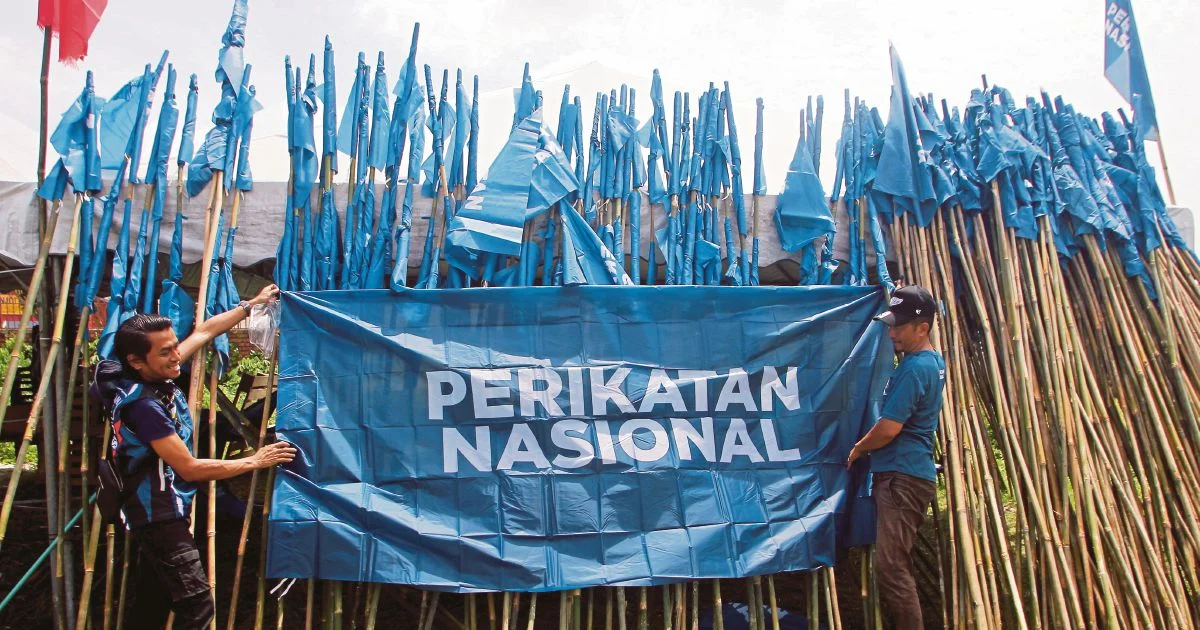
Malaysia's opposition coalition Perikatan Nasional has scheduled a critical Supreme Council meeting for June 22, signalling an attempt to clear away contentious internal issues that have threatened to undermine its effectiveness as a unified political force. The gathering in Kota Baru will centre on two particularly divisive matters: the contested ownership and usage rights of the coalition's logo, and the mechanism for selecting and endorsing candidates across member parties for upcoming electoral contests.
The decision to convene reflects growing pressure within PN's leadership to establish clearer governance structures and operating procedures. As a coalition comprising multiple political entities—notably PAS, Bersatu, and smaller component parties—PN has struggled to maintain cohesion when disagreements arise over fundamental operational issues. The absence of settled protocols on critical matters such as logo ownership has previously created confusion and friction during campaign periods, when clarity and unified messaging are paramount.
The logo dispute represents far more than a bureaucratic squabble. In Malaysian electoral politics, a coalition's visual identity carries significant symbolic and legal weight. It appears on ballot papers, party materials, and campaign advertising, making its ownership and control an intensely practical question with real consequences for candidate registration and party financing. Competing claims over who holds ultimate authority to permit logo usage has reportedly created operational delays and generated friction between coalition members seeking independent campaign space versus those favouring a unified branding approach.
Candidate endorsement procedures present an equally thorny challenge. Different PN components have historically operated distinct protocols for selecting and fielding candidates, reflecting their separate organisational cultures and power structures. As the coalition contemplates participation in state elections and potential federal contests, establishing agreed frameworks for how candidates gain PN backing has become urgent. Without such clarity, smaller parties fear marginalisation in seat allocation, while larger partners worry about dilution of their electoral appeal through unsuitable candidacies.
For Malaysian political observers, PN's June 22 meeting holds significance beyond mere coalition housekeeping. The alliance has positioned itself as the primary electoral alternative to the Pakatan Harapan-led federal government, yet internal dysfunction actively undermines that positioning. Voters considering support for PN need confidence that the coalition operates with competence and purpose. Visible internal disputes over basic governance matters erode that confidence and create openings for rival coalitions to exploit divisions.
The timing of this meeting also carries implications for upcoming electoral cycles. If PN intends to contest state elections scheduled for later in 2024 or early 2025, resolving these governance questions promptly becomes critical for adequate preparation. Campaign machinery, candidate screening, and voter mobilisation all depend on settled procedures that all coalition members understand and accept. Protracted internal negotiations that spill into public view risk demoralising supporters and confusing voters about PN's readiness for electoral contest.
Historically, Malaysian political coalitions have struggled to maintain unity once established. Disputes over resource allocation, seat distribution, and leadership recognition have fractured previous alliances. PN's relative newness as a formal coalition—having evolved from earlier cooperative arrangements—means it lacks the institutional memory and deeply embedded protocols that might otherwise cushion such disagreements. Each contentious issue therefore carries potential to destabilise the broader partnership.
For PAS, which holds significant strength particularly in northern and eastern Malaysia, the meeting offers opportunity to assert influence over coalition direction. Bersatu, meanwhile, carries the weight of former Prime Minister Mahathir's legacy and expectations as a Bumiputera-focused political vehicle. Reconciling the strategic preferences of these major components while accommodating smaller partners' legitimate concerns about representation requires adroit political navigation and genuine compromise.
The Supreme Council meeting will also implicitly test the coalition's capacity for constructive conflict resolution. Success in reaching workable agreements on logo usage and candidate endorsement would demonstrate that PN possesses sufficient institutional flexibility and commitment to manage future disagreements. Conversely, if the June 22 discussions conclude without resolution or with only partial agreements, confidence in PN's structural viability would suffer tangible damage heading into electoral campaigns.
Regional considerations amplify these stakes. Across Southeast Asia, opposition coalitions and multi-party alliances face constant pressure to maintain sufficient unity for electoral competitiveness while respecting component parties' distinct identities and interests. PN's experience navigating these tensions therefore carries learning value for similar arrangements elsewhere in the region. Successful resolution of governance questions might strengthen Malaysian coalition politics more broadly.
Ultimately, the June 22 meeting represents PN's attempt to transition from informal coordination toward formal institutional maturity. Coalition partners must move beyond ad-hoc dispute resolution toward comprehensive frameworks governing operations. Whether Supreme Council members can achieve this transformation will substantially influence PN's electoral prospects and ability to function effectively as a genuine alternative governing option for Malaysian voters.

