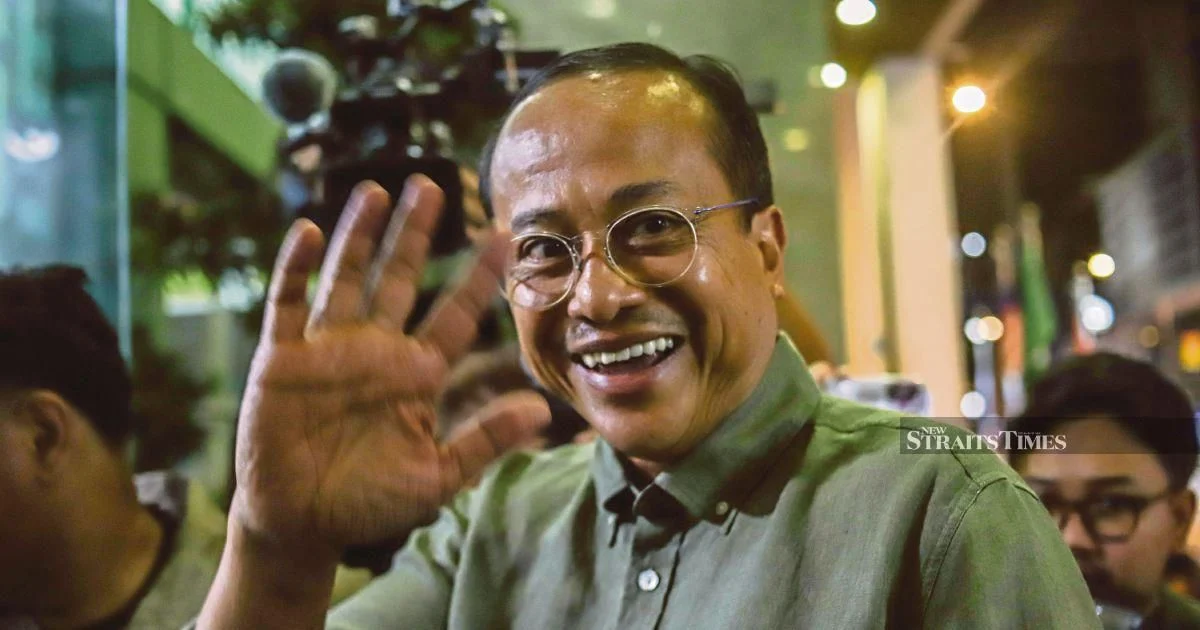
Datuk Seri Hamzah Zainudin, the Larut member of Parliament, continues to serve as Opposition Leader in the Dewan Rakyat without official confirmation from his coalition partner, Perikatan Nasional. This absence of formal recognition raises questions about the procedural clarity within the opposition bloc and the administrative mechanisms governing parliamentary leadership appointments in Malaysia's legislature.
The position of Opposition Leader carries significant constitutional and procedural weight in Parliament. It grants the holder special speaking privileges, access to parliamentary facilities, and authority to coordinate opposition business in the chamber. The role typically requires formal notification to the Speaker's office and broader parliamentary acknowledgment. The lack of an official notice from Perikatan Nasional suggests either administrative oversight or deeper deliberations within the coalition about the appointment's status.
Hamzah Zainudin, who previously held prominent ministerial positions in the government, transitioned to the opposition benches following the political realignments that characterised recent Malaysian electoral cycles. His elevation to Opposition Leader reflected efforts by Perikatan Nasional to consolidate its parliamentary presence and project leadership capability. However, the absence of formal coalition notification introduces ambiguity into an arrangement that should be transparent and clearly documented.
The significance of this procedural gap extends beyond mere administrative formality. In Westminster-modelled parliaments like Malaysia's, formal notices serve as official records that establish hierarchy, responsibility, and accountability within parliamentary structures. When such notices remain unissued, it creates potential confusion about who precisely holds decision-making authority within the opposition caucus and how parliamentary procedures should be executed. This could affect everything from determining speaking order during debates to coordinating opposition legislative strategy.
Pefikatan Nasional comprises several political parties, and coalition decisions typically require agreement among party leaders and their respective parliamentary members. The delay or absence of formal notification might indicate that not all coalition components have formally endorsed Hamzah Zainudin's leadership designation, or that internal discussions about the appointment's terms remain unresolved. Such coordination challenges are common in multi-party coalitions, where consensus-building can be time-consuming and occasionally contentious.
For Malaysian parliamentary observers, this situation highlights an ongoing tension between informal political arrangements and formal institutional procedures. Political coalitions often operate through behind-the-scenes negotiations and understandings that never translate into official documentation. While such informality sometimes allows for flexibility, it can also create ambiguity about who holds authority and responsibility, potentially complicating parliamentary operations and legislative coordination.
The practical implications affect how Hamzah Zainudin exercises his presumed leadership functions. Without formal recognition, his directives to opposition members lack the institutional backing that would normally accompany such a position. Opposition MPs might question the legitimacy of instructions or strategies emanating from a leader whose appointment lacks official coalition sanction. This could undermine the cohesiveness and effectiveness of opposition parliamentary work on critical legislation and government oversight.
Historically, opposition leadership appointments in Malaysia have occasionally been contentious, reflecting broader coalition dynamics and intra-party politics. The current situation with Hamzah Zainudin suggests ongoing negotiations about Perikatan Nasional's parliamentary direction and the specific role he will play in coordinating opposition activities. These negotiations likely involve questions about resource allocation, speaking opportunities, and strategic prioritization among competing interests within the coalition.
From a Southeast Asian perspective, Malaysia's opposition dynamics carry relevance for regional democracy and parliamentary development. How opposition coalitions organize themselves, handle leadership succession, and manage procedural clarity influences perceptions of institutional strength and democratic maturity. When opposition structures lack clear formal underpinnings, it can inadvertently weaken parliamentary oversight capabilities and institutional checks on executive power.
The Speaker's office and parliamentary administration presumably await formal notification to complete any necessary administrative updates to the record. In the interim, Hamzah Zainudin continues functioning as Opposition Leader through what appears to be tacit acceptance rather than explicit authorization. This de facto rather than de jure arrangement, while not unprecedented in Malaysian politics, represents a gap between political reality and institutional formality that eventually requires resolution.
Resolution of this situation likely hinges on broader decisions within Perikatan Nasional about its parliamentary strategy, coalition governance, and Hamzah Zainudin's specific mandate. Coalition leaders must determine whether they intend to formalize his leadership designation through an official notice or whether other arrangements better suit their political objectives. Either path requires deliberate action and clear communication to parliamentary authorities and affected MPs.
For stakeholders monitoring Malaysian parliamentary affairs—including government, international observers, and media—the situation underscores the importance of institutional clarity in opposition organization. Strong, formally recognized opposition leadership enhances parliamentary effectiveness regardless of political affiliation. Until Perikatan Nasional issues formal notice confirming Hamzah Zainudin's appointment, questions about the procedural foundation of his authority will persist.