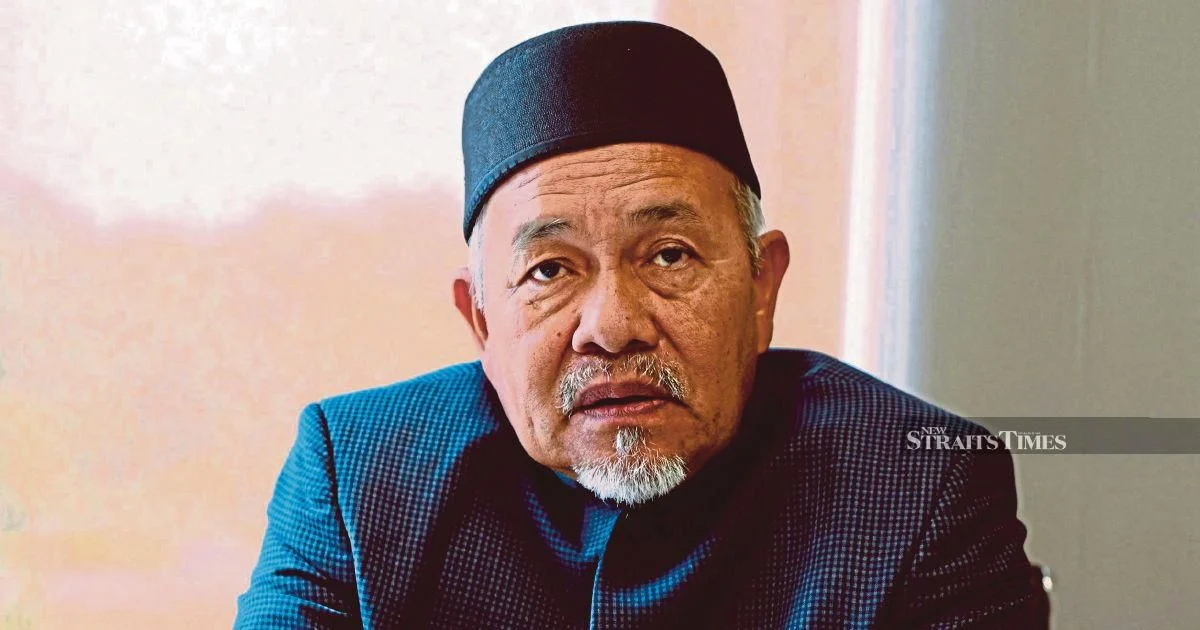
Perikatan Nasional's internal reorganisation marks a significant recalibration of the opposition coalition's power structure, with leadership figures defending the changes as a necessary step to consolidate bloc unity and enhance its competitive positioning in Malaysian politics. The restructuring, unveiled from Kota Baru, reflects mounting efforts to iron out operational inefficiencies and establish clearer decision-making pathways across member parties that have sometimes pulled in divergent directions on policy matters.
Tuan Ibrahim, speaking on behalf of the coalition, characterised the restructuring as fundamentally defensive in nature—a response to the complex demands facing multi-party alliances in contemporary Malaysian governance. Rather than indicating internal fractures or leadership disputes, coalition officials presented the reorganisation as proactive preparation, designed to create institutional robustness that would insulate Perikatan Nasional from the unpredictable swings of electoral politics and parliamentary manoeuvring that have destabilised other opposition groupings historically.
The timing of the restructuring assumes particular significance given the shifting political landscape in Malaysia. Since the 2022 general election, opposition coalitions have faced mounting pressure to maintain party discipline while accommodating the distinct interests of component organisations. Perikatan Nasional, comprising PAS, Bersatu, and smaller allies, has had to navigate ideological differences, regional power imbalances, and competing ambitions for ministerial positions that could trigger internal tensions. The leadership reshuffle appears calibrated to address these organisational fault lines before they metastasise into more serious ruptures.
From a structural perspective, the reorganisation likely involves adjusting the roles and responsibilities of coalition coordinators, refining inter-party communication channels, and establishing clearer hierarchies for decision-making on policy positions and electoral strategy. Such measures are instrumental in preventing the kind of public contradictions and policy incoherence that have previously damaged opposition credibility with Malaysian voters. When coalition partners speak with conflicting voices on major issues, the resulting confusion undermines their collective bargaining power and raises doubts about their capacity to govern coherently.
For Malaysian observers, the restructuring warrants scrutiny as an indicator of whether Perikatan Nasional possesses the institutional maturity required to function effectively as an alternative government. The opposition's capacity to maintain internal discipline while articulating a unified policy platform remains a critical variable in determining electoral competitiveness. Previous Malaysian coalition experiments, notably Pakatan Harapan in 2018-2020, demonstrated that even strong electoral mandates can collapse when member parties prioritise factional interests over coalition cohesion. Perikatan Nasional's current leadership appears determined to learn from those cautionary lessons.
The restructuring also occurs against the backdrop of Perikatan Nasional's efforts to strengthen its presence in key electoral battlegrounds across Malaysia. Coalition unity directly translates into electoral efficiency—the ability to deploy resources strategically, avoid wasteful three-way contests, and maintain consistent messaging across different states and constituencies. A fragmented coalition disperses its political capital; a consolidated one multiplies its electoral impact. From this perspective, the leadership changes represent a calculated investment in future campaign effectiveness.
Regional dynamics add another layer of complexity to the restructuring calculus. Perikatan Nasional's strength remains heavily concentrated in Malaysia's northern and eastern regions, particularly among Malay-Muslim voters. Expanding this base while maintaining cohesion across religiously and ethnically diverse membership requires sophisticated political management. The restructuring appears designed to facilitate more efficient resource allocation and campaign coordination across these geographically dispersed strongholds while accommodating the varying priorities of constituent parties with different organisational strengths in different regions.
Economic pressures on Malaysian politics have intensified scrutiny of opposition coalitions' fiscal management and resource distribution. Coalition partners naturally expect benefits commensurate with their contributions—whether measured in votes delivered, organisational reach, or political capital invested. Restructuring allows leadership to rebalance these distributions, apportion responsibilities more equitably, and demonstrate transparent governance that can counter government narratives about opposition dysfunction and fiscal irresponsibility. The symbolic importance of appearing well-organised extends beyond internal stakeholder management to shaping public perception.
Looking forward, the restructuring's success will be measured not merely by formal announcements or organisational charts but by observable changes in coalition behaviour—whether member parties adhere to agreed positions on parliamentary votes, coordinate campaigns effectively, and refrain from public disputes on fundamental matters. The Australian comparison is instructive: oppositions that maintain discipline across parliamentary sessions and electoral campaigns gain credibility with voters sceptical of political fragmentation. Conversely, coalitions that allow member parties to diverge publicly on key issues reinforce perceptions of dysfunction.
The restructuring also speaks to generational transitions within Malaysian opposition politics. Younger leaders ascending to greater responsibilities within the coalition hierarchy signal potential shifts in strategic orientation and policy priorities. These changes can either strengthen the alliance by introducing fresh thinking and energy, or destabilise it if new leaders lack buy-in from established powerbrokers across member parties. The announcement from Kota Baru should therefore be viewed as both tactical adjustment and strategic positioning for the next phase of Malaysian political competition.