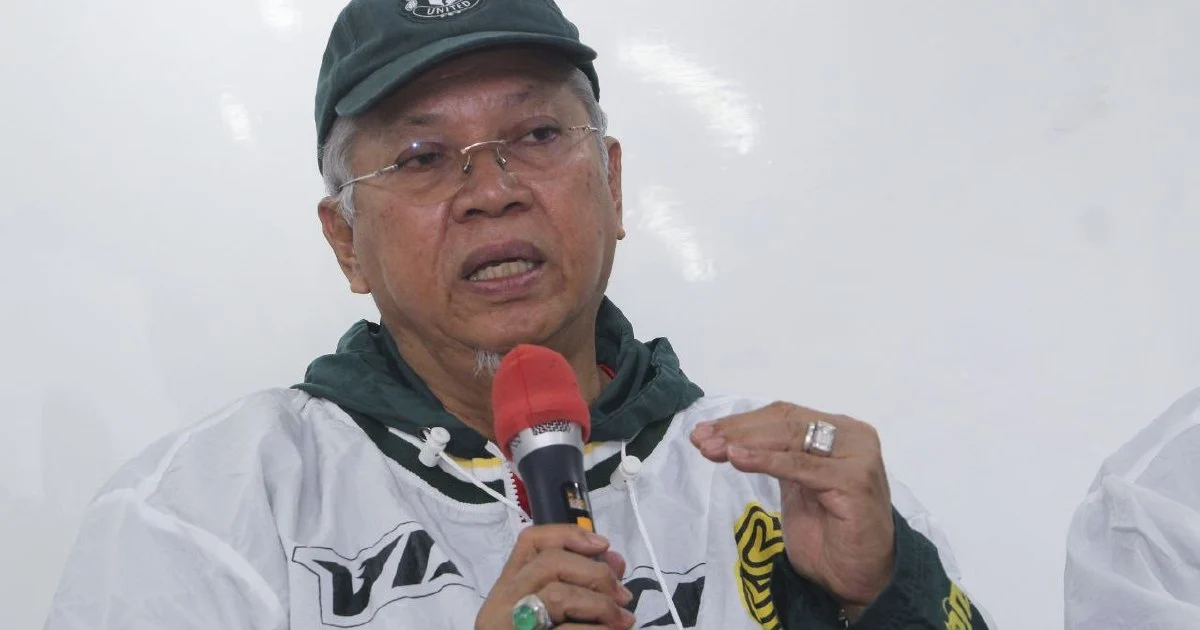
Perikatan Nasional has signalled its readiness to contest the 16th General Election at short notice, positioning itself as a viable alternative government should Prime Minister Anwar Ibrahim decide to call for early polls this year. The declaration from the coalition's leadership underscores mounting political tension within Malaysia's fractious parliamentary landscape, where the razor-thin government majority has repeatedly sparked speculation about snap elections. Party secretary-general Annuar Musa made the statement during a visit to Kota Baru, emphasising that PN's organisational structure and campaign infrastructure are sufficiently developed to mobilise supporters across all states within a compressed timeframe.
The PN's confidence reflects its strengthened political position since the last election in November 2022, when the coalition secured 73 seats and emerged as the largest single bloc in Parliament. That result marked a significant recovery from previous electoral setbacks and established PN—comprising UMNO's rival Bersatu, the Islamic fundamentalist PAS, and smaller components—as a formidable opposition force. The coalition's subsequent organisational consolidation and improved party discipline have equipped it with campaign machinery that senior figures believe can be activated rapidly across the peninsula and East Malaysia. Annuar's remarks suggest PN leadership views an early election call not as an unexpected crisis requiring improvisation, but as a tactical scenario for which detailed contingency planning has been completed.
Malaysia's political trajectory since the 2022 election has been marked by persistent instability within the ruling Pakatan Harapan coalition. The unity government, which was formed through an unprecedented post-election agreement between PH and PN's ally Bersatu, has struggled to consolidate legislative control. Anwar Ibrahim's coalition commands approximately 82 seats with support from PN-aligned members, but this margin leaves little room for dissent or defection. Rising tensions over policy direction, ministerial appointments, and the ongoing transformation of institutions have periodically threatened the government's stability. Each bout of political turbulence inevitably triggers debate about whether the Prime Minister might benefit from a fresh mandate, particularly given that the next scheduled election is not constitutionally required until mid-2023.
PN's assertion of readiness carries strategic implications beyond mere parliamentary arithmetic. By publicly announcing its preparedness, the coalition aims to project strength and capability to wavering party members, coalition partners, and potential swing voters who might be considering defection to the government or dissatisfaction with either the PH administration or their respective party leaderships. The statement also serves as an implicit warning to smaller parties and independent MPs whose support the government occasionally requires for critical votes. For the broader electorate, PN's confidence narrative competes directly with the government's efforts to demonstrate administrative competence and legitimacy despite its slender majority.
The PAS component of PN has proven particularly energised in recent months, with the Islamist party consolidating support among its traditional grassroots base while expanding inroads into economically disadvantaged areas where social welfare messaging resonates. UMNO, despite ongoing internal factionalism and legal challenges affecting some senior members, retains formidable ground organisation inherited from its 74 years in government. This combination of PAS's grassroots mobilisation capacity and UMNO's institutional experience represents a powerful campaign apparatus that has successfully secured strong performances in recent state-level contests, most notably in the 2023 Kedah state election where PN made significant gains.
The timing of Annuar's announcement reflects PN's calculation that political volatility could create openings for early elections. Speculation about a snap poll intensifies whenever the government faces legislative defeats or when significant numbers of MPs are absent or hospitalised. Parliamentary mathematics means that the PH-led coalition must maintain near-perfect discipline, a discipline that becomes increasingly difficult to sustain over an extended period. PN's readiness proclamation is partly an attempt to keep the government psychologically off-balance while maintaining internal coalition morale by suggesting that power may soon be within reach.
For Malaysian voters and regional observers, the prospect of early elections carries broader implications. Multiple elections within a compressed timeframe drain both government resources and public patience, while creating periods of policy uncertainty that can affect economic decision-making and investor confidence. The inability of any single coalition to secure a decisive majority has become characteristic of Malaysia's current political era, suggesting that even a successful PN election would likely require complex post-poll negotiations similar to those that produced the current unity government. This structural instability has profound consequences for policy implementation, long-term planning, and institutional development across government agencies and state-owned enterprises that require consistent strategic direction.
PN's mobilisation claims also reflect competition within the broader opposition landscape. Beyond PN, scattered independent MPs and smaller parties remain unaligned, while some components of the original PH coalition harbour grievances about representation or policy outcomes. An early election would reset the board entirely, offering all actors opportunities to reposition themselves while creating uncertainty about which coalitions would ultimately command legislative majorities. Previous Malaysian elections have demonstrated that dramatic shifts in voting patterns can occur when elections are called during periods of heightened political tension or public dissatisfaction.
The broader context for PN's readiness announcement involves Malaysia's ongoing institutional reckoning following two consecutive changes of government in 2020 and 2022. Public trust in political institutions and elected representatives has been damaged by perceived instability and opportunistic coalition-building. Both the government and opposition face voter scepticism about their respective commitments to reform and service delivery. For PN, casting itself as a prepared and organised alternative becomes part of a larger narrative about capacity and stability—claims that voters are increasingly motivated to scrutinise carefully before casting ballots.
As Malaysia navigates its current political equilibrium, the possibility of earlier-than-scheduled elections remains a persistent feature of the landscape. PN's assertion of organisational readiness, while partly tactical positioning, underscores the genuine uncertainty surrounding the government's longevity and Malaysia's electoral calendar in the coming years.

