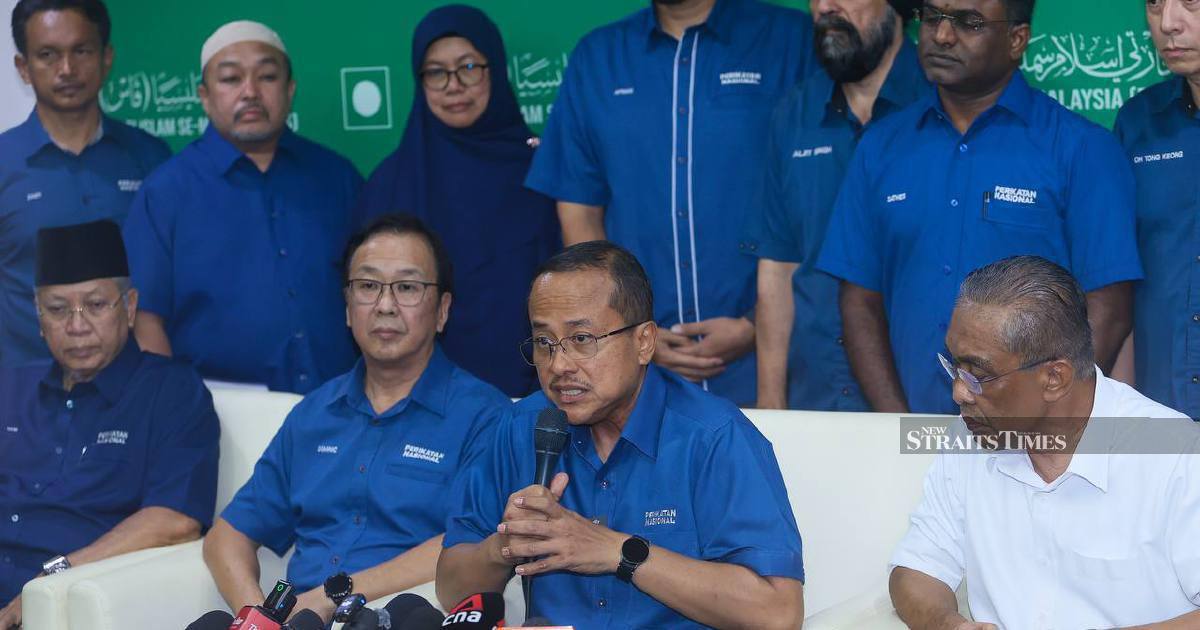
Perikatan Nasional (PN) has opened its ranks to two additional political parties, expanding the opposition coalition's parliamentary footprint following an unscheduled Supreme Council meeting convened in Kuala Lumpur. The decision was announced by PN chairman Datuk Seri Dr Ahmad Samsuri Mokhtar at the conclusion of the emergency session, signalling the coalition's ongoing efforts to strengthen its organisational structure and consolidate political influence ahead of anticipated electoral contests.
While the expansion demonstrates PN's appetite for coalition-building, the admissions appear to reflect broader tensions within the alliance regarding its strategic direction and public positioning. The timing of the emergency meeting itself underscores underlying disagreements that continue to simmer within the opposition ranks, particularly as the coalition attempts to maintain momentum following its electoral performance in recent state-level contests across Malaysia.
The identities of the two newly admitted parties and their specific contributions to PN's parliamentary numbers remain unclear from the announcement. This opacity is characteristic of Malaysian political negotiations, where coalition dynamics are often managed through closed-door arrangements before public disclosure. However, the expansion mechanism suggests PN leadership recognises the tactical advantages of broadening its membership base beyond its core founding parties, which include Parti Islam SeMalaysia (PAS), Bersatu, and several other established entities.
Critically, Dr Ahmad Samsuri indicated that substantive discussions regarding Wawasan—PN's strategic vision and ideological framework—were not addressed during tonight's proceedings. This deliberate exclusion from the agenda raises questions about the coalition's internal consensus on fundamental matters of direction and purpose. For Malaysian observers, the Wawasan question carries particular weight, as it encompasses PN's social, economic, and governance platforms that would theoretically differentiate the coalition from the current ruling government when presented to voters.
Equally conspicuous by its absence from the Supreme Council's discussions was the matter of a unified coalition logo or visual identity. Symbolic coherence matters considerably in Malaysian electoral politics, where party and coalition branding directly influences voter perception and campaign messaging. The decision to defer this conversation suggests either internal disagreements that require additional negotiation, or prioritisation of immediate tactical gains over longer-term organisational requirements.
For Malaysian political analysts, the sequence of events reveals a coalition potentially managing immediate expansion while consciously postponing deeper ideological or strategic alignments. This approach permits rapid accretion of parliamentary numbers without necessitating difficult compromises on substantive platform elements—a common strategy when coalition building must proceed despite fundamental unresolved disagreements among existing members.
The broader implications for Malaysian politics remain multifaceted. PN's expansion into new party membership occurs against a backdrop of shifting federal and state electoral calculations, particularly as the nation contemplates its electoral cycle trajectory. Each additional party in the coalition theoretically strengthens PN's arithmetic in parliament while simultaneously introducing fresh constituencies, interests, and demands into coalition management structures that are already demonstrably stressed.
The postponement of Wawasan discussions suggests that core PN constituents—particularly PAS and Bersatu, which maintain distinct ideological orientations and policy priorities—have not yet achieved sufficient convergence to articulate a unified vision convincingly. This unresolved fundamental question about what PN collectively stands for beyond opposition to current governance remains an Achilles heel in the coalition's broader political credibility, particularly among centrist and urban voters who seek clear policy alternatives.
Similarly, the logo question reflects decisions about PN's public presentation and brand architecture. Whether PN will present itself as a coalition of distinct parties or as a unified political force carries implications for voter messaging, campaign coordination, and organisational coherence. These are not trivial aesthetic considerations but rather fundamental questions about PN's electoral strategy and self-presentation to Malaysian voters.
Looking forward, PN's leadership faces the challenging task of maintaining coalition unity and momentum while deferring discussions of its fundamental purpose and presentation. The strategy may succeed tactically in accumulating parliamentary numbers, but the unresolved questions surrounding Wawasan and visual identity will inevitably demand attention as the coalition progresses toward major electoral contests. Whether PN can achieve the ideological and strategic alignment necessary to present a convincing alternative government remains among the most significant questions in contemporary Malaysian politics.

