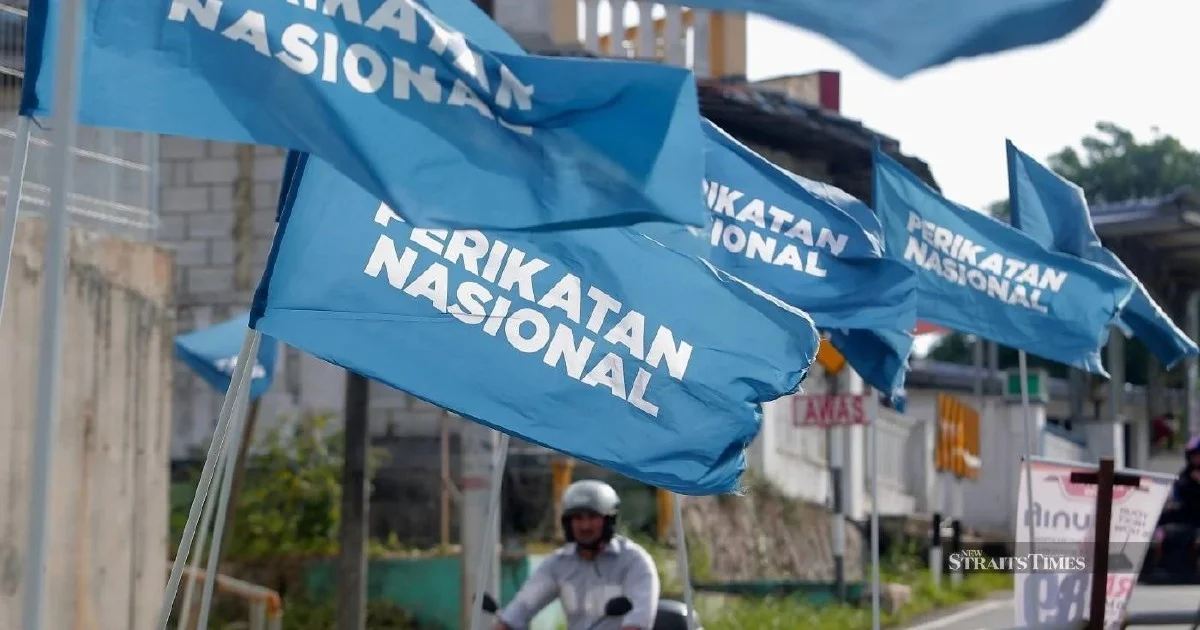
Perikatan Nasional has moved swiftly to quash misleading claims circulating online suggesting the opposition coalition plans to sit out the Johor state election. Deputy chairman P. Punithan directly refuted the allegation, characterizing the viral statements as deliberate misinformation designed to confuse voters and sow discord within the coalition's ranks.
The emergence of such unverified claims underscores the ongoing challenge of managing political narratives in Malaysia's digital information landscape. With state elections drawing attention across the country, various actors—whether rival political camps, independent agitators, or simply pranksters—have incentive to manufacture and amplify misleading political content. The speed at which such posts spread across social media platforms demonstrates how quickly false narratives can gain traction before being properly investigated or debunked by official sources.
Punithan's direct denial carries particular weight because PN's electoral strategy in Johor will shape broader political dynamics across the peninsula. The coalition, which comprises the Malaysian Islamic Party (PAS), Perikatan Nasional proper, and other allied parties, has actively campaigned in Johor despite facing significant organizational challenges and competing priorities elsewhere. Any decision to withdraw from the state would represent a major strategic shift with implications for the coalition's national positioning and relationship with its grassroots supporters.
The rumour appears especially inconvenient timing-wise for PN, arriving during a period when the coalition is simultaneously managing multiple electoral and governance responsibilities. Such false claims, even when quickly debunked, can undermine party cohesion by raising questions among supporters and workers about leadership direction and factional disputes. The need for Punithan to personally intervene suggests PN views the misinformation as sufficiently damaging to warrant immediate clarification.
For Malaysian voters, particularly those in Johor, distinguishing between genuine political announcements and fabricated claims has become increasingly difficult. The proliferation of messaging platforms, social media channels, and online news portals—combined with the reduced friction in sharing unverified content—creates an environment where false narratives flourish. Political parties themselves occasionally contribute to this confusion through vague public statements or delayed clarifications that leave information vacuums for speculation to fill.
The incident also reflects deeper tensions within Malaysia's opposition landscape. PN's relationship with other opposition figures and parties, including PKR and DAP, remains complex and often fractious. Some observers suggested the false claim might have originated from rivals seeking to complicate PN's electoral positioning or exploit internal disagreements. Without evidence of the claim's source, such speculation remains unproven, but the pattern is recognizable from previous electoral cycles.
Johor state elections carry particular significance in Malaysian politics. The state has traditionally been a stronghold for established parties and represents a crucial battleground where shifts in voter allegiances become apparent. PN's participation in Johor contests directly affects the national opposition's overall strength and narrative momentum. A coalition withdrawal would be interpreted as acknowledging either electoral weakness or strategic reorientation toward other regions deemed more winnable—messaging PN clearly wishes to avoid.
The coalition's commitment to Johor also matters for internal cohesion among its member parties. PAS and other PN components have invested organizational resources and political capital in the state. Sudden withdrawal would demoralize activists and field workers while potentially triggering recriminations among coalition partners about decision-making processes. Punithan's prompt denial serves partly to reassure the internal party base that leadership remains committed to the electoral venture.
Moving forward, the incident illustrates a broader challenge confronting Malaysia's democratic processes. As election cycles accelerate and voter bases become increasingly digitally connected, managing information quality becomes as significant as traditional campaign activities. Political parties must balance rapid response to misinformation against the risk that overly frequent denials draw additional attention to false claims. PN's approach—direct, unambiguous refutation—represents one strategy, though its effectiveness depends on whether voters possess sufficient media literacy to distinguish authoritative sources from propagandistic noise.
The spread of such claims also highlights opportunities for improved media cooperation and fact-checking infrastructure. While individual newsrooms attempt to verify claims, a more coordinated approach involving multiple media outlets, civil society organizations, and neutral fact-checking entities could establish clearer standards for identifying political misinformation. This institutional approach remains underdeveloped in Malaysia compared to several other democracies, leaving voters vulnerable to manipulation.
For Southeast Asia more broadly, the Johor situation exemplifies challenges all regional democracies face regarding information integrity during electoral periods. Thailand, the Philippines, Indonesia, and other countries have encountered similar problems with viral political misinformation, often with more severe consequences than Malaysian cases. Learning effective response strategies and supporting fact-based public discourse represents an increasing priority for the region's democratic health.

