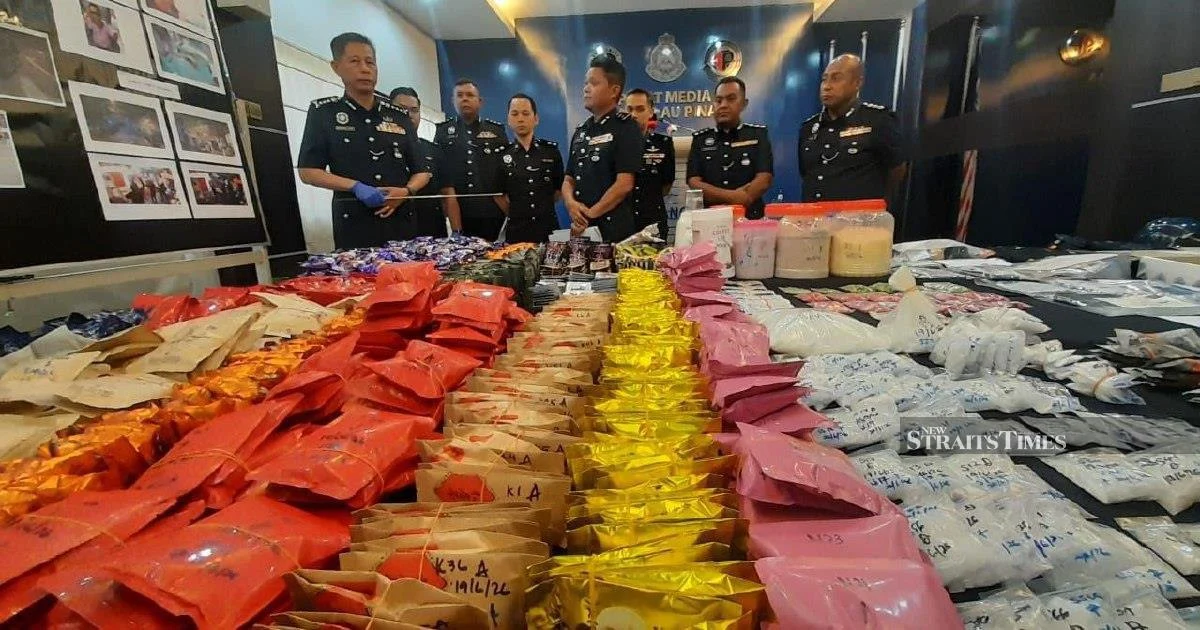
Authorities in Penang have dealt a substantial blow to the region's drug trade following the uncovering of an organised trafficking operation that was being run from a residential condominium in Butterworth. The discovery culminated in the arrest of a couple and the seizure of controlled substances valued at RM9.7 million, representing one of the more significant busts in recent months for the state's law enforcement agencies.
The operation, which functioned as both a processing hub and distribution centre, had been operating from within the condo complex, allowing the suspects to maintain a degree of anonymity whilst managing their illicit enterprise. The choice of a residential location reflects a growing trend among traffickers who exploit the ordinary appearance of such premises to evade detection, blending their illegal activities into the fabric of normal suburban life. This method has proven sufficiently effective across Southeast Asia that it has become a standard operating procedure for mid-level drug syndicates seeking to distribute larger volumes whilst minimising exposure to law enforcement.
The Penang police operation that led to the arrests demonstrates the ongoing capacity of state authorities to conduct sophisticated intelligence-gathering and targeted enforcement actions. The decision to move against this particular operation suggests that investigators had accumulated sufficient evidence of sustained criminal activity to warrant an intervention. Such operations typically require weeks or months of surveillance and corroborating information before authorities move to make arrests, indicating that this breakthrough did not emerge spontaneously but rather from methodical police work.
The confiscation of drugs valued at RM9.7 million represents a significant reduction in the supply available to traffickers operating across northern Malaysia and potentially further afield. When evaluated against the broader context of regional drug markets, the seizure denies suppliers the ability to continue servicing their customer base at their previous scale, at least temporarily. The street value of such quantities underscores the level of profit involved in trafficking operations and the financial incentives that drive individuals to take the considerable legal risks associated with drug distribution.
Butterworthposition on the mainland opposite Penang Island and its proximity to major transportation routes have historically made it an attractive location for trafficking operations. The area's connectivity to the northern corridor linking Kuala Lumpur, Ipoh, and the Thai border means that drugs processed or distributed from Butterworth can relatively easily reach multiple markets across Peninsular Malaysia. This geographic advantage has long made the area a focus of police operations, though the perennial challenge of interdicting drugs at scale continues to tax enforcement resources throughout the country.
The arrest of the couple involved in this operation raises broader questions about the demographics of those engaged in mid-to-senior level trafficking roles. Many such operations involve intimate partners working in conjunction, a factor that law enforcement agencies across the region have identified as a significant feature of contemporary trafficking networks. The involvement of both individuals suggests a division of labour within the operation, though the specific roles each played remain subject to ongoing investigation and potential judicial proceedings.
Penang's position as a major commercial and tourist hub means that any disruption to drug supply networks carries implications beyond the immediate locality. The state functions as a transportation nexus for goods moving through Malaysia, and criminal organisations have long exploited these legitimate logistics networks to move controlled substances. The police action thus carries significance for interdiction efforts across a wider geographic area, potentially disrupting supply chains that extend beyond Penang itself.
The seizure also reflects broader trends in Malaysian law enforcement, where joint operations involving drugs and financial crimes have become increasingly integrated. The sophistication required to operate a processing and distribution facility at the scale suggested by the RM9.7 million valuation indicates that financial management, supply chain coordination, and customer relationship networks were likely operating in tandem with the actual drug handling. Federal and state authorities have progressively expanded their capacity to investigate these interconnected elements of trafficking operations, recognising that targeting only the physical drugs misses critical vulnerabilities in the overall criminal enterprise.
Moving forward, the disposal and destruction of the confiscated narcotics will follow established protocols under Malaysian law, ensuring that the drugs cannot be returned to circulation through theft or corruption. The legal proceedings against the arrested couple will proceed through the courts, with sentencing likely to reflect the substantial quantities involved and Malaysia's stringent penalties for trafficking offences. The outcome of this case will contribute to the evolving body of prosecutions that shape enforcement strategy and deterrent messaging within the criminal underworld regarding the risks associated with large-scale trafficking operations.
The successful operation underscores the continuing relevance of conventional police detective work in combating drug trafficking despite the evolution of criminal methodologies. Intelligence-led policing, when resourced appropriately and executed with adequate coordination between agencies, continues to generate results that disrupt trafficking networks and remove dangerous individuals from circulation. For Malaysia's law enforcement community, sustaining this operational momentum across the various states remains critical to managing the persistent challenge that illicit drugs pose to public safety and social stability across the region.

