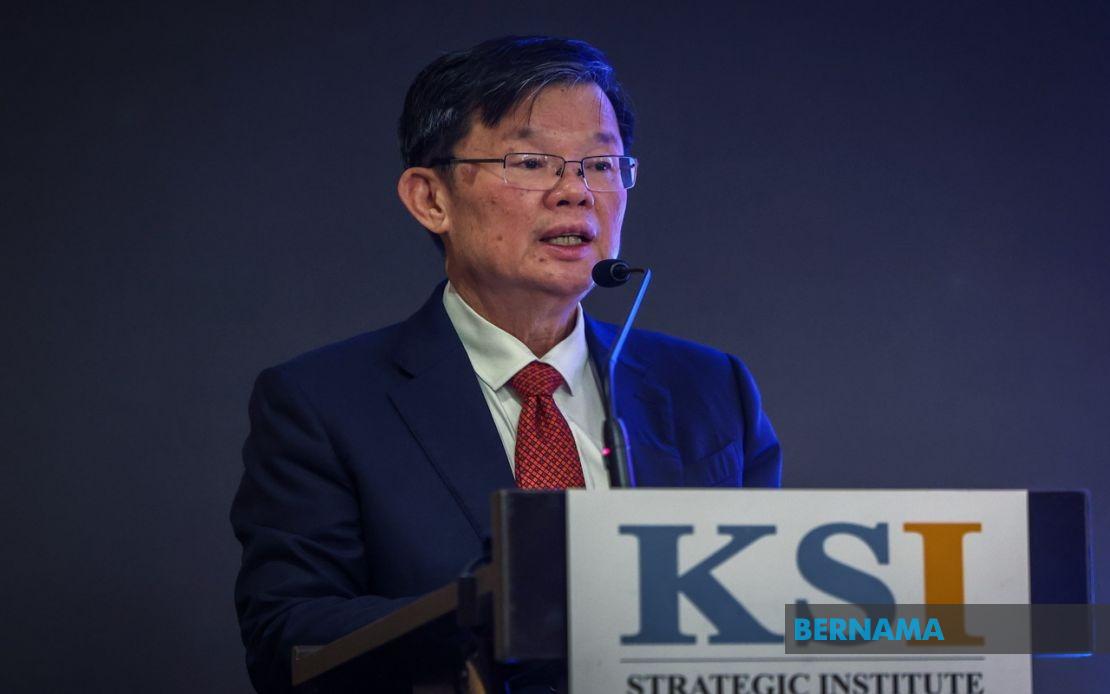
Penang's ruling Pakatan Harapan coalition intends to field a greater number of women candidates when the state heads to the polls next, though the leadership acknowledges persistent obstacles in sourcing sufficient applicants. Chow Kon Yeow, who chairs the coalition and serves as Chief Minister, made the commitment while speaking at the World Women Economic and Business Summit 2026 in George Town, underlining that despite aspirations to expand female representation, practical constraints continue to impede progress on the ground.
The 30 per cent women participation target, a benchmark established nationally in 2009, remains unfulfilled across Malaysia's political landscape. Current figures reveal the considerable distance yet to be travelled, with women comprising merely 13.5 per cent of Members of Parliament and 12 per cent of state assemblypersons nationwide. These modest percentages underscore a systemic challenge that extends beyond any single state or political faction, affecting how Malaysian political parties approach candidate selection and internal decision-making structures.
Chow articulated the paradox facing efforts to elevate women's political engagement: despite notable achievements by women across education, commerce, engineering and government services, the transition into electoral politics encounters distinctive friction. The hurdles are not primarily about capability—women have demonstrated competence across professional domains—but rather stem from the specific pressures and demands that electoral participation imposes. Few women volunteer themselves during candidate recruitment drives, a phenomenon that requires deeper examination of both structural and cultural barriers.
Penang PH has positioned itself as supportive of the 30 per cent benchmark, yet the coalition acknowledges that aspiration alone cannot bridge the gap between stated commitment and electoral outcomes. The availability of suitable and genuinely willing candidates forms the genuine constraint. Without a sufficient pool from which to select, numerical targets become aspirational rather than achievable. This distinction matters: it suggests that expanding women's political representation requires not only institutional willingness from political parties but also grassroots mobilisation to encourage and develop women interested in contesting elections.
The Chief Minister pointed toward potential remedies during his address at the summit. Political parties, he suggested, should embed the 30 per cent objective directly into their formal candidate selection processes, transforming it from a discretionary goal into a structural requirement. Such institutionalisation would create mechanisms to systematically identify and nurture female candidates rather than relying on organic emergence, which has evidently proven insufficient.
Beyond candidate recruitment, Chow identified additional leverage points for advancement. Ensuring equal female representation on internal decision-making committees would signal genuine commitment to women's inclusion at leadership levels, not merely in electoral candidacy. The concentration of power-sharing within party hierarchies has historically favoured male incumbents; deliberate action to diversify these bodies could reshape internal cultures and demonstrate to potential candidates that pathways to influence exist.
Mentoring and resource access constitute another dimension requiring institutional attention. Emerging women leaders frequently lack the informal networks, financial support, and guidance that male counterparts accumulate through established party structures. Formalising mentorship programmes and ensuring equitable distribution of campaign resources and training would level the playing field, enabling women to navigate the considerable demands of electoral politics with similar preparation to their male peers.
The challenge facing Penang PH reflects broader Malaysian political realities. While parties espouse gender equity principles, translating these into practical outcomes demands sustained effort against entrenched patterns. The gap between current representation levels and the 30 per cent target indicates that incremental change through existing mechanisms has stalled. Achieving meaningful progress will require parties to move beyond rhetorical support toward genuine structural reform.
For Malaysian voters and observers, the conversation initiated at the World Women Economic and Business Summit carries broader significance. Women's participation in politics affects not only the composition of legislatures but the substantive agenda and priorities that governments pursue. Research across democracies demonstrates that increased female representation correlates with enhanced policy attention to education, healthcare, family support and social protection. Penang's experience navigating these challenges will likely inform discussions in other states contemplating similar initiatives.
Chow's candid acknowledgement of difficulties—rather than claiming the target is easily within reach—reflects pragmatism about the work required. The admission that identifying willing candidates presents a genuine bottleneck opens space for broader strategies, including public campaigns to encourage women's political participation, mentorship initiatives beginning at secondary and tertiary education levels, and cultural conversations about women in leadership. These precede and enable the candidate selection process itself.
The upcoming state election in Penang will provide a measure of whether commitment translates into expanded female candidacy. Tracking whether women's representation increases, remains static or decreases will reveal whether PH's intentions materialise into concrete progress. For a coalition governing Malaysia's most urbanised and relatively progressive state, the stakes carry symbolic weight beyond Penang, signalling to other states and federal counterparts whether serious gender equity advancement is feasible within competitive electoral environments.