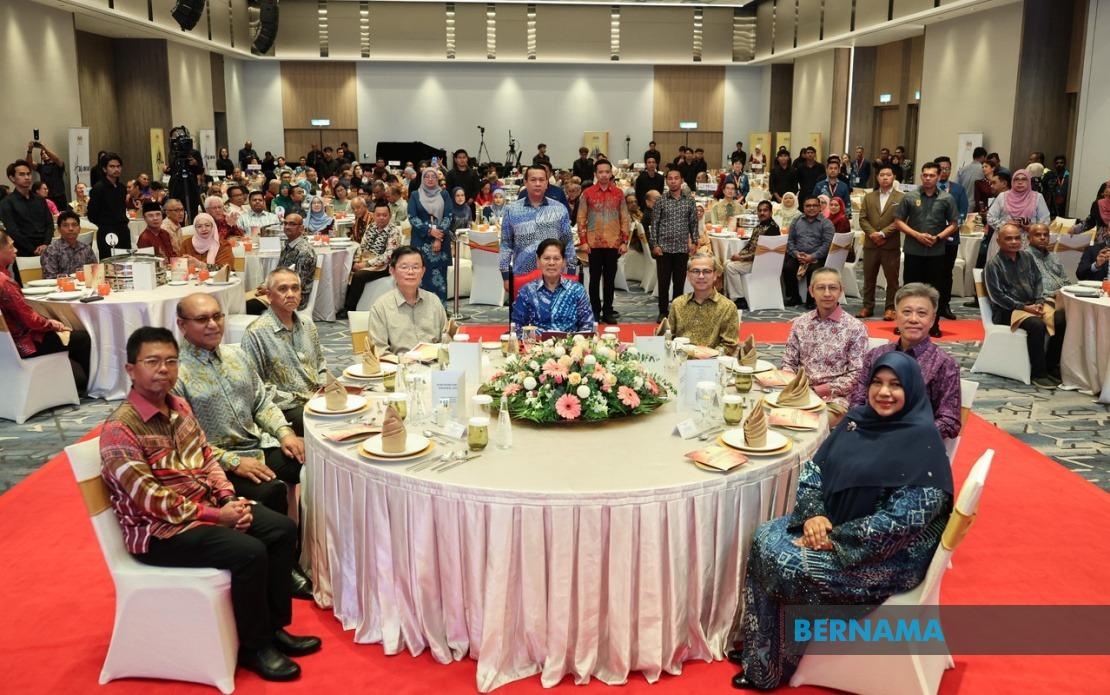
Penang Governor Tun Ramli Ngah Talib has expressed strong commendation for the Communications Ministry's strategic decision to rotate the hosting of the National Journalists' Day celebrations across Malaysia's states, a move that underscores the government's commitment to acknowledging the media's foundational contributions to national development. His endorsement comes as Penang prepares to serve as the focal point for HAWANA 2026, one of Malaysia's most significant annual gatherings for media professionals.
The initiative to decentralise the hosting of HAWANA carries deeper implications for Malaysia's federal structure and regional engagement. By distributing these celebrations among different states, the Ministry of Communications enables local communities to develop a more immediate and tangible connection with the journalism profession and its practitioners. For Penang specifically, hosting the event represents recognition of the state's standing as a developed, dynamic and competitive entity within the Malaysian federation, while simultaneously reinforcing the island's historical importance as a media hub in Southeast Asia.
During remarks made at the HAWANA 2026 dinner, Tun Ramli underscored the symbolic significance of welcoming media delegations from across Malaysia and the broader ASEAN region to Penang. The convergence of approximately 350 guests at the inaugural dinner, including editors-in-chief, senior media executives, veteran journalists and state government representatives, demonstrates the scale and prestige attached to this year's celebration. The presence of international delegates, particularly from fellow ASEAN nations, signals Malaysia's commitment to fostering cross-border dialogue on journalism standards and media cooperation.
The broader theme guiding HAWANA 2026—"Media Integrity Strengthens Credibility"—reflects contemporary concerns about trust in news institutions across the region. In an era marked by information fragmentation and the proliferation of digital platforms, the explicit emphasis on journalistic integrity serves as a clarion call for media practitioners to reinforce professional standards. For Malaysian readers and citizens, this thematic focus carries particular resonance given the complex media landscape within which local news organisations operate.
Tun Ramli articulated HAWANA's multifaceted purpose beyond ceremonial recognition. The celebrations function simultaneously as a platform to honour journalists who have devoted careers to the profession, a mechanism for strengthening cooperation among media organisations operating at regional scale, and a forum for reinforcing friendship and professional bonds within the media community. This tripartite function underscores how professional associations and government-sponsored events can serve structural purposes within democratic societies that depend on robust information flows.
The governor emphasised the media's indispensable role as a bridge for disseminating information, a catalyst for generating ideas, and a driving force in the creation of informed and knowledgeable societies. These characterisations reflect a sophisticated understanding of media's democratic functions—moving beyond simplistic notions of journalism as mere reportage to encompassing its broader contribution to civic engagement and public understanding. In Southeast Asia, where media landscapes remain subject to varied regulatory frameworks and political pressures, such public affirmation of journalism's positive contributions carries particular weight.
The high-level attendance at the HAWANA 2026 dinner, including Communications Minister Datuk Fahmi Fadzil, Penang Chief Minister Chow Kon Yeow, and various government officials, confirms the state backing behind the event. Prime Minister Datuk Seri Anwar Ibrahim is scheduled to officiate the main HAWANA 2026 proceedings at the PICCA Convention Centre @ Butterworth Arena, further elevating the political salience of the celebrations. This constellation of official engagement signals that Malaysia's government views media relations and journalism support as matters warranting executive-level attention.
Approximately 1,000 media practitioners, predominantly journalists representing multiple ASEAN countries, have assembled in Penang for the primary HAWANA 2026 event. The mobilisation of this scale of participation, coordinated by the Ministry of Communications with Bernama serving as the implementing agency, represents significant logistical and organisational effort. For regional press representatives, the gathering offers an opportunity to network, exchange professional insights, and strengthen collaborative relationships that may enhance coverage of cross-border issues affecting Southeast Asia.
The structure and composition of HAWANA 2026 reflects deliberate institutional design aimed at elevating journalism's professional standing within Malaysian society. By organising a major state-level celebration dedicated exclusively to media practitioners and their contributions, the government institutionalises recognition of journalism as a valued profession worthy of formal acknowledgment. For a profession often subject to criticism and periodic regulatory pressures, such public validation carries symbolic and practical importance in sustaining institutional morale and attracting new entrants to the field.
Tun Ramli's specific invocation of HAWANA's role in recognising veteran journalists acknowledges the historical continuities within Malaysia's media profession. Veteran practitioners who have navigated Malaysia's evolving media landscape over decades possess institutional memory and professional wisdom that younger journalists can benefit from accessing. By creating dedicated platforms for intergenerational exchange, HAWANA facilitates the transmission of journalistic values and professional standards across career cohorts.
The governor's aspiration that HAWANA 2026 will "continue to strengthen journalistic professionalism and elevate the media industry to greater heights" reflects confidence in the profession's trajectory despite contemporary challenges. In Malaysian and Southeast Asian contexts where media freedom indices reveal ongoing pressures on press independence, such official encouragement for professional advancement carries both symbolic and practical significance. The stated commitment to elevating the media industry suggests governmental recognition that national development depends upon a vibrant, professional and respected journalism sector.
Looking forward, the precedent established by rotating HAWANA celebrations among states may reshape how Malaysia engages with its media community geographically and administratively. Rather than concentrating these celebrations in capital cities or traditional media hubs, distribution across states encourages provincial communities to develop direct relationships with journalism practitioners and to understand media's local applications. For readers in Penang and across Malaysia, HAWANA 2026 offers a concrete opportunity to appreciate how journalism functions as a foundational institution supporting informed democratic participation and national development.

