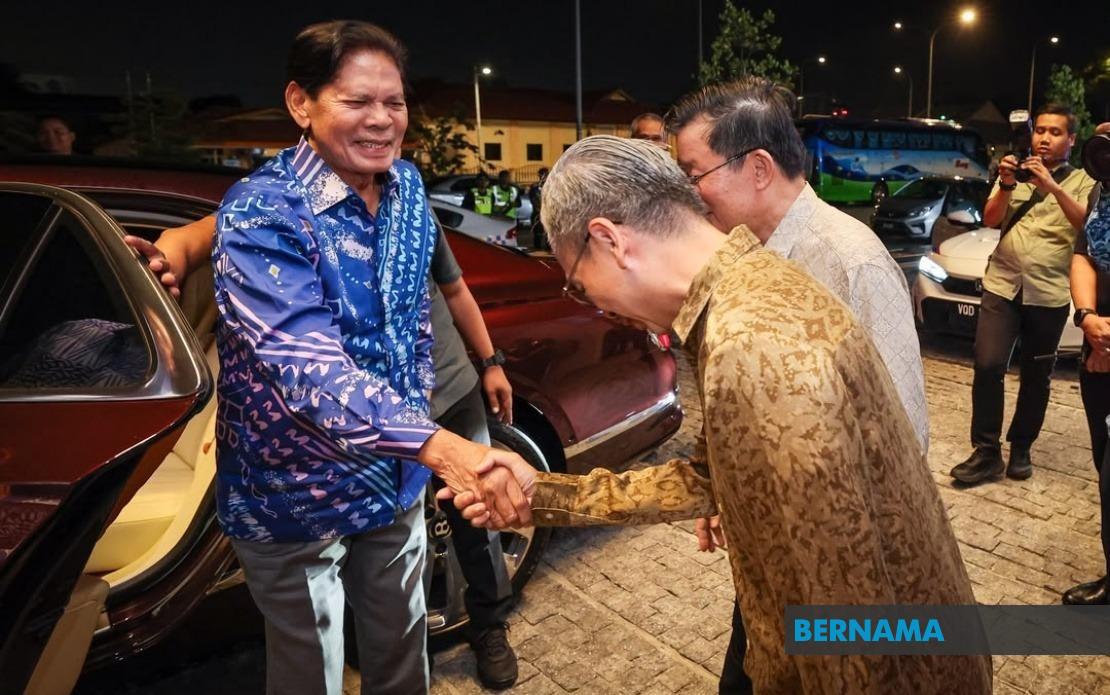
Penang Governor Tun Ramli Ngah Talib marked National Journalists' Day by convening a ceremonial dinner in Butterworth on June 19, drawing close to 350 guests representing the country's media establishment and regional counterparts. The gathering served as a prelude to the HAWANA 2026 main event scheduled for the following day, providing the state government with an opportunity to publicly recognise the journalism profession's indispensable role in Malaysia's continued advancement.
The gathering reflected the breadth of Malaysia's media landscape, with editors-in-chief and senior executives from prominent publications and broadcast networks present alongside veteran journalists and state officials. Among the notable attendees were Penang Chief Minister Chow Kon Yeow and Communications Minister Datuk Fahmi Fadzil, signalling the federal government's commitment to honouring the sector. The inclusion of Penang State Secretary Datuk Seri Zulkifli Long and Communications Ministry Secretary-General Datuk Abdul Halim Hamzah underscored the administrative significance attached to the occasion, while the presence of international delegates from Timor-Leste, Indonesia and other regional nations demonstrated HAWANA's expanding reach beyond Malaysia's borders.
The event brought together leadership from Malaysia's major news organisations, including Bernama, New Straits Times, Sin Chew Daily, The Star, Daily Express Sabah and Astro Awani. This assembly of editorial decision-makers created a rare convergence of individuals shaping the nation's information landscape, offering informal networking opportunities for journalists and media executives across competing outlets. The gathering acknowledged that despite commercial rivalries, Malaysia's media community shares common professional standards and institutional challenges.
International representation at the dinner highlighted HAWANA's transformation into a platform extending beyond domestic boundaries. Delegates included Noemio Mateus Soares Falcao, President of Timor-Leste's TATOLI news agency, alongside Indonesian media figures such as Asro Kamal Rokan and ANTARA Bureau Chief Rangga Pandu Asmara Jingga. This international dimension carries significance for Southeast Asian press freedom and regional media cooperation, particularly as countries grapple with disinformation and the need for professional journalism standards across ASEAN.
The dinner preceded HAWANA 2026's main symposium, which was scheduled for officiation by Prime Minister Datuk Seri Anwar Ibrahim at the PICCA Convention Centre @ Butterworth Arena. Prime ministerial attendance at such events typically signals government recognition of media's democratic function, though the framing of journalism's role emphasises development rather than accountability, a distinction worth noting for observers tracking the relationship between Malaysia's political leadership and press institutions.
HAWANA 2026 carries the thematic focus "Media Integrity Strengthens Credibility," a concept reflecting contemporary anxieties about trust in information sources across Malaysia and the wider region. By emphasising integrity, the organisers—the Communications Ministry with Bernama as implementing agency—positioned journalism as foundational to public confidence in institutions. This thematic choice arrives at a moment when Malaysian media faces challenges from digital disruption, economic pressures on traditional newsrooms, and evolving audience expectations around speed, accuracy and diversity of perspective.
The three-day RIUH Pi HAWANA Carnival, commencing on the evening of the dinner, represented a deliberate effort to expand HAWANA's reach beyond the professional journalism community into the general public. With projected attendance of approximately 30,000 visitors, the carnival introduced a popular cultural dimension to what might otherwise have remained an internal industry celebration. The inclusion of more than 24 local creative product brands alongside 20 food and beverage vendors suggested recognition that contemporary media engagement extends beyond traditional journalism into broader creative industries and digital content creation.
The carnival's programming of 16 stage performances featuring artists including Exists, Bunkface, Masdo, Sakura Band and others acknowledged younger audiences' media consumption patterns and the need to make journalism careers and media literacy visible to potential entrants into the profession. By offering free admission and interactive workshops exploring creative activities, RIUH Pi HAWANA sought to demystify media production and connect citizens with the journalists and organisations serving them. This engagement approach reflects global trends in media institutions attempting to rebuild connections with audiences amid fragmentation and declining trust.
For Malaysian readers and media professionals, HAWANA 2026 carries implications extending beyond ceremonial recognition. The gathering of approximately 1,000 journalists from Malaysia and several ASEAN nations represented an unusual concentration of the region's journalistic talent, offering potential for peer learning, discussion of shared challenges, and advancement of professional standards across Southeast Asia. The international component—particularly participation from Timor-Leste and Indonesia—underscores how journalism challenges transcend national borders and how regional cooperation can strengthen professional practices.
The emphasis on media integrity within HAWANA's messaging reflects ongoing tensions in Malaysia's information environment. The country's media operates within a regulatory framework including defamation law, the Communications and Multimedia Act, and Official Secrets Act provisions that sometimes tension with press freedom principles. By foregrounding integrity rather than freedom or independence, the official framing suggests an institutional preference for emphasising responsibility over broader debates about journalism's watchdog function and critical distance from power.
For the media industry itself, HAWANA 2026 provided opportunity for workforce recognition at a moment when journalism globally faces economic pressures and recruitment challenges. Malaysian newsrooms have experienced retrenchments and consolidation over recent years, making public celebration of journalistic contributions potentially meaningful for profession morale. The dinner's gathering of editorial leadership from competing organisations also permitted informal discussion of industry-wide challenges including digital transition, talent retention and shifting advertising markets affecting traditional media business models.
The regional dimension of HAWANA 2026 positions Malaysia as a potential leader in professionalising Southeast Asian journalism and establishing regional norms around media ethics and standards. ASEAN's media landscape encompasses countries with varying press freedom conditions and professional development levels, creating opportunity for Malaysian institutions to exercise soft influence through technical cooperation, training initiatives, and establishment of shared professional standards. Such regional media engagement also serves Malaysian diplomatic interests in demonstrating the country's commitment to open information flows and professional journalism within ASEAN frameworks.
Looking forward, the success of HAWANA 2026 in attracting large participation from both Malaysian and regional media practitioners, combined with its public carnival component reaching tens of thousands of citizens, suggests the event may have established a template for future collaboration. Whether the momentum translates into sustained regional media cooperation mechanisms, enhanced professional development opportunities for journalists across Southeast Asia, or institutional mechanisms for addressing shared challenges remains to be seen. The gathering nonetheless demonstrated that despite commercial competition and varying national interests, journalism communities across Malaysia and ASEAN recognise mutual interest in strengthening professional standards, integrity and public trust in information.

